
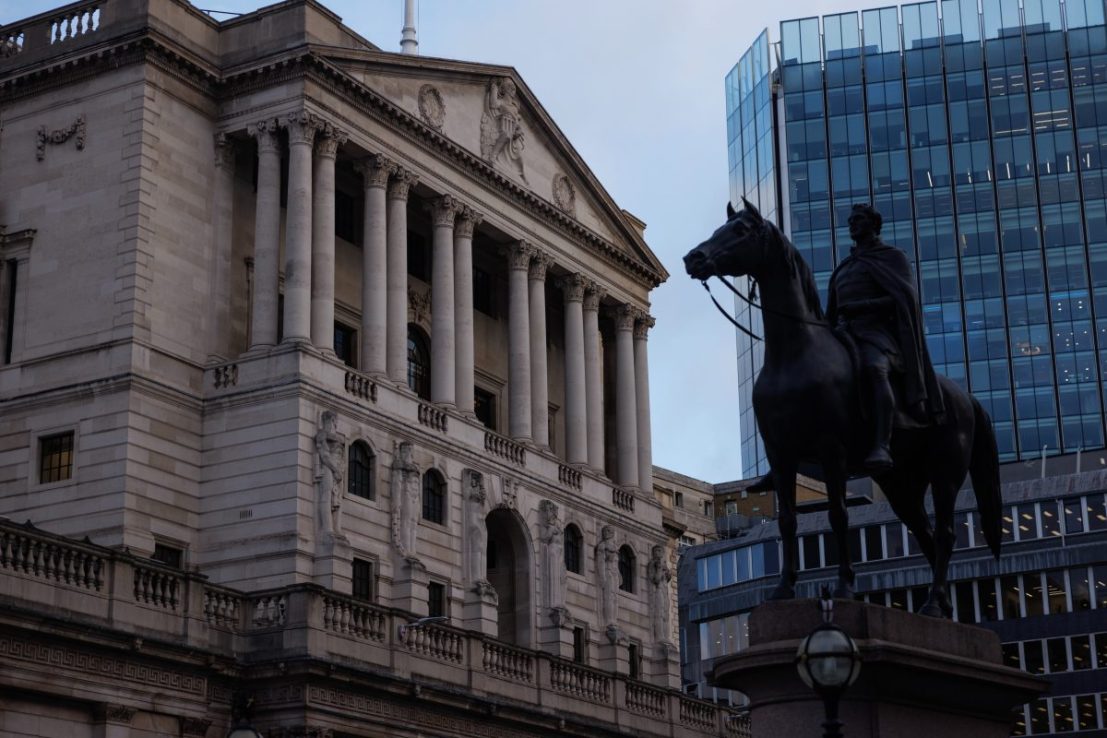
The Bank of England is likely to slow its unusual approach to offloading gilts after conceding it had pushed up borrowing costs at a time when government bond yields have hit near-record highs, economists have predicted.
The Bank’s Monetary Policy Committee will vote to reduce the pace of its ‘quantitative tightening’ programme from £70bn to £50bn and could halt sales of long-dated bonds when it it meets on Thursday, several economists said.
The move would follow calls for the Bank to pause active sales of its vast bond portfolio, which has made it an outlier relative to its international peers. Critics have argued the stance, in which the Bank actively sells its stockpile of bonds into the market rather than letting them mature organically, has pushed up borrowing costs and piled unnecessary pressure on the country’s creaking public finances.
“A reduction in the annual QT envelope to £50bn remains our base case,” Deutsche Bank economists Maui Brennan and Sanjay Raja wrote in a note, adding: “We continue to think the Bank could scrap long gilt sales altogether.”
Thomas Pugh, chief economist at RSM UK, agreed the MPC would choose to reduce or pause the Bank of England’s longer-dated gilt sales.
Any decision to halt sales of long-dated bonds would come as the UK long-term government debt continues to find itself at the sharp end of a historic sell-off. Yields on 10-year and 30-year gilts have climbed to multi-decade highs as investors price in greater inflation expectations and concerns over western governments’ ballooning debts. At an auction of 30-year debt last week, the government was forced to pay an interest rate of 5.82 per cent – the highest rate on any gilt since 1998.
The Bank of England raised its estimate on the extent to which its quantitative tightening stance has stoked government borrowing costs, conceding it had added 30 basis points – or a third of a per cent – to 10-year gilt yields.
Bank officials have long argued that the central bank’s active approach to offloading its gilts is necessary given its outlier status on the types of bonds it holds on its balance sheet.
Bank of England defends bond sales
During the era of quantitative easing – when central banks across the world hoovered up government bonds to insulate their economies from the 2008 financial crisis – the UK’s monetary authority bought debt with a longer maturity compared to its peers. As a result, mirroring other monetary authorities’ ‘passive’ approach to unwinding that buying spree would not be as effective in the UK as it is at the Federal Reserve and European Central Bank.
Governor Andrew Bailey argued in May the institution’s stance would grant the Bank the firepower to launch another round of QE “if needed”.
Alexander Harvey, UK economist at Oxford Economics, said “the quantity of active gilt sales [was likely to] stay at around £20bn” to avoid upsetting jittery bond markets.
“Given the stressed nature of the gilt market, we think the Bank will be keen to avoid market surprises,” he added. “This makes a fairly steady continuation of QT… the most likely outcome at the next meeting.”
The decision on Thursday will set the course for the Bank of England’s quantitative tightening for the next 12 months. Unlike its central interest rate that the Monetary Policy Committee votes on eight times every year, officials only vote on the pace and nature of its bond sales once a year in a bid to provide certainty to market participants.
“At its Thursday MPC announcement, the Bank has a chance to change course,” Damian Pudner, senior research fellow at the Great British Think Tank, told City AM. “Pausing QT – and holding rates – would buy breathing room for households, businesses and markets. The rumoured cut from £70bn to £50bn is not sufficient.”