
Article content
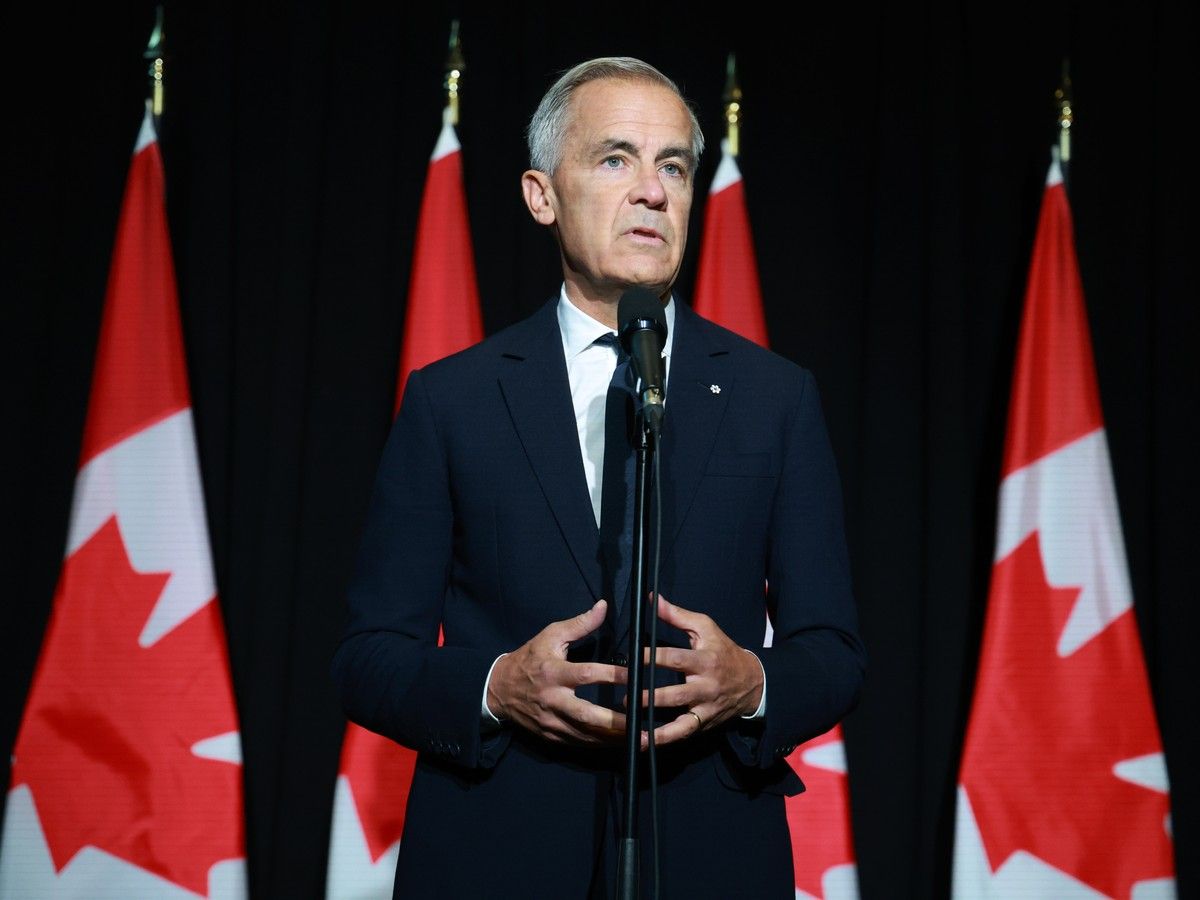
Mark Carney has been a “wartime” prime minister for all of his 18 months on the job. He has been astute enough that trade conflict with the United States has bolstered his support in Canada with the prime minister fully wrapped in the flag.
Sign In or Create an Account
or View more offersArticle content
To question Carney’s actions or motives at such a time is seen as treasonous in some quarters yet it is precisely because of the immense power and support now resting with the prime minister that questions should be asked. Canadians have put their faith in Carney and it is only right and proper to ask whether that faith has been misplaced.
Article content
Recommended Videos
We apologize, but this video has failed to load.Try refreshing your browser, or
tap here to see other videos from our team.We apologize, but this video has failed to load.Try refreshing your browser, or
tap here to see other videos from our team.Article content
Story continues below
This advertisement has not loaded yet, but your article continues below.
Article content
A new Angus Reid poll shows the prime minister is so popular that should an election be called, the Liberals would win by a landslide. And yet all we have is a tariff war with Donald Trump.
Article contentArticle content
Apart from “Elbows Up,” one of the prime minister’s main themes has been: build big, build bold and build fast. Paradoxically, to achieve that aim he instituted another layer of bureaucracy with the Major Projects Office. The Building Canada Act was passed last year with the purpose of streamlining federal regulatory processes but, as the C.D. Howe Institute pointed out this week, it is just another hurdle to overcome.
Article content
“None of these mechanisms address the fundamental sources of uncertainty in Canada’s regulatory system: political decision-making over individual projects and open-ended criteria that require regulators to consider broad public policy objectives,” says the C.D. Howe analysis.
Article content
The new “streamlined” system didn’t work for Saskatchewan-based potash giant Nutrien, which chose to build a new export terminal in the U.S., almost certainly because of onerous regulations in Canada, a University of Saskatchewan agriculture economist told the CBC.
Article content
Story continues below
This advertisement has not loaded yet, but your article continues below.
Article content
Canada is not building big or bold and certainly not fast.
Article contentRead More
- Tasha Kheiriddin: Mark Carney must wake up to fact China is no friend
- Colby Cosh: Canada’s secret meeting with the Chinese military
- Story continues belowThis advertisement has not loaded yet, but your article continues below.
Article content
The prime minister likes to boast, as he did on Thursday in Banff, where he was attending a two-day cabinet retreat, that the economy is in a “position of strength,” job growth is outpacing the U.S., foreign investment is booming and non-U.S. exports have doubled.
Article content
And yet, as Statistics Canada reported earlier this year, Canada continues to underperform the U.S. on the most important economic indicators. When measured by labour productivity and per capita income, Canada is a laggard.
Article content
“Considering the importance of productivity growth to long-term improvements in living standards, the relative decline in productivity growth is the principal reason why Canada is falling behind, regardless of how economic performance is measured,” says the C.D. Howe analysis.
Article content
Pivoting away from the U.S. is a key strategy for Carney that has allowed Mexico to overtake Canada as the main buyer of American goods: U.S.-Mexico trade reached a record US$94.8 billion in July with Canada second at US$62.8 billion. But a consequence of this strategy has seen Canada reaching out to the likes of the United Arab Emirates and China.