
Michelle Darmody: How to follow a magical process and bake your own bread rollsThe strong white flour is high in gluten which gives the dough its wonderfully bouncy and stretchy nature. Sat, 12 Sep, 2026 – 18:03Michelle Darmody
Michelle Darmody is a baking expert and writer, as well as an award-winning author. Michelle works across food education, sustainability and food policy and has a Doctorate in Culinary Arts.
Last week, when I was tired and exhausted, I realised I had forgotten to get bread rolls. They were needed early the next day and the shops were already shut. I resentfully, and sleepily, started to gather the ingredients to make a batch of rolls myself. I used a fast action yeast, as time was of the essence and I had no starter in the house. Once I started to create the dough for the rolls my resentment slipped away. As I kneaded the warm soft ball my tired mind soothed. I used a little brown flour to add texture to the rolls but they can also be made with all white flour, as long as it is strong flour.
Kneading allows the proteins in the gluten to strengthen and form strands which help to trap the air that is formed when the yeast starts to react. It is a magical process.
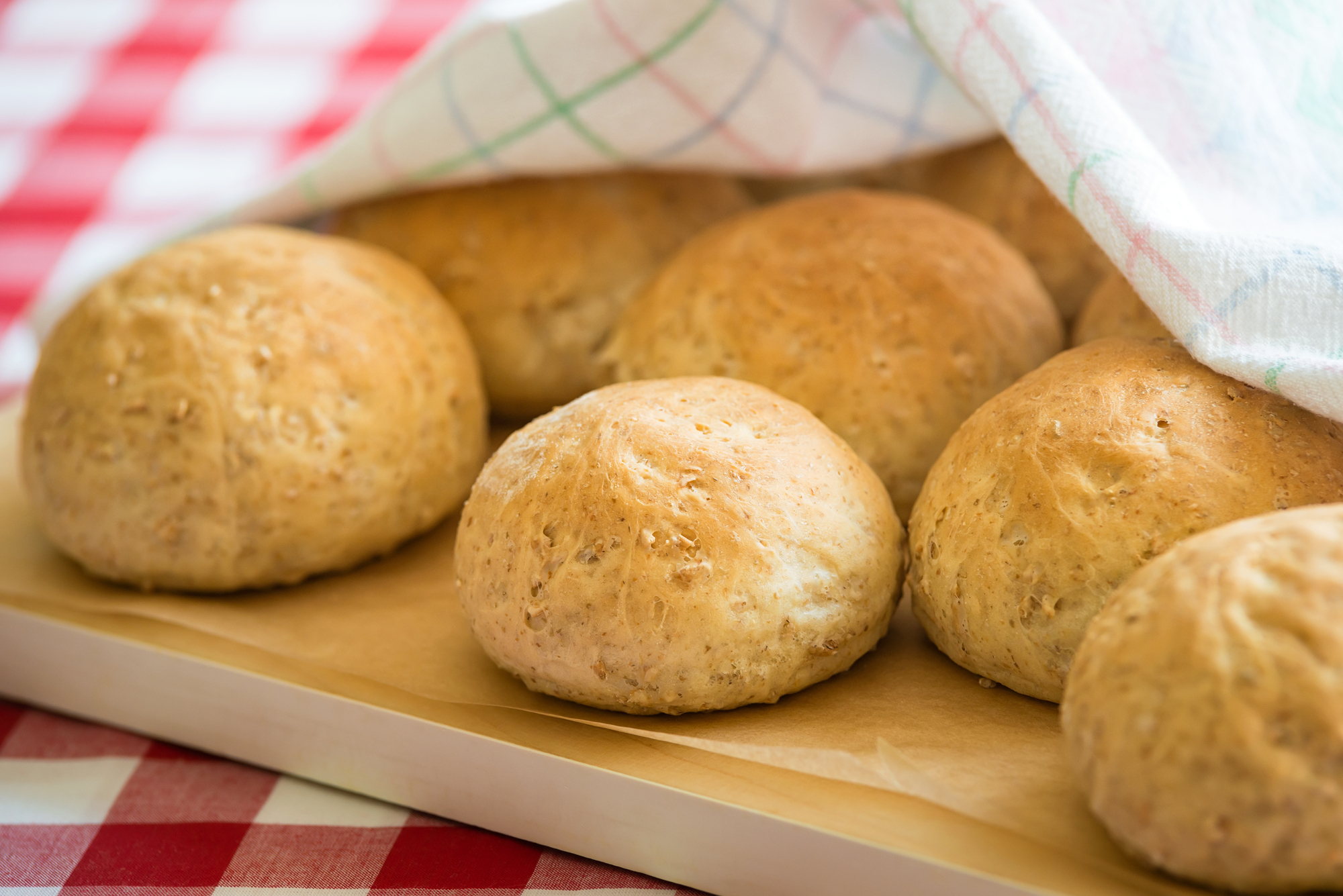
As well as easing my weariness I had added satisfaction – the smell of baking bread wafting through my kitchen. I went to bed happier and more relaxed with a bundle of warm rolls resting below a tea towel.
Sandwhich Rolls
recipe by:Michelle Darmody
I use a big old ceramic bowl to make yeast breads and when I am making a relatively small amount of dough like this, it allows me to knead the dough within the bowl rather than tip it onto a counter.
Servings
8
Preparation Time
19 mins
Cooking Time
15 mins
Total Time
34 mins
Course
Main
Ingredients
-
50g brown whole wheat flour
-
450g strong flour
-
1 tsp fine sea salt
-
7g sachet dried, fast acting yeast
-
350mls warm water
-
2 tbs olive oil – and 1 tbs before baking
Method
-
To make the dough, mix both flours in a large bowl.
-
Add the sea salt to one side of the flour in the bowl and the yeast powder on the other side.
-
Properly combine the dry ingredients, the flours, salt and yeast as you are adding the olive oil and warm water.
-
Mix everything together in the bowl.
-
With clean hands knead the dough in the bowl until it is smooth and forms a neat ball with no trace of the ingredients on the sides or base of the bowl.
-
Cover the bowl with a damp tea towel and leave in a warm place to rise.
-
Line a large flat baking tray with parchment.
-
After the hour break the dough into eight even size pieces and shape each one into a ball.
-
Place each ball on the baking tray with room between each one.
-
Cover again with a damp tea towel and leave in a warm place. Do not let the towel touch the dough balls – I use upside down glasses on the edges of the tray on which to balance the tea towel.
-
Leave to rise for another half an hour or so.
-
Preheat your oven to 220ºC/gas mark 7.
-
Mix one tablespoon of olive oil with one tablespoon of warm water and gently brush this on the top of each roll.
-
Place the tray into the center of your oven.
-
Bake for 10 minutes until beginning to golden.
-
Turn your oven to 180ºC/gas mark 4, without opening the oven door, and bake for a further 10 minutes until baked through.
-
Allow to sit until cool enough to handle, then place onto a wire rack to cool completely.
Baker’s tips
Sprinkle the sea salt on one side of the flour and the yeast powder on the other because the salt will start to affect the yeast as soon as the two meet. It’s safer to keep them apart until the oil and water are being added. It is important to add the salt otherwise the bread can feel quite tasteless.
The water you add to the recipe needs to be warm, at blood temperature. When dipping a finger into the water it should be the same temperature as your body.
When you leave the dough for the hour it should double in size. Keeping it warm, but not hot, is important at this stage. It is also good to keep it away from any drafts.
When you are breaking the dough into eight pieces and rolling it into balls it will lose some of the air it gained in the rise. Do not worry. Allowing it to sit again will help the balls to form a nice stretch before baking.
Turning the temperature up high at the beginning helps to turn the moisture in the dough to steam and gets a quick rise and good crust.
If your rolls do not rise there is probably one of three reasons why, the yeast was old and did not activate, the temperature in your oven was wrong or the structure of the gluten was weak which means it was kneaded until soft. I would generally knead the dough for about seven minutes.
Delicious variations
Sesame seed encrusted rolls
Sesame seeds are wonderful added to yeast bread. I like to brush the rolls with an egg wash before adding the sesame. The egg wash gives a shiny golden finish and acts like a glue for the seeds. Beat an egg with a tablespoon of warm water. Generously brush this over the tops of the rolls. Pour sesame seeds into a bowl and gently dip each egg covered roll in the seeds and place back onto your tray to bake.
Herb rolls
I like to add a really generous bunch of finely chopped herbs to the dough. You can knead them in while you are kneading in the bowl and continue with the rest of the instructions.
Cheesy tomato bread rolls
Sun-dried tomatoes are little bursts of chewy flavour. They generally come in olive oil. I drain the oil and finely chop about four of the sun-dried tomatoes. Grate 80g of a cheddar or Emmental style cheese. Add both the cheese and tomato to the dough while you are kneading it in the bowl. Continue with the rest of the instructions. It’s an easy twist that adds incredible depth of flavour to your bake.
Read More
Eunice Power: Two irresistible late-summer recipes you’ll want to make again and again
Michelle Darmody: How to bake your own Fig Rolls at home
Aishling Moore: Red mullet is one of my favourite fish — here’s how to cook it
x
185th Anniversary Offer
Six months of digital access for €18.50
Already a subscriber? Sign in
No obligation. Ts&Cs apply.
More in this section
Joe McNamee: We should invest in local produce — a growing model that skips the middleman
Aishling Moore: My black pudding and onion baked oysters are a true ‘surf and turf’ dish
Eunice Power: Here are my comforting family meals for cooler days