
25 years on from 9/11: How toxic exposure left responders and survivors fighting for helpResponders, survivors and advocates spent decades battling governments for recognition, treatment and compensation for illnesses linked to 9/11 Sat, 12 Sep, 2026 – 05:53Paul Hosford
John Feal wasn’t in the World Trade Center when the Twin Towers collapsed.
But he answered the call and, like thousands of others, that decision has led to a quarter of a century of advocacy and fight.
On September 11, 2001, John was in Nanuet about an hour from New York City, overseeing a demolition job, but when the scale of the catastrophe became clear “everybody went home”.
“It took me about an hour to lock up the job site. I never went back, I never went home that day, I went to the office. They were calling all construction companies, large, small, to come and help. Late that night, early in the morning of the 12th, we went down to Ground Zero, brought machines, brought tools, and began working.”
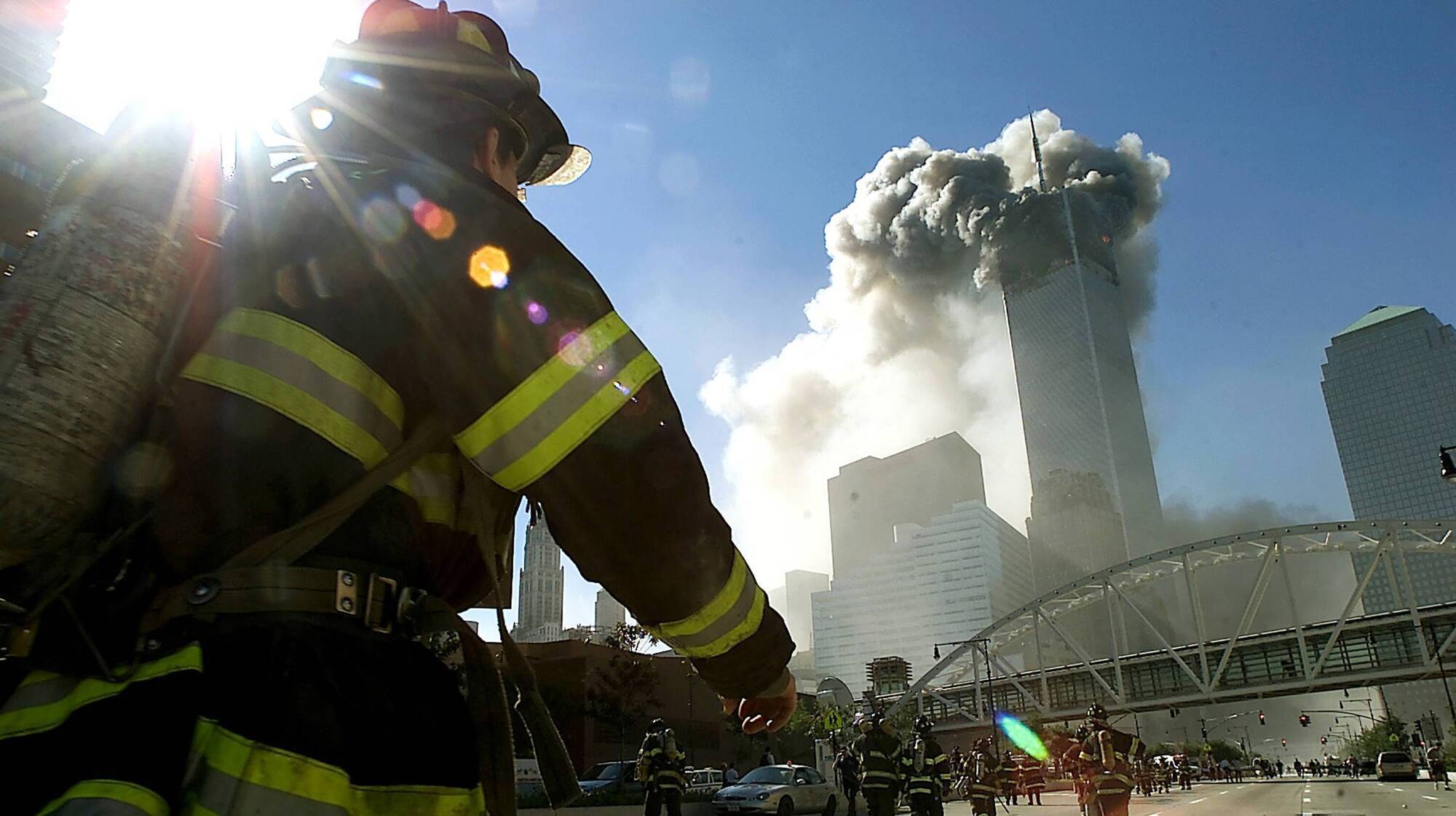
In the aftermath of the collapse of the towers, the media and wider public began to refer to site as “Ground Zero”, but for those rescuers, first responders, construction workers and residents nearby, the site was transformed into what responders called “the Pile” — a vast, unstable mountain of twisted steel, concrete, glass, office equipment, vehicles and other debris.
The wreckage filled much of the World Trade Center site and reached deep into the underground levels.
Mr Feal says that for four days, the site was “organised chaos” before 12-hour shifts were implemented, but as workers toiled in an attempt to move the 1.8 million tons of material which now lay where the iconic buildings once stood, they were exposed to environmental and safety conditions which would claim three times as many lives in the years that have followed.
For John Feal, that exposure began on September 17. As he was overseeing the removal of a piece of steel, the 8,000lb girder landed on his foot. He would spend 11 weeks in the hospital with gangrene and sepsis, almost dying and undergoing multiple surgeries over the next several years just to learn how to walk again.
“But my injury pales in comparison, and I am so small and so minute compared to those who got sick and those who have died.”
In the days after the attacks, the US Congress created the original September 11th Victim Compensation Fund (VCF). Its purpose is primarily to compensate people physically injured or killed as a result of the attacks and immediate debris-removal operations, and its legislation authorised it to disburse just over $7.3bn.
But the problems were just beginning, and people on ‘The Pile’ knew it.
“Now I’m no doctor, but we knew the air wasn’t safe,” says firefighter Brian Davan.
“They gave us these little masks that really didn’t do anything. Later on, we got some better equipment. But it’s very difficult to work with those bigger masks, and we were down there in the dust and things like that.”
“We knew the air wasn’t safe. We knew,” John Feal says. “I knew when I came out of hospital that people would get sick and die.”
In the days after the attack, the Environmental Protection Agency (EPA) moved to quell fears that the plume of dust, ash and pulverised concrete and glass mixed with jet fuel and who-knows-what-else was safe.
Within a week, then-EPA administrator Christine Todd Whitman said her agency’s air monitoring showed the “public in these areas are not being exposed to excessive levels of asbestos or other harmful substances.”
“Given the scope of the tragedy from last week,” Mr Whitman said in a statement, “I am glad to reassure the people of New York and Washington, DC that their air is safe to breathe and their water is safe to drink.”
By August 2003, the EPA’s own inspector general had issued a damning report into the handling of the early statements, saying that the EPA simply did not have the evidence required to say that the site was safe and that the White House Council on Environmental Quality “influenced, through the collaboration process, the information that EPA communicated to the public through its early press releases when it convinced EPA to add reassuring statements and delete cautionary ones”.
At a time of national solidarity, the Bush administration sought to reassure a nervous public that everything was back to normal and New York, that great beacon of hope, was back on its feet.
Three blocks northwest of The Pile, stands Stuyvesant High School, a highly selective public high school which draws students from across New York. On the day, the school evacuated, sending 3,000 students into the streets, among them Lila Nordstrom, in her final year.
When Stuyvesant returned less than a month after the attacks, it was billed as a show of resilience and unity, but Ms Nordstrom, author of the book Some Children Left Behind, says that basically clean-up jobs were not done.
“When we got back, it turned out that the Department of Education had misled our parents about how safe the school would be. They said it had been cleaned in ways that it had not been. They said that there would be HEPA filters installed in every air intake, and that did not happen. And then later they said, ‘if we did it now, it would upset all the dust’, so it would be even more dangerous.”
While the original fund helped those in immediate need, advocates like John Feal quickly realised that more needed to be done to cope with the long-term impacts of diseases associated with 9/11.
Former New York congresswoman Carolyn Maloney made it to ‘The Pile’ the evening of the attacks, having driven from Washington DC back to her district, which covered much of the Upper East Side of Manhattan. She has since been diagnosed with two of the most common conditions experienced by those in proximity — a dry cough referred to as “9/11 cough” and GERD, a chronic digestive condition where stomach acid flows back into the oesophagus.
Bridget Gormley was an 11-year-old daughter of a firefighter in South Brooklyn on the day of the attacks, and while her father was unharmed on the day, he would work for weeks on ‘The Pile’ driven by a sense of duty to recover the bodies of firefighters and
“My father was down there probably well through Thanksgiving, so end of November, early December. The pile itself was on fire for about 100 days.
“My father said that when he came down here, there was nothing bigger than a milk jug. He said it was just all like totally pulverised, almost incinerated fine powder. It was so fine it would just hang in the air.
“You have a lot of bad things, each one a carcinogen, each one being cooked, then you mix them up, and then you breathe this.
“It was so fine; it would absorb through your skin… going in your eyes, going in your nose, ears for eight months.”
On the day, Congresswoman Maloney worked to provide phones and drum up volunteer psychiatrists, but her work was just beginning.
“If you were there that day, as I was, and the days after, as I was, a lot of them became very, very sick, and we first got individual grants to take care of just these people that were sick at Mount Sinai because their sickness was environmental…but it wasn’t a program.
“We were getting grants that were piecemeal, but the city was fighting it, and they were claiming that people were not sick from 9/11, that the illnesses were not caused by 9/11.”
Resistance to legislation
When James Zadroga, an NYPD detective who responded to the World Trade Center attacks to spend hundreds of hours working at Ground Zero, died in 2006, a pathologist ruled “with a reasonable degree of medical certainty that the cause of death in this case was directly related to the 9/11 incident”, making him the first 9/11 responder whose death was directly linked with the toxic cloud that what some called a “mist” hung over Lower Manhattan.
Mr Zadroga’s name would become attached to a piece of legislation which Ms Maloney and her House colleagues Jerrold Nadler and Peter King would spend years trying to pass.
She says:
Why did it take so long to pass the bill? They didn’t want to pay for it.
The Zadroga Act sought to create a federal World Trade Center Health Program providing monitoring and treatment and reopened the compensation fund.
Bridget Gormley says Congress treated the incident like it was a New York problem as the calls for a long-term plan grew. An estimated 500,000 people below Canal Street were exposed, according to estimates, but claims to the compensation fund came from all over — 434 of 435 congressional districts.
As Carolyn Maloney pushed for legislation, resistance was coming from both the city and federal governments.
She says:
The city didn’t want to pay for it, and the pushback from the federal government was that it was a New York attack.
“It was not a federal attack…but we fought for years to get the initial bill passed and then re-authorised.”
After years of lobbying, Congress passed the Zadroga Act in December 2010, and President Barack Obama signed it in January 2011, providing treatment and compensation for qualifying 9/11-related illnesses.
However, the fight continued because the legislation initially contained expiration dates. In 2015, Congress extended the Health Program for 75 years, through 2090, while the VCF received only a temporary extension.
As claims and illnesses continued to grow, advocates — including John Feal, first responder Luis Alvarez and comedian Jon Stewart — demanded permanent compensation.
In a now-iconic moment before the House Judiciary Committee, Jon Stewart criticised Congress for repeatedly making sick responders return to Washington to ask for funding rather than simply recognising the government’s obligation to them, calling the empty chairs alongside him “an embarrassment to the country”.
In 2019, after intense public and congressional pressure, Congress passed the Never Forget the Heroes Act. President Donald Trump signed it on July 29, permanently authorising the VCF through 2090. Together, these laws transformed temporary post-9/11 assistance into a long-term federal commitment to responders, survivors and victims’ families.
9/11-related victims
While Bridget, who works with Barasch and McGarry, a law firm for the 9/11 community, had assumed on the day of the attacks that her family would have suffered a loss, it was not for a decade that 9/11 would claim the life of her father.
“You have to understand that my family, my community, it was very Fire Department-centric. I had uncles and cousins, and my dad and my brothers are going on the job soon. We had so many people in the department; the fact that we didn’t lose anybody was astounding, because when it happened, we’re like, ‘someone’s fucking dead’.
“We lost someone. We just don’t know who it is, just because the odds were against us in terms and numbers, and we didn’t, and we thought it was a miracle because we were, you know, there were six churches in our neighbourhood, and just every weekend, you heard the pipes, the pipes, the pipes, the pipes, the pipes.”
While her father was required to do a medical every year, his eventual cancer diagnosis was so aggressive that it progressed quickly.
“He had the World Trade Center cough, which they labelled early days because guys got it immediately and it just kind of stayed. And then he had skin cancers, and his sinuses were never really quite right.
“Then he got really sick. He got bladder cancer in 2016 December, and then in June 2017, he passed away. So it took six months, and it wasn’t a late-stage diagnosis.”
For Lila Nordstrom, the fight was to have students and residents recognised as 9/11 survivors. Through her organisation Stuyhealth, she has seen that happen, though with higher barriers for entry and more complexities involved in accessing schemes.
“The national discussion was all about how unified we were, and nobody was really paying attention to what was happening on the ground in Lower Manhattan,” Ms Nordstrom says, saying that her own incentive to become involved hinged on health struggles for classmates.
“The whole reason I got involved in this is I couldn’t afford my asthma medication, and then a classmate of mine who’d been a friend at Stuyvesant came to me and was like, ‘I just got diagnosed with cancer, could that be related?’
“And suddenly, all these other people had lymphoma, and then suddenly people had thyroid cancer. The first responder community saw the same thing, where the very first cancers that appear are blood cancers and thyroid cancers.
We were in our early 20s, and suddenly I knew five classmates had had cancer, and that seemed a little nuts to me, and so that’s kind of what propelled me to get involved.
Unlike first responders, survivors and residents are not monitored closely, so stats are hard to parse, but Lila says that some 50 people she knows from school have had some form of cancer.
In the firefighter community, those cancers are seen as an inevitability.
“We had young men getting cancers that only older men got, or we had men getting cancers that only women got,” says Brian Davan.
“We got very unusual cancers, very, very aggressive cancers. So there was no doubt where it came from. I made a statement to my wife 15 years later, and she got scared. She got mad at me,” he adds.
“I said, ‘Oh, you know, when I get cancer’, I must have been talking to someone else. And I said, ‘Oh, when I get’, and she goes, ‘What do you mean?’ I said, ‘Well, we’re all going to get it’.”
Despite the heroism shown in the days after, John Feal does not believe that any first responder would go through their experience again.
“I think if you ask a majority of the 9/11 responder community, I think it’s noble and romantic that they would say, ‘Yeah, I would do it all over again’. And I think they’re programmed; they’re trained to say that. But I call bullshit on them.
“Nobody wants to have stage four cancer. Nobody wants to go do chemo. Nobody wants to lose a mother or a father or a brother or sister. I don’t think as many people who said they would do it again would do it again.
“I know I wouldn’t. I don’t want to feel that kind of pain again. I don’t want to go through what I went through. I do what I do now as an advocate, so people don’t go through what I went through.”
What’s your view on this issue?
You can tell us here
John Feal is 20 for 20 in getting legislation passed, and says he has a ritual every time he manages to, in his words, “go through” the DC apparatus.
“I would say thank you for what you did. What you did was historic. Nobody can take that away from you. But put down your swords. You’re no longer warriors. Go home, plant some, pick up your rakes, and watch it grow with a loved one.”
While he admits that he is “itching” to pick up his sword for the next fight, as the 25th day of remembrance closes in, he hopes for one thing.
“I hope we bring humanity back. I’m picking team humanity.”
Read More
Trump promises Americans ,000 ‘if the Republicans win’ as party faces major midterm losses
x
185th Anniversary Offer
Six months of digital access for €18.50
Already a subscriber? Sign in
No obligation. Ts&Cs apply.
CONNECT WITH US TODAY
NEWSLETTERS
NOTIFICATIONS
Be the first to know the latest news and updates
Colin Sheridan: 9/11 Falling Man photo reminds us that all human lives matter
The Deirdre O’Shaughnessy Podcast: The lasting impact of 9/11 on the people of New York
25 years on: 14 documentaries and films to mark 9/11 anniversary and where to watch them
More in this section
The Mick Clifford Podcast: What kind of welcome will Donald Trump receive?
Programme that brings the circus to halting sites ‘giving children the space to be themselves’
25 years on from 9/11: ‘Suffering did not end’ once the smoke and dust cleared, New York mayor says
#911