
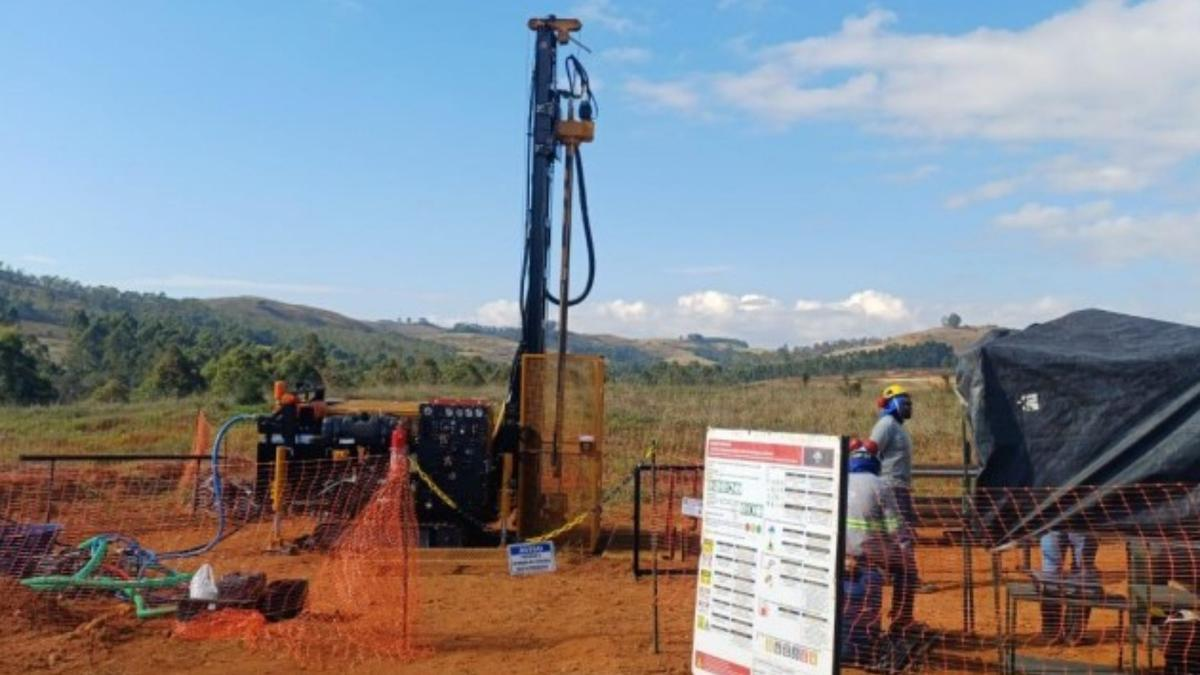
Viridis Mining and Minerals has kicked another critical goal on its path to production, appointing the heavyweight duo of Sedgman and Blossom Consultoria e Assessoria S.A as preferred engineering, procurement and construction management (EPCM) partners for its globally significant Colossus rare earths project in Brazil.
The appointment is a major de-risking event for the project, following a comprehensive global tender process and sets a clear course towards a targeted first production date in 2028.
Sedgman, a well-known international project house, will pair with its established Brazilian engineering provider, Blossom, in a move that combines global execution muscle with crucial on-the-ground expertise in the Brazilian state of Minas Gerais.
Rather than waiting for a final investment decision (FID), Viridis says it will immediately launch a “bridging phase” of works with its new partners. The company has approved expenditure of up to US$3 million (A$4.2M) to get the ball rolling on detailed engineering, finalise execution plans and manage the long-lead equipment packages already ordered.
The strategy aims to maintain momentum, continue de-risking the construction schedule and enable a rapid transition into full-scale execution once the FID lands, targeted for the third quarter of 2026.
Today’s news is the latest in a string of box-ticking exercises for Viridis as it bolts together its mine development plan. The EPCM appointment follows the recent completion of a definitive feasibility study (DFS), the securing of equity funding sources, the award of a 138-kilovolt grid connection contract and the placing of the project’s first major equipment order.
The Colossus project is underpinned by a massive, upgraded JORC-compliant global footprint of 473 million tonnes grading 2505 parts per million (ppm) total rare earth oxides (TREO), with a combined magnet rare earth oxides (MREO) grade of 592ppm.
That global figure packs a richer subset specifically targeted to lift geological confidence by upgrading lower-grade inferred material into higher-confidence resource categories. The targeted approach has carved out a massive, premium-grade core, comprising a measured and indicated resource of 305Mt grading 2723 ppm TREO, with 659ppm MREO.
Notably, within that measured and indicated envelope, the tightest infill grid proved up an elite starter zone of 31Mt grading 2858ppm TREO, with 758ppm MREO.
Adding further weight to those massive resource numbers, Viridis delivered a standout maiden probable ore reserve just over a year ago of 200.6Mt grading an impressive 2640ppm TREO and 740ppm MREO, representing a healthy 61 per cent resource-to-reserve conversion.
Viridis released its DFS last month, underpinning the financial and technical modelling for an initial 25-year mine life directly on top of that massive reserve base. It refined the operational metrics very slightly to 200.1 million tonnes grading 2894 ppm TREO and 715 ppm MREO, due to updated mine sequencing and engineering filters. That number included 27.4 Mt of proved ore reserves and 172.7Mt of probable ore reserves.
The 25-year production target comprises an estimated 17 per cent proved ore reserves and 83 per cent probable ore reserves, and notably, no measured, indicated or inferred mineral resources outside the declared ore reserve were included in the production target. Importantly, this means the DFS’s economic viability does not depend on converting additional mineral resources into ore reserves.
With all that grist to its mill – literally – it’s no wonder that previous company announcements point to Colossus as having the biggest measured and indicated resource and highest magnet rare earth oxide grade of any ionic adsorption clay (IAC) hosted rare earths project in the world. With large-scale, non-Chinese sources of high-value heavy rare earths remaining exceptionally scarce, bringing Colossus online by 2028 would position Viridis as a strategically important new supplier for Western economies.
That strategic advantage has not been lost on international funding bodies. The company has already secured non-binding letters of support from Export Finance Australia for up to US$50 million (A$69.3M) in debt financing, while Export Development Canada issued a letter of interest offering support for a potential US$100 million (A$138.6). France’s Bpifrance has also provided a letter of support.
Adding to its financing firepower, Viridis announced yesterday that it had secured a A$21M, 16-year, low-cost loan directly from the Brazilian Government’s development bank (BNDES). The project has been selected for the country’s Climate Investment Platform, supported by a joint support plan by BNDES and the federal agency for studies and projects, FINEP.
We have undertaken a comprehensive competitive process to select the team we believe is best equipped to deliver our execution strategy, which combines significant Brazilian engineering and project delivery capability with specialist equipment and expertise from leading global suppliers.
With a world-class asset, top-tier EPCM partners now mobilising, and solid government-backed financial support lining up, Viridis appears to be systematically dismantling the remaining hurdles that separate exploration from production. And while the FID remains the ultimate green light, the company is not sitting on its hands, already spending money and pushing ahead on the critical-path work needed to turn its giant resource into a producing mine.
Is your ASX-listed company doing something interesting? Contact: [email protected]
Get the latest news from thewest.com.au in your inbox.
Sign up for our emails