
Labor, Coalition in immigration talks as Malinauskas warns against ‘race to the bottom’By political reporter Holly Tregenza
Posted Thu 10 Sep 2026 at 12:43pmThu 10 Sep 2026 at 12:43pmThu 10 Sep 2026 at 12:43pm
In short:
The federal government says it is in discussions with the opposition over immigration.
On Wednesday, South Australian Labor Premier Peter Malinauskas warned of a “political race to the bottom” with One Nation.
What’s next?
Opposition Leader Angus Taylor and Prime Minister Anthony Albanese met on Wednesday as the government prepares to unveil its immigration policy.
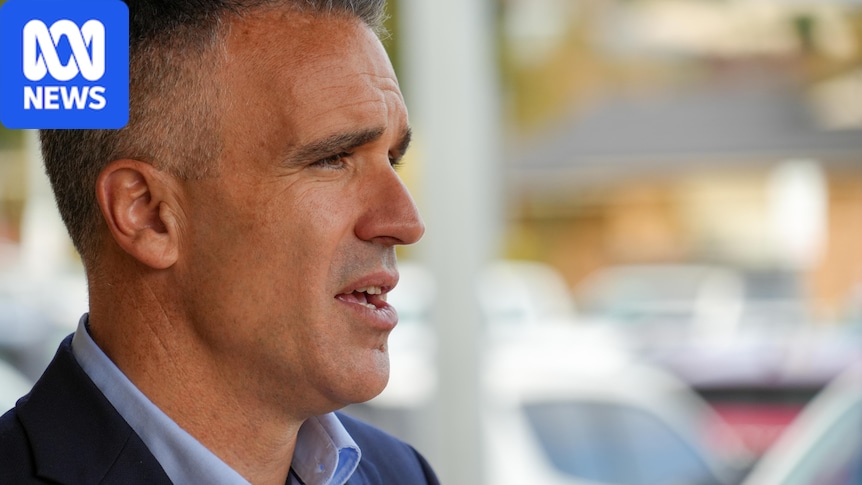
The federal government says it is in discussions with the opposition over immigration as South Australian Premier Peter Malinauskas accuses major parties of pandering to One Nation and warns of a “political race to the bottom”.
Mr Malinauskas used a speech at the Sydney Institute on Wednesday to frame cuts to skilled migration as an act of economic self-harm, and argue the correct political response to anti-immigration politics and populism was “not appeasement”.
“More troubling is the prospect of mainstream politics entering a political race to the bottom for who can cut migration numbers the most,” he said.
“This is madness.”
Opposition Leader Angus Taylor met with Prime Minister Anthony Albanese this week after writing to him with demands ahead of an expected crackdown to curb Net Overseas Migration (NOM), which both major parties agree is too high.
The letter confirmed the Coalition hoped its proposed measures, which include tying NOM to housing completions, would bring the NOM “below 170,000”.
Treasury had forecast a NOM reduction to 225,000 next year, although Labor has previously overshot estimates.
Home Affairs Minister Tony Burke was due to unveil the government’s proposal at a speech at the National Press Club in early August but cancelled at the last minute after it became clear elements of the policy were not ready for release.
Among the measures canvassed were tougher family visa rules, a cap on the number of backpackers in the country and restrictions on the work and appeal rights of asylum seekers.
Assistant Minister for Multicultural Affairs Julian Hill confirmed the government had been in discussions with the Coalition “to find a way forward on the next phase of immigration reform”.
He said the government wanted to overhaul the system to allow it “control and precision”, and agreed with Mr Malinauskas’s assessment that the debate risked a “race to the bottom”.
“Any political party or operator who thinks they can out One Nation One Nation is on a highway to nothing,”
he said.
But he noted the premier’s comments about reducing the intake of skilled migrants, which Mr Malinauskas framed as an act of economic self-harm, was specific to the South Australian context.
“It doesn’t have the housing shortage pressures that some other capitals or states have, and migration with AUKUS and the massive expansion of their economy there is incredibly important,” Mr Hill said.
Government, opposition not ‘anywhere’ near agreement
Mr Taylor said he could “not see” a package being delivered by the government that would get “anywhere near” what the Coalition considers an appropriate NOM number.
“I’ve laid out very clearly what our asks are, and as it stands we are not getting those,”
he said.
Liberal frontbencher Andrew Hastie said while the Coalition was willing to engage, ultimately the view within the joint partyroom held that Labor had “failed” on immigration.
“We’ve committed to cutting immigration and pegging it to housing completions, that’s the best way we can ease the pressure on the housing market, ease the pressure on essential services on infrastructure, and, frankly, put Australians first,” he said.
NOM has been falling since a massive spike following the fallout from the COVID pandemic.
This week, four major bodies representing business joined the call to preserve the number of working holiday-makers being granted visas to enter Australia, after the government slowed the rate of approvals.
The Australian Chamber of Commerce and Industry (ACCI) is among the group collectively urging the government to clarify its intent for the future of the working holiday-maker program, warning a restriction on the flow of these workers was “crippling” Australian businesses ahead of the summer season.
“Australia’s pubs, cafes, farms and tourism operators are desperate for staff,” ACCI CEO Andrew McKellar said.
“Slowing their visas may artificially reduce a migration number, but it just makes skills shortages worse.”
Nationals leader Matt Canavan has previously insisted his party would not allow any cuts to backpackers on working holiday visas, who were “not the problem” and were needed in the regions.
The Coalition is yet to outline its own NOM target, beyond a one-to-one ratio with housing completions.