
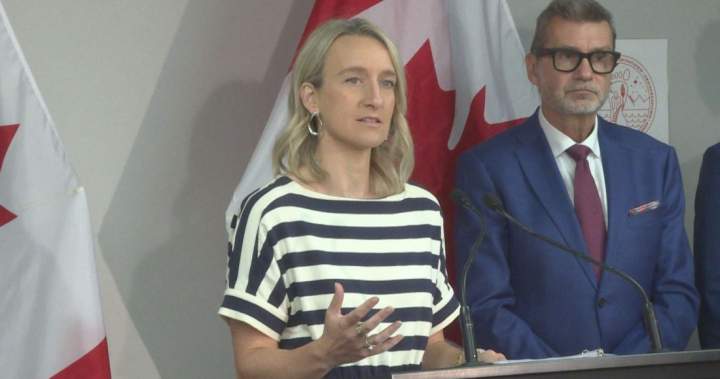
The federal government is spending $5 million to enhance HIV prevention and support services for people living with the condition.
Ottawa’s funds will increase access to self-testing kits and help communities facing an elevated number of cases by encouraging peer-based support work, said Doug Eyolfson, Member of Parliament for Winnipeg West.
“This is about making sure that where you live, your circumstances, or the barriers you face do not determine whether you can access the care you need. That is how we reduce new HIV transmissions. That is how we reduce stigma. And that is how we build a healthier, and more equitable Canada,” he told reporters, speaking on behalf of the federal Minister of Health Marjorie Michel.
The aim of the program, he said, is to connect people who do not know their HIV status to health care and any necessary services. An estimated 7,000 people are unaware of their positive HIV status in the country, according to a Public Health Agency of Canada news release.
Story continues below advertisement
“That means there are still too many people facing barriers to testing and treatment and care. Knowing your HIV status is an important first step,” Eyolfson added.
Investing in self-testing kits offers people a quick and simple way to check their HIV status, said Dr. Joss Reimer, Canada’s chief public health officer.
Get weekly health news
Receive the latest medical news and health information delivered to you every Sunday.
By providing your email address, you have read and agree to Global News’ Terms and Conditions and Privacy Policy.
Two kits are currently approved for use in Canada. The INSTI self-test requires a finger prick, and the OraQuick test calls for an oral swab.
“Ensuring early diagnosis and connection to care is the intent of this new funding,” Reimer said.
“This investment helps to address stigma and the inequities that keep people away from care.”
Manitoba declared a public health emergency due to increased transmission of the virus in May over rates estimated to be three times higher than the rest of Canada. The province sought help from Ottawa address the sharp rise in cases.
Uzoma Asagwara, Manitoba’s provincial health minister welcomed the announcement.
“More HIV self-tests and more peer support are coming to communities across Canada. Obviously, I’m very biased (and) I’m thrilled that there’s a whole lot of those tests coming to Manitoba communities,” Asagwara said.
2:15
Manitoba declares HIV public health emergency over sharp rise in cases
- Billy Joel says he underwent brain surgery following his diagnosis
- Alberta First Nation invokes treaty clause to set up gender-affirming care safe haven
- ‘Dynacare sucks’: Manitoba premier considers making lab services public
- Pamela Anderson opens up about hepatitis C ‘death sentence’ diagnosis
-
‘Dynacare sucks’: Manitoba premier considers making lab services public
-
‘Kitten College’ Campus opens in Langley
-
Alberta First Nation invokes rare ‘medicine chest’ clause in support of transgender medical care
-
Health Matters: Rossdown chicken sold at Costco recalled
The federal support is expected to be particularly helpful for rural and remote communities.
Story continues below advertisement
“Here in Manitoba, we know that there are unique barriers beyond what we already know around HIV, geography being one of them. That’s why this investment is so important. It closes those gaps,” Asagwara said.
An estimated 70,900 people were living in Canada with HIV as of the end of 2024, according to the chief public health officer of Canada, who said that figure is continuing to rise. When the virus is effectively managed, it becomes undetectable, which then makes the virus untransmissible.
With files from The Canadian Press
1:32
What should be done about the spread of HIV in Manitoba?