
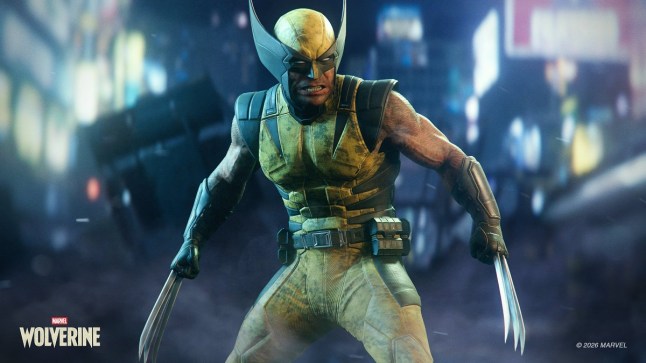
The makers of Marvel’s Spider-Man turn their hand to a very different kind of superhero, in a considerably more violent and less open world adventure.
You would imagine that using the Marvel video game licence would be a guarantee of success and in a certain sense it is, just not the kind you’d expect. With the very obvious exception of Sony’s Spider-Man games, every other recent console title has been a sales disappointment, from Midnight Suns to Marvel Tōkon: Fighting Souls, the games have been of impressively consistent quality and yet depressingly consistent flops.
There’s no obvious explanation for this, expect perhaps that mainstream fans are only interested in Marvel games if they’re straightforward action games, not strategy titles or fighters. If that’s true, then Marvel’s Wolverine has a very good chance of breaking the curse, since it’s based on a very popular character, it’s by Spider-Man developer Insomniac Games, and it’s nothing if not straightforward.
It’s not open world, as the Spider-Man games were, and the combat focus bares obvious comparison to action titles like Devil May Cry and (for a surprising number of reasons) the recent Onimusha reboot. But the sky-high production values and comic book style melodrama are classic Insomniac, which helps to paper over some of the game’s rougher edges.
Although this is apparently set in the same universe as Insomniac’s Spider-Man games, we saw no obvious proof of this. We’re sure there are some Easter eggs somewhere, but the important point is that this is not the same universe as either the comic books or the MCU. As such, there is no X-Men and mutants are relatively unknown to the wider world. They’re still persecuted when they are though and Wolverine is part of a group called Team X, along with Sabretooth and Mystique. The team is led by Nathaniel Essex who… well, if you don’t know, we’re not going to spoil it for you.
In fact, we’re not sure what to say about the story at all because if you know the comics, you’ll recognise that everyone except Wolverine is traditionally portrayed as a supervillain. Some elements are purposefully different to the comics, and some are invented purely for the game (we think), but even so, certain twists in the story are highly predictable, depending on how well you know the source material.
Expert, exclusive gaming analysis
Sign up to the GameCentral newsletter for a unique take on the week in gaming, alongside the latest reviews and more. Delivered to your inbox every Saturday morning.
This isn’t really a problem though as the storytelling is solid and the characters are nicely characterised. They might not be quite three-dimensional but there’s certainly more to them than we expected. The game’s themes are of loneliness, trust, and friendship, and we actually found Sabretooth, of all people, to be the most effective demonstration of this. He clearly wants to be closer to Wolverine, but he doesn’t know how to express himself and constantly lashes out in frustration, which makes him far more interesting than you’d expect.
By contrast, Wolverine is portrayed as morally grounded (except for the hundreds of bad guys he brutally murders throughout the game) but deathly afraid of commitment. His world view is altered by the appearance of Jean Grey, with much of the game’s story revolving around a budding romance between the two. That’s a relative rarity in video games but while the plot often gets in the way it is quite convincing – although it might not have been if not for Wolverine’s pitifully sad, puppy dog eyes.
If there’s a fault in the storytelling, it’s that the game does touch on some serious subjects, with some fairly grim subject matter, but it never tackles anything head-on. Sometimes the absurdity of the situations and characters (most of whom have very comic accurate costumes) makes it hard to take anything seriously, which seems mildly disrespectful when alluding to real-world issues.
There are some very long cut scenes and narrative moments, where you’re wandering around a small hub area with no combat, but they’re unevenly distributed. In fact, the first few hours almost seem like a different game, with some laughably bad boss battles, that go on forever, and very linear action. This is what fans reacted to negatively during the early previews but it’s not indicative of the game as a whole.
That said, this is not a complex game when it comes to gameplay. The combat system is based around a single button press and a leap attack that also doubles as a combo finisher. If you can count pressing the square button three times as a combo. Parrying is important, and there’s also a dodge move, but the skill tree is bonsai-sized and there are just six special abilities in total, only four of which you have access to at any one time.
The lack of complexity is clearly purposeful and while it has a predictable effect on the sense of repetition, the only mechanical flaw is a surprisingly fussy camera, that sometimes struggles to keep the action in frame.
While it may lack nuance, the combat is undeniably entertaining, with fights usually involving at least half a dozen enemies, of multiple different types, all of which have to be prioritised appropriately. Although there are obvious similarities to the likes of Devil May Cry and Bayonetta, the game shares just as much DNA with old school scrolling beat ‘em-ups. The combat is certainly more complex than Konami’s old X-Men game, but the cadence of the action is surprisingly similar.
Each main level features a ‘nightmare door’ that unlocks one of Wolverine’s suppressed memories, and these take the form of either a painfully dull assault course or more interesting combat challenges. One type in particular is basically a survival mode and it’s a lot of fun, even if it does underpin that the default difficulty is rather easy.
You do get up to other things in the game, including a couple of motorbike sequences and some simple stealth, as well as sections where you’re tracking scents or otherwise searching small open world sections for secrets, but the game is 80% combat. Some of this segues into short cinematics, or simple QTE sequences, in a way that can be a little disconcerting, as you wonder when you actually lost control, but the combat and visuals, and excellent voiceovers, work very well to hide the inherent shallowness.
However, it’s clear in several of the more orchestrated set pieces that Insomniac is trying to invoke the spirit of Naughty Dog’s work on Uncharted, but they never quite get there. One sequence is reminiscent of the Madagascar chase sequence from Uncharted 4 (while also being a homage to the truck chase from Raiders of the Lost Ark) but it’s nowhere near as fluid or cinematic.
This contrasts with a clever first person set piece right towards the end of the game, that stands out not only because it works so well but because nothing else in the game is quite so inventive and unexpected.
As such, it’s impossible to avoid a sense of repetition, in terms of both the combat and some of the locations and plot points. This almost certainly would’ve been a better game if it was eight-ish hours long, like Spider-Man: Miles Morales, but since it’s a full-price game it’s just as well it isn’t.
Although Wolverine is an extremely popular character, after playing the game we’ve begun to think he’s not a particularly good video game protagonist. Or at least not a very distinctive one. He’s basically just good at stabbing people and has a healing factor, which describes the majority of all video game action stars. Crucially, and unlike Spider-Man and Batman, or flying or teleporting characters, he doesn’t have a unique style of traversal.
More than once in the game we wondered whether it wouldn’t have been more fun to play as Jean (who can fly) or someone with more unique powers. But while, say, Ant-Man would make for a very unusual and interesting game the obvious problem is that no-one wants to spend £70 pretending they’re Ant-Man, or at least not enough people do to justify a $200+ million video game budget. So instead, we get a hirsute man with knives in his hands, constantly fighting robot people.
Despite our qualms we hope the game’s a success, because ideally it will act as a gateway game for other titles with more complex combat, as well as opening the door for other big budget superhero games that don’t involve Spider-Man. In a standout year, this is nowhere close to being the best action game of 2026, but it is a crowd pleaser and as good a Wolverine game as seems reasonable to imagine.
Marvel’s Wolverine review summary
In Short: Shallow and repetitive to the core but the storytelling has plenty of heart and ambition, while the enjoyable combat has blood and guts in equal measure.
Pros: Very cinematic, with incredible production values. Combat is surprisingly solid, given the limited number of moves, and the bosses get a lot better after the first two duds. Earnest storytelling with well-rounded characters.
Cons: The combat is simplistic compared to other similar games. Some narrative sequences go on too long and the wacky superhero hijinks don’t always sit well with the serious themes. Imperfect camera and limited upgrades.
Score: 7/10
Formats: PlayStation 5
Price: £69.99
Publisher: Sony Interactive Entertainment
Developer: Insomniac Games
Release Date: 15th September 2026
Age Rating: 18
Email [email protected], leave a comment below, follow us on Twitter.
To submit Inbox letters and Reader’s Features more easily, without the need to send an email, just use our Submit Stuff page here.
For more stories like this, check our Gaming page.
Comment now
Comments
Add Metro as a Preferred Source on Google
Add as preferred source