
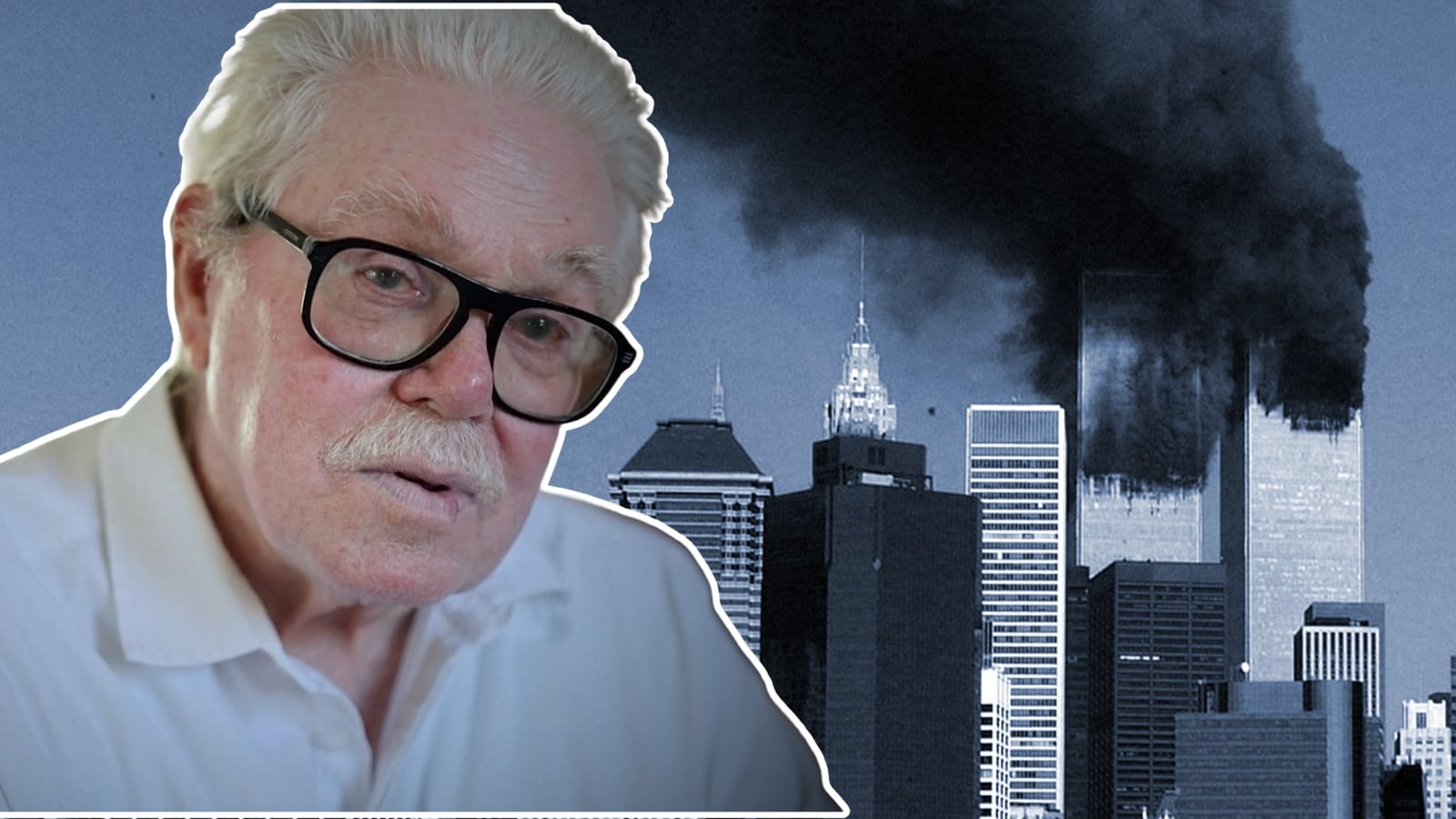
As an airline customer service agent, Michael Tuohey helped two of the hijackers check into their flights at Portland International Jetport in Maine on 11 September 2001 – the starting point of a journey that ended in American Airlines Flight 11 crashing into the North Tower of the World Trade Centre.
Another jet flew into the South Tower, followed by a third that went into the Pentagon and a fourth downed in Pennsylvania killed about 3,000 people.
The day amounted to an unprecedented attack that left behind tens of thousands of grieving spouses, parents and children and stunned the world.
The events of 11 September, early in President George W Bush’s first term, profoundly reshaped US national security policy and led to decades-long wars in which more than 900,000 died – primarily in Iraq and Afghanistan.
They also changed the course of individual lives, inspiring some children of victims to follow their parents into emergency service, steering others toward military, medical or public-service careers, and leaving survivors, responders and millions of Americans still reckoning with the legacy of that day.
A routine morning for Mr Tuohey in New England changed when Mohammad Atta and Abdul Aziz al Omari arrived just a half hour before their flight.
Mr Tuohey scanned the men’s paper tickets to see whether they had been recently purchased or paid for in cash, which would have raised red flags even by pre-9/11 standards.
But the tickets had been bought weeks in advance, paid for with credit cards, and were for first class.
“They never reached that next level. I followed all the guidelines; I did my job,” he said.
‘I didn’t listen to my gut’
Later, in the aftermath of the attacks, US intelligence failures that missed the al-Qaeda plot would be widely dissected.
The US Department of Homeland Security would be created, safety procedures at airports revamped, and the nation ushered in a web of new security laws.
But as the first glimmers of sunlight warmed the eastern skies over Portland that crisp fall morning, Mr Tuohey had no way of knowing the horrors the morning would bring.
“My gut instinct was good, but there were laws, there were laws against profiling people,” said Mr Tuohey, now 80 and retired.
“I didn’t listen to my gut. And it turned out to be an awful thing,” he said from his Maine home.
Aftermath
He went on to stay on job for three more years. After a send-off from US Airways, Mr Tuohey said he began to struggle from his memories from 11 September.
“I would go to my mailbox and a car would drive by and I saw Mohammad Atta looking at me from the car,” he said.
“I’d end up laughing and I’d say, ‘come on, you’re losing your mind here.’ That happened on several occasions.
“Every time somebody turned on my street, if I was outside, I’d run in the house. I’d ask, ‘what am I doing?'”
His wife also alerted him to his tendency to pass time sitting parked in his driveway or staying in the shower without realising it.
So Mr Tuohey accepted that he needed to seek help. He was soon diagnosed with a dissociative disorder and underwent about six months of therapy in which he replayed the day in his sessions.
He said at the end of the treatment he was no longer seeing Atta and started to feel “normal” again.
No therapy of course can change the events of 11 September. But it helped Mr Tuohey move closer to a place of acceptance about a chapter from his past.
“It wasn’t that I was right. It’s just that it could have changed something. Not that it would have, but it could have. Who knows?”