
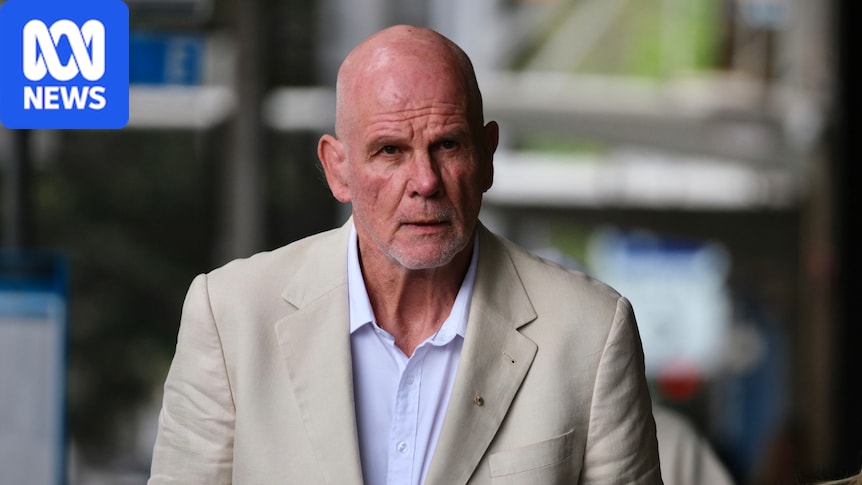
Author and journalist Peter FitzSimons gives evidence in Alan Jones trial
Posted Thu 10 Sep 2026 at 12:41pmThu 10 Sep 2026 at 12:41pmThu 10 Sep 2026 at 12:41pm, updated Thu 10 Sep 2026 at 12:48pmThu 10 Sep 2026 at 12:48pmThu 10 Sep 2026 at 12:48pm
In short:
Author and journalist Peter FitzSimons is giving evidence in the Alan Jones criminal trial.
Mr FitzSimons told the court a young colleague of Mr Jones appeared “deeply upset” when describing allegations of indecent assault to him.
The defence case is that Mr FitzSimons and radio shock jock Ray Hadley “colluded” by getting Complainant C to help “destroy” Mr Jones.
Author and journalist Peter FitzSimons has begun to give evidence in Alan Jones’s criminal trial, telling the court a young colleague of Mr Jones appeared “deeply upset” while detailing allegations of indecent assault.
Mr Jones has pleaded not guilty to 22 counts of indecent assault and sexual touching relating to six men, including a younger colleague, Complainant C, who has alleged the “powerful” broadcaster kissed and touched him multiple times.
The NSW Local Court trial on Thursday heard from Peter FitzSimons, a former Australian representative rugby union player-turned-journalist, who said he first met Mr Jones in 1982 when Mr Jones was coaching rugby.
He said he answered Mr Jones’s call to join the Manly rugby league club and described the defendant as a “brilliant rugby league coach”.
After writing two articles for the Sydney Morning Herald in 2017 about Mr Jones’s “genius” in rugby coaching, Mr FitzSimons said he received a “very strong email from a young man”.
It is not suggested that young man was Complainant C.
The journalist has been called to give evidence about a conversation he had with Complainant C in October 2019, a day after 2GB shock jock Ray Hadley informed him that a younger colleague wanted to speak about his experience with Mr Jones.
Mr FitzSimons said he spoke to Complainant C as arranged, and the man allegedly told him Mr Jones would “scrape or hold his penis” while in the car together, and kissed him in the lift to his Circular Quay apartment.
‘He was revolted’
Mr FitzSimons said the complainant described Mr Jones as “the most important powerful person at 2GB” and was “drawn in” to Mr Jones’s orbit.
“He couldn’t quite believe that in the world that he was in … the number one person was noticing him,” Mr FitzSimons said.
“He made clear … he was revolted by what had happened, but he was deeply upset at himself for not being stronger.“
He said Complainant C told him he did not say no to Mr Jones at the time, but did push his hand away.
The journalist told the court he immediately passed his notes from the phone call onto his colleague, investigative reporter Kate McClymont, because it appeared “extremely important”.
“It was not a story I could possibly pursue on my own,” he said.
Mr FitzSimons said four days after the phone conversation, Mr Hadley indicated Complainant C was “deeply upset”, “panicking” and “spiralling”, and he made it clear neither he nor Ms McClymont would pursue the story further at that time.
Under cross-examination, defence barrister Gabrielle Bashir SC questioned Mr FitzSimons about whether Mr Hadley “offered himself” as a source against Mr Jones as well as putting him in touch with Complainant C.
She put to him that Mr Hadley brought up the names of two other younger men in relation to Mr Jones, which Mr FitzSimons agreed with.
“[Ray Hadley] made allegations of sexual interaction with [one man] but I don’t remember sexual allegations with [another man], but I remember his name coming up,” he said.
The defence case is that Mr FitzSimons and Mr Hadley “colluded” by getting Complainant C to help “destroy” Mr Jones.
The trial continues.