
Advertisement
A cancer patient has died and another is terminal after a Victorian hospital, still reliant on paper records, failed to triage 150 critical referrals left sitting in cardboard boxes for up to 16 months.
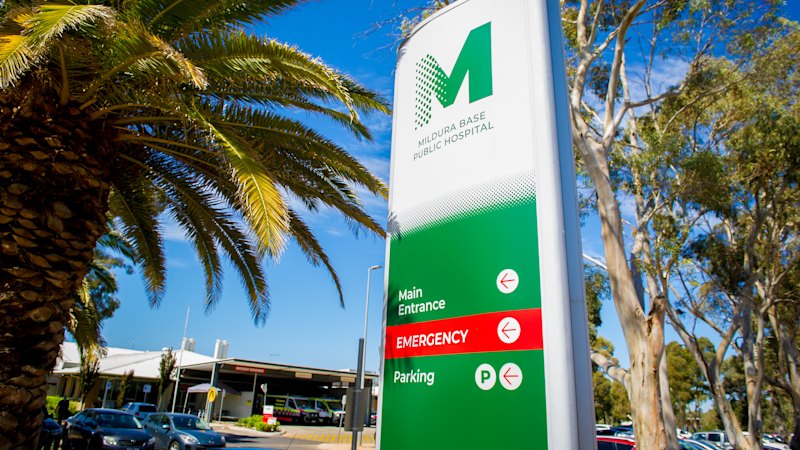
Mildura Base Public Hospital has reported the sentinel events to the state’s health watchdog, Safer Care Victoria, and is undertaking its own investigation into the lengthy and potentially fatal delays.
The delays involve dozens of patients with cancer symptoms who need colonoscopies and other diagnostic tests, as well as patients requiring treatment for confirmed skin cancers.
The situation highlights a broader issue plaguing many regional and rural hospitals, where outdated paper records and manual sorting are still used despite repeated calls from doctors’ groups for digital upgrades.
Advertisement
The patient who died from cancer and another who received a terminal diagnosis were among the 150 patients caught up in the backlog, according to four hospital sources not authorised to speak publicly.
It is not known whether earlier triage could have prevented the cancer patient’s death or the other cancer patient’s terminal prognosis. But a health professional who works at the hospital, who was not authorised to speak publicly, said prompt access to diagnosis and treatment would have markedly improved their quality of life.
“You can’t justify having failures in the system in this day and age that might lead to someone’s death,” they said.
The sources said the cardboard boxes containing the GP referrals were forgotten, so no specialist doctor was assigned the task of triaging them for the hospital’s specialist clinics.
Advertisement
“It’s a disaster,” said one doctor with knowledge of the situation, who also requested anonymity because they were not authorised to speak publicly.
“We are already seeing bad outcomes for patients because they are not getting timely access to the care they need.”
Some of the paper referrals were sent to the hospital in Victoria’s north-west in December 2024. They were not triaged until the files were discovered in April this year.
In one critical case, a patient had to wait almost five months to access an initial specialist clinic appointment to discuss the removal of a melanoma detected by their GP. In another case, a patient waited 17 months to access a specialist appointment to discuss an endoscopy for suspected cancer.
Advertisement
If these patients had been triaged earlier, they would have been classified as category 1, which means they should have been seen at a specialist clinic within 30 days. They would then be placed on the elective surgery waiting list for treatment.
Australian Medical Association Victoria president Dr Simon Judkins described the situation as “gravely concerning” and said it highlighted what could go wrong when health services relied on outdated paper-based processes.
He said despite the AMA calling for IT upgrades for regional and rural hospitals for more than a decade, many still relied on “faxing bits of paper and paper referrals” while their city counterparts used electronic systems.
“This is a process that relies on people collecting bits of paper and putting them in a box for someone else to look at – it’s flawed,” he said.
“We won’t know the impact on patients for a long time. No one should be waiting that period of time to have their referral looked at.”
Advertisement
Opposition health spokeswoman Georgie Crozier said the state government had ignored repeated warnings about serious failures in the state’s health system, and patients were paying the price.
“This is a disgrace,” she said.
“Delays in diagnosis and treatment have put Victorian lives at risk. These failures cannot simply be swept under the carpet. These forgotten patients are Victorians waiting for diagnosis and treatment while their health deteriorates, and they deserve answers.”
While the hospital has an IT system, it still sorts paper-based referrals from GPs into cardboard folders and boxes for each specialist clinic. There is no centralised way of tracking referrals, according to hospital insiders.
Advertisement
Once patients visit the specialist clinic, they receive a paper slip which they have to carry to another part of the hospital to book in their elective surgery.
Matthew Jukes, the interim chief executive of Mildura Base Public Hospital, said it was incredibly distressing to have to wait for medical treatment, particularly for cancer patients.
“Mildura Base Public Hospital is always working to improve its service delivery and models of care, including wait times to ensure the best possible outcomes for the Mildura community,” he said.
He said the hospital was unable to share specific patient details.
Advertisement
The hospital has now triaged the backlog of 150 critical referrals, and booked the patients into specialist clinics.
A Safer Care Victoria spokeswoman said Mildura Base Public Hospital had reported these cases to the watchdog in line with its reporting obligations and also undertaken its own review of the incidents.
“Safer Care Victoria’s role is to oversee and support the sentinel event reporting process. It reviews information provided by health services, provides feedback where appropriate and helps identify opportunities to improve patient safety,” she said.
In Victoria, the investigation of individual sentinel events – which the watchdog describes as “adverse patient safety events that result in serious harm or death” – is the responsibility of health services.
Advertisement
Mildura Base Public Hospital was operated as a public hospital under a private management contract with Ramsay Health until 2020, when it was taken over by the state Labor government.
In its latest annual report, the health service said it had commenced a project in its specialist clinic to transition from paper-based referrals to an electronic system.
It said once this project was completed it would “result in significant efficiencies for the administration team and improved patient experience, particularly greater visibility of patients waiting for care”.
It’s estimated that upgrading the system across health services in the Loddon Mallee region would cost around $70 million.
An unprecedented number of patients are seeking specialist clinic care at Victorian public hospitals, as the cost-of-living crisis and soaring private doctors’ fees makes care in the private system unaffordable for many.
Advertisement
In response, the state government announced in May it would overhaul the state’s specialist clinics by creating regional waiting lists, shifting appointments from doctors to nurses, and using AI to flag urgent cases.
It said this would provide people with quicker access to appointments, clearer communication and more care options for patients closer to home.
This followed the release of a Department of Health report that found Victorians were currently waiting up to four years to access specialist care at public hospitals, with wild variability across the state.
Mildura Base Public Hospital is also struggling to keep up with demand in its emergency department. Last year, this masthead revealed that hundreds of patients were languishing in the hospital’s emergency department for more than 24 hours.
Advertisement
In response, the board of the hospital lashed out at the state government over its lack of funding to expand bed capacity at the regional health service, and said it “can no longer meet the growing demand”.
The government responded by announcing that four new sub-acute beds would open at the hospital.
The latest health data shows that the median wait times for urgent first appointments at specialist clinics is 16 days. The statewide median wait time for a routine first appointment is 58 days.
Mildura Base Public Hospital has 16 main specialist and outpatient clinic services, including general medicine, oncology and infectious diseases.
Start the day with a summary of the day’s most important and interesting stories, analysis and insights. Sign up for our Morning Edition newsletter.
You have reached your maximum number of saved items.
Remove items from your saved list to add more.
More:
Henrietta Cook is a senior reporter covering health for The Age. Henrietta joined The Age in 2012 and has previously covered state politics, education and consumer affairs. Email her via [email protected] or [email protected] via X, Facebook or email.AdvertisementAdvertisement