
Advertisement
September 10, 2026 — 9:48am
You have reached your maximum number of saved items.
Remove items from your saved list to add more.
Fewer than one in 30 phones sold in Australia last year folded in half. Apple has just priced its first one at a whopping $3499.
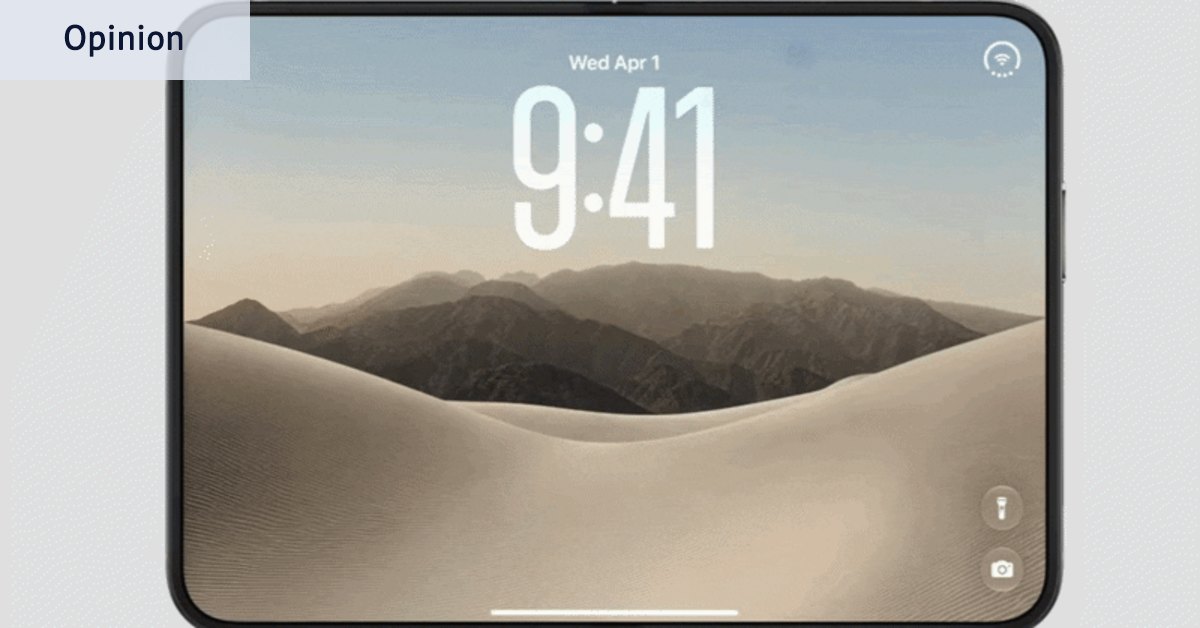
The iPhone Duo, announced this morning (Australian time) and on sale here from October 23, is the most expensive iPhone ever made, and by some stretch. The 2 terabyte version is $5899. For the money, you get a 7.6-inch screen that folds down to the size of a passport.
Loading
You also lose a bunch of features seen on other iPhones, including the superior camera on the iPhone Pro, and Face ID, which has been replaced by Touch ID on the side button.
A Motorola Razr Fold costs up to $1200 less, has a bigger inner screen, a bigger cover screen, and the telephoto lens Apple left out. Samsung’s Galaxy Z Fold 8 starts at about $800 less than the iPhone Duo.
Advertisement
Yet Apple will sell every one it makes, and I predict this is the phone that cracks the category open.
As with everything Apple has done over the last decade or so, the pitch – a foldable phone – is far from a new idea. It’s a better-built version of somebody else’s.
The company didn’t invent the MP3 player, the smartphone, the tablet or the smartwatch. The iPod, the iPhone, the iPad and Apple Watch each arrived years late but ended up defining their category. It’ll do so again now.
Executing that familiar playbook now falls to a new boss. The stakes are high for John Ternus, who has been chief executive for just nine days. He got a ceremonial on-stage handoff from former Apple boss Tim Cook, and unveiled the Duo with Apple’s trademark “one more thing”, giving Ternus his own “Steve Jobs moment”.
Advertisement
That hardware choice reveals a lot about the new Apple boss. He’s an engineer, and the Duo is an engineer’s phone: a hinge with more than 100 components, a titanium plate under the display, adhesives that let the screen layers slide over each other like the pages of a book.
It has also picked the right shape here. Book-style foldables, the passport-sized kind that open into a small tablet, already account for 60 to 65 per cent of Australian foldable sales. Clamshells – the type that used to be highly popular in the early 2000s, and that you can slam shut after a phone call – account for the rest.
It’s worth noting that journalists haven’t yet had more than a few minutes to play with the new devices, with review units set to be sent out over coming days.
Ben Henzell has run his digital agency since before the original iPhone existed, and he’s queuing for this one. “Apple may not be the first to market with a foldable phone, but it certainly has the engineering and brand to bring it to the mainstream,” the BFJ Digital owner said. He expects it to be particularly popular with people stuck working on their phones, and reckons the last comparable moment was the iPad.
Advertisement
Speaking of iPads: I stopped bringing mine to work about six weeks ago.
I didn’t consciously abandon it, I just stopped needing it. Unfolded, my loaner Motorola Razr is an 8.1-inch screen that lives in my pocket. On a flight, it means I can fold it open to watch a show; on the train, I can work properly, with two things open at once. I don’t have to plan out which devices I need to carry like I used to.
That’s Apple’s most persuasive pitch and why thousands of Aussies will shell out for $3499 for a phone: it’s a tablet you don’t have to remember to pack in your bag. The battery life is excellent, too – two full days without a charge – which should be similar with the Duo.
And I still get tons of “oh, what’s that?” comments when I bring out my phone. That’s not something you’ve been able to say about new iPhones for years, given they’ve mostly just gotten slightly slimmer or slightly bigger.
Advertisement
There are some real drawbacks to foldables: you can still see the crease when the light hits it, the water resistance isn’t as good as an ordinary phone, and if you break it, the repair bill is frightening (Apple is still to release AppleCare details for the Duo).
Yet there are dozens of moments through the day when unfolding the phone to tablet size is genuinely useful.
Apple’s new flagship might cost a bomb, but there’s a reason everything costs more this year. Apple didn’t release a standard iPhone 18 at all — the cheapest new iPhone is now $2099 — and it quietly raised the price of phones it put out last year. The iPhone 17 went from $1399 to $1549.
Memory is scarce and expensive right now, and the industry is passing that on. A 2TB Duo costs $5899, which is $2400 for storage.
Advertisement
It’s worth noting too that most people won’t be asked for it in one go. Telstra, Optus and Vodafone already move 55 to 60 per cent of the foldables sold in this country, almost all on financing and trade-in plans.
Paying $3499 for a phone is a massive ask. But there are a few truisms I’ve learned through my decade-plus career: “don’t bet against Apple” is one of them.
Get news and reviews on technology, gadgets and gaming in our Technology newsletter every Friday. Sign up here.
You have reached your maximum number of saved items.
Remove items from your saved list to add more.
More:
David Swan is the technology editor for The Age and The Sydney Morning Herald. He was previously technology editor for The Australian newspaper.Connect via X or email.AdvertisementAdvertisement