
This section is The content in this section is supplied by Business Wire for the purposes of distributing press releases on behalf of its clients. Postmedia has not reviewed the content. by Business Wire Article contentLight Sail VR’s Matt Celia Brings Together Film Producers, Executives and Practitioners to Advance the Immersive Supervisor Role at TIFF ’26
Sign In or Create an Account
or View more offersArticle content
LOS ANGELES & TORONTO — Audiences aren’t just watching films and television anymore. The same stories and intellectual property are moving across VR headsets, AR glasses, spatial formats, and platforms that did not exist a few years ago, yet most production workflows were built for the traditional screen and still treat what comes next as an afterthought.
Article contentWe apologize, but this video has failed to load.Try refreshing your browser, or
tap here to see other videos from our team.Article content
Story continues below
This advertisement has not loaded yet, but your article continues below.
Article content
“If you wait until the traditional production is finished to think about immersive, some of the decisions you need may already be behind you.”
Article contentLight Sail VRArticle contentArticle content
, a 2025 Emmy-winning immersive cinema studio, will raise that issue at the
Article contentToronto International Film Festival (TIFF)Article content
, running Sept. 10-20, 2026. Co-founder and Chief Creative Director
Article contentMatthew CeliaArticle content
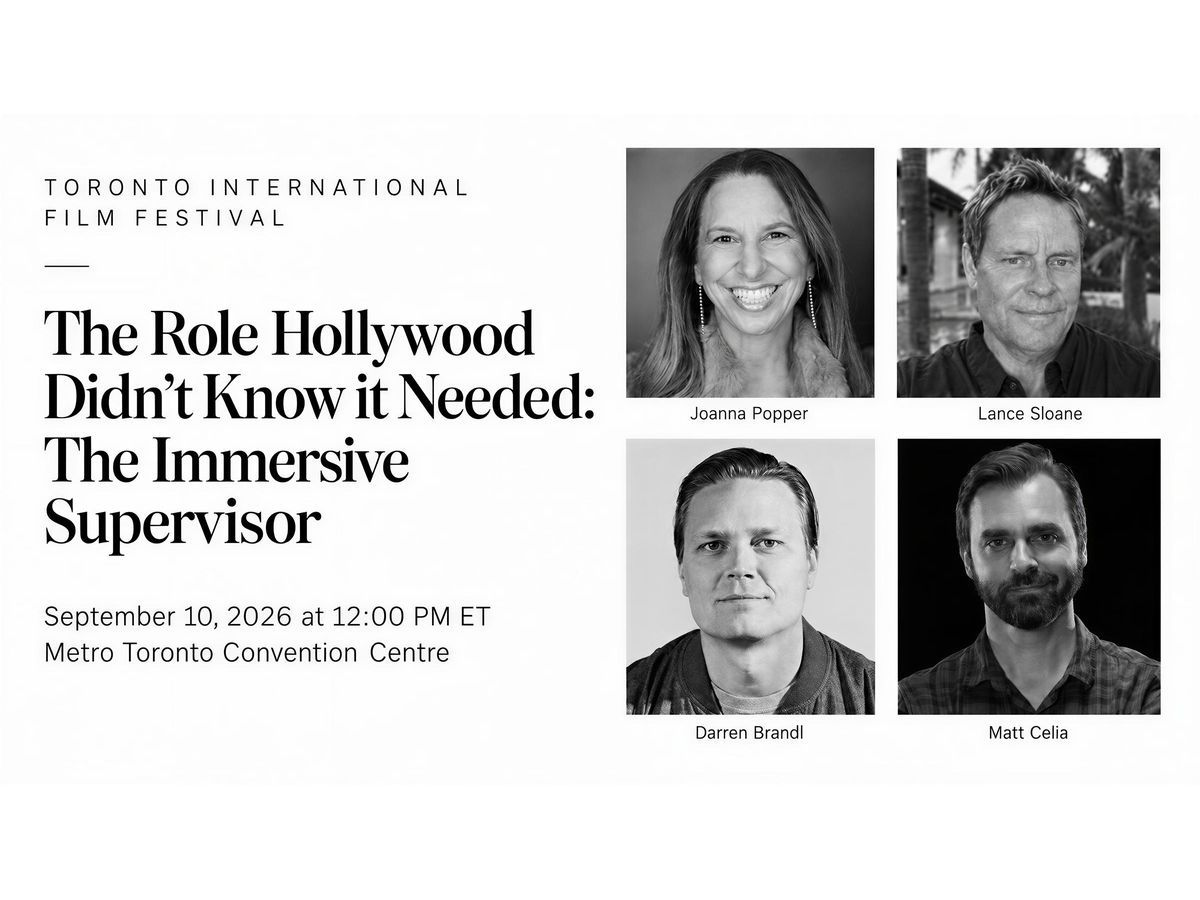
has curated a panel bringing together a film producer, an executive and a practitioner to examine the emerging role of the immersive supervisor, why immersive thinking belongs in pre-production rather than post-production, and how filmmakers can create new value from existing IP as formats continue to multiply.
Article contentTIFF ’26 Session DetailsArticle contentPanelArticle content
:
Article contentPERSPECTIVES The Role Hollywood Didn’t Know It Needed: The Immersive SupervisorArticle contentJoanna PopperArticle content
is CEO of Laurel Beach, an AI and media consultancy, and former chief metaverse officer at CAA, with leadership across AI, XR and immersive media. She will moderate the panel.
Article contentMatt CeliaArticle content
is co-founder and chief creative director of Light Sail VR, with more than a decade of immersive production experience across over 200 projects for major entertainment and technology partners.
Article contentLance SloaneArticle content
is a media executive and producer at Paramount Skydance, with senior leadership experience across immersive entertainment at Sony Pictures and Warner Bros.
Article contentDarren BrandlArticle content
is co-Founder of XRTV and former co-founder and COO of Crypt TV, with over 80 television and immersive productions totaling more than $100 million.
Article contentWhereArticle content
: Metro Toronto Convention Centre
Article contentWhenArticle content
: Sept. 10, 2026 at 12:00 p.m.
Article content
“Traditional filmmakers already know how to tell stories. That part doesn’t go away,” said Celia. “What changes is where those stories can live and how an audience experiences them. If you wait until the traditional production is finished to think about immersive, some of the decisions you need may already be behind you. The immersive supervisor brings that thinking into the room early, while those set and production decisions can still be made.”
Article contentThe Platform Shift Facing Traditional FilmmakersArticle content
Light Sail VR has spent 10 years translating traditional filmmaking into immersive production.
Article content
“Some filmmaking instincts carry over and some don’t,” said Robert Watts, co-founder and executive producer of Light Sail VR. “That matters now because more productions are being asked to work across formats that were never part of the original filmmaking process.”
Article content
Light Sail VR has applied that experience across narrative, franchise and live productions, including “ The Faceless Lady,” projects for “ The Boys Gen V,” and the Emmy-winning “ SNL 50th Anniversary Special.” In each case, production decisions had to account for how audiences would ultimately experience the work outside traditional film and television.
Article content
Story continues below
This advertisement has not loaded yet, but your article continues below.
Article content
The medium itself is still developing. On Light Sail VR’s “ Inside the Shot” video podcast series, filmmaker and entrepreneur Adam Lisagor described the current moment in immersive filmmaking as “Lumière territory,” comparing it to cinema’s earliest years, when filmmakers were still establishing the language audiences now take for granted.
Article content
For traditional filmmakers, the issue is not abandoning established craft. It is knowing what carries forward and what changes with the medium.
Article contentThe Immersive Supervisor Moves Into PrepArticle content
The immersive supervisor helps filmmakers make decisions early enough to preserve future immersive options while the set, performers and production resources are still available.
Article content
That may mean considering how a scene will be experienced, what should be captured for later use, and whether decisions made for one format will work when the same intellectual property moves somewhere else.
Article content
“Spatial video. AR glasses. Volumetric capture. Every format coming next is going to break a different traditional instinct on a set somewhere,” said Celia.
Article contentFrequently Asked QuestionsArticle contentWhat is an immersive supervisor?Article content
An immersive supervisor is a production role that helps filmmakers plan for immersive and emerging formats from the beginning of a project rather than adding those considerations after production.
Article contentWhat does an immersive supervisor do?Article content
An immersive supervisor helps filmmakers make production decisions that will work for immersive audiences and preserve material that may be needed when the same intellectual property moves into another format.
Article contentWhen does a film production need an immersive supervisor?Article content
A production may need an immersive supervisor when it is being created for immersive media or when filmmakers want the option to extend the project into spatial video, AR, location-based entertainment or other emerging formats.
Article contentHow did the immersive supervisor role emerge?Article content
Major shifts in filmmaking have often created new production roles. Digital filmmaking introduced the digital imaging technician in the 1990s. The growth of visual effects established the VFX supervisor in the 2000s. Today, immersive and spatial formats are creating new responsibilities around how stories are captured and experienced, leading to the emerging role of the immersive supervisor.
Article contentWhy doesn’t a traditional monitor tell the whole story in immersive filmmaking?