
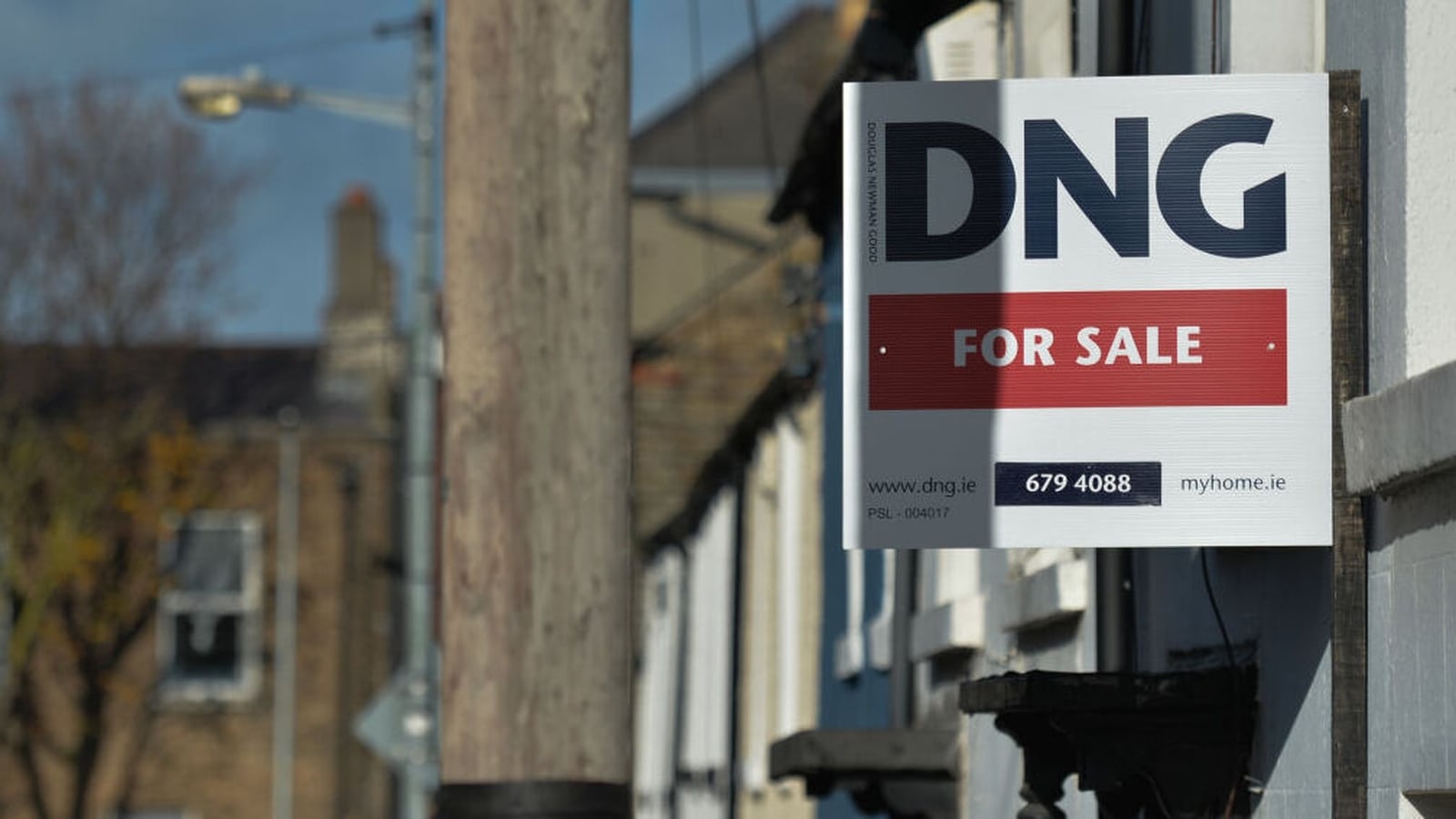
Tánaiste and Minister for Finance Simon Harris has seemingly ruled out removing stamp duty for first time property buyers in next month’s budget, despite Fianna Fáil’s calls for the move earlier this week.
At Fianna Fáil’s annual pre-Dáil think-in on Monday, Taoiseach Micheál Martin said he was favourably disposed towards the abolition of stamp duty for first-time buyers, while party colleague and Minister for Housing James Browne said he is open to the move.
While both Government members stopped short of saying such a change should be introduced in the 6 October budget, Fianna Fáil TD Seamus McGrath went further, saying he is “keeping the pressure up” to ensure the measure is delivered next month.
The comments have led to disagreement within the coalition’s partners Fine Gael.
Asked about he possible measure as he arrived at Government Buildings for this morning’s cabinet meeting, Mr Harris said he was not planning to table the move when he announces the Budget 2027 plans as Minister for Finance next month.
“There are no proposals in relation to Programme for Government on stamp duty, and therefore in this moment in time I’m not prepared to bring forward such measures.
The Tánaiste said “this is not about one party in Government or another party in Government, everybody in Government is bringing forward their best ideas and best thinking on how to make progress on housing,” but added that “there is a finite amount” of money available.
The Tánaiste separately said his “priority” in ongoing budget talks is “to keep the economy safe at a time of huge global uncertainty” and to “insulate [Ireland] as best we can from any global shocks”.
He said this includes addressing the cost of living crisis, and that “personal income tax is one way you can do that, to make sure people keep more of their own money”.
Mr Harris said this commitment has already been made in the Programme for Government, and that he is “clear on the direction of travel”.
“In 2015 people used to pay the higher rate of tax at €33,000, it’s now €44,000, but there’s still too many people paying the higher rate of tax on the average income and that doesn’t seem right,” he added.
Mr Harris also said energy credits are unlikely in the upcoming budget.
It comes as Sinn Féin leader Mary Lou McDonald has said Budget 2027 must ensure that that working people and families come first and accused the Government of “leaving big money behind”.
She told RTÉ’s Morning Ireland programme today that her party wants to abolish the USC on the first €40,000 people earn.
Responding to this on his way into Cabinet, Mr Harris said: “Untargeted temporary measures, I think the people want us to do a bit better than that, being quite frank.
Watch: Harris says people ‘want us to do better’ than ‘untargeted temporary measures’
“I’m not in any way dismissive of the idea that assisting people with this bill is an assistance in that moment in time, but then the next bill comes and the next bill comes and the next bill comes.
“So I would like to use month to come [to look at] bigger structural moves rather than a temporary move.”
Speaking to reporters as he arrived at Government Buildings for today’s cabinet meeting, the Taoiseach said in his view the Sinn Féin leader did not outline how these changes could be funded during her interview on RTÉ’s Morning Ireland programme.
Watch: Taoiseach says to take out USC in budget would cost ‘enormous amount of money’
The Taoiseach said: “There was a lot of absence this morning, I listened to the interview, in terms of where would one get the money for both of those [the USC and energy credits proposals].
“To take out USC would cost an enormous amount of money and reduce your resources and then for workers for those furthest behind.”
Mr Martin also said that in his view there is a need to “target resources” in the upcoming budget on October 6, saying this is his Government’s priority.
He said: “I notice Mary Lou did not mention income tax reductions for workers. We’re committed to reducing income tax for workers, we’re committed to reducing childcare costs for families and also then other supports, cost of disability payments, at least to begin that and get that under way.”