
Advertisement
New York: They are easy to find. Dressed to impress, posing for selfies and sometimes carrying tripods, the influencers – and the wannabes – have hit this year’s US Open with a vengeance.
Joe Bonham, a 29-year-old content creator from Dallas, is outside centre court in the hot sun interviewing people. His microphone is branded Kalshi, the prediction market company – sports betting, effectively – that signed a multi-year rights deal with the US Tennis Association.
Bonham interviews athletes, fans and entrepreneurs at major sporting events, and has amassed more than 450,000 followers on TikTok. He travels the country and has been to two US Opens, three Super Bowls, the Kentucky Derby and even Donald Trump’s recent UFC fight at the White House.
“My first trip, I went to Kansas City for the NFL draft” he says. “I got some really good content, and I partied at Travis Kelce’s house ’til 6am. That was the coolest experience. I thought that was a sign from God that I should keep pursuing content.”
Advertisement
It certainly beats his old corporate job where he “got paid nothing”, he says.
“Now I’m making a lot of money.” How much? “I’m making probably more than a doctor.”
Social media influencers and content creators can tap into the massive American market. With hundreds of thousands or millions of online followers, and frequently working with established brands, they are already a part of the media ecosystem.
The US Open launched its content creator program last year, offering more than 50 accreditations to influencers from lifestyle, food and drink and entertainment fields. This year, the number of accredited influencers nearly doubled.
Advertisement
That has brought controversy. The off-court culture war at this year’s US Open has centred on the volume of influencers and content creators present at the tournament, and their behaviour in the stadium. Some tennis fans complain the influencers are not interested in the sport, and instead spend the match chatting, moving around to take photos of themselves, and generally being irritants.
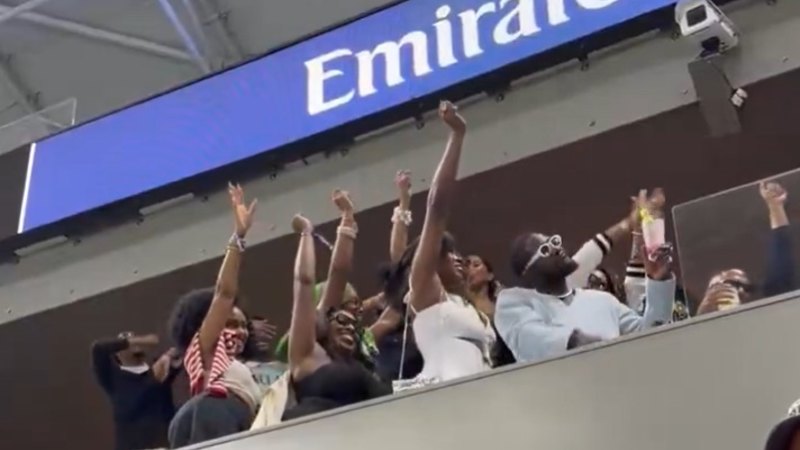
It came to a head courtesy of a viral video of a group of influencers loudly recording themselves while Naomi Osaka and Anastasia Zakharova were playing on centre court.
“Hey, guys. We’re back. Did you miss us? Because we missed you,” the group chanted in unison, followed by a cheer: “Wooooo!” Also captured in the video: a fed-up tennis fan, slumped in his chair, head in his hand. The umpire intervened, pausing play to tell the group to please take their seats.
Later, Osaka welcomed the effort to get influencers to the biggest stages in tennis, but called for respect. “You want people to continue to grow the sport,” she said. “I just think it has to be in a way that everyone knows the rules and the etiquette.”
Advertisement
The tennis world loves to agonise over the implications of changes that attempt to broaden the sport’s appeal. Most agree it is great to grow the audience, in theory. Not everyone likes the results.
Under former tournament director Craig Tiley, the Australian Open arguably did more than any grand slam to change the look and feel of tennis. Tiley’s mantra was constant evolution and constant growth, with food, music and entertainment as important as the tennis itself. He proudly announced 30 to 40 per cent of attendees didn’t actually watch any tennis while they were there.
Indeed, Tennis Australia was working with influencers before the Americans. There were 200 content creators at this year’s Australian Open, up 50 per cent, The Herald Sun reported. There is even a dedicated “creator lounge” at Melbourne Park. And they induced the same grumbling among some fans, one of whom told the ABC: “I’ve witnessed them on their phones, talking, leaving early.”
Advertisement
The enviable growth of the Australian Open under Tiley led the USTA to seek him out as its chief executive. He only took the reins in July, but it’s likely future US Opens will head even further in the Tiley direction. The USTA did not make him available for an interview.
Don’t expect the same at Wimbledon, the staid UK grand slam where players must wear white. Organisers have reportedly ruled out establishing credentials for influencers following the US Open controversy.
But aside from the aforementioned disruptive moment at Arthur Ashe Stadium, it did not feel like influencers had taken over Flushing Meadows.
Yes, it can be noisy in the stands, but New York spectators have always had that reputation. On Friday, defending champ Aryna Sabalenka stopped play during her third round match to complain about the smell of marijuana. “Someone is smoking weed,” she told the umpire. “It’s so strong.”
Advertisement
Crowd behaviour has come a big talking point, including among the creators themselves. “I’ve seen some of the videos,” says 22-year-old Emily Adawi. She caught my eye as she posed for pictures outside centre court with her friend Anas Sawalhi.
They were dressed to impress: she in an AQUA dress, Dior bag, and Sam Edelman heels, and he with a green, double-breasted Zara suit jacket with white pants. They called themselves content creators.
“We love to dress nice,” says Sawalhi, 23. “Any of the different events that we’re at, it’s a good outfit, good vibes, good food and of course good drinks.”
The pair say they are also tennis fans and, unlike the 100 creators who were given credentials by the US Open, they paid for their own tickets. And when I check their follower counts later, it’s likely they won’t be influencing much anytime soon. But they have solid advice.
Advertisement
“There’s a time and place on when to flick up [pose for a picture], when to bring out the tripod and all the extra lighting,” said Sawalhi. “It’s obviously disrespectful while the game is actively going on.”
There are also content creators here who are dedicated to tennis: not there to preen in front of the camera, but to bring the sport to a new generation of fans through serious coverage on social media.
Patricio Campos of Chile makes tennis content for more than 70,000 Instagram followers on VTC Tenis, which is dedicated to Chilean tennis players, as well as his own TikTok account, with nearly 13,000 followers. He covers the sport, he doesn’t do fashion – but he has seen the influencers who do.
“If you go [to] Louis Armstrong or Arthur Ashe [stadiums], sometimes people are taking pictures in the middle of points and recording themselves instead of watching the match,” the 34-year-old Campos says. “I find it weird. But it’s their own business, I don’t care. They do their stuff, I do mine.”
Advertisement
Joe Bonham, the sports content creator from Dallas, thinks people ought to be more courteous and less dismissive towards influencers.
“Content creators and influencers are created a lot like fast food workers. Everyone consumes it, but then they treat some of the people who are doing it like crap,” he says.
“I get [that] some influencers can be obnoxious sometimes. But there are influencers who deal with a lot of people who are hating on them in the comments, too.”
News, results and expert analysis from the weekend of sport sent every Monday. Sign up for our Sport newsletter.
You have reached your maximum number of saved items.
Remove items from your saved list to add more.
More:
Michael Koziol is the North America correspondent for The Age and Sydney Morning Herald. He is a former Sydney editor, Sun-Herald deputy editor and a federal political reporter in Canberra.Connect via X or email.AdvertisementAdvertisement