
Article content
Stock investors are caught between the pull of strong earnings and mounting macroeconomic risks.
Sign In or Create an Account
or View more offersArticle content
Markets in the United States and Europe have traded sideways for a month as the boost from the earnings season shows fatigue. Equities are not only facing the possibility of interest-rate hikes by the U.S. Federal Reserve, but also an escalation of the conflict in the Middle East and U.S. midterm elections that remain too close to call.
Article contentWe apologize, but this video has failed to load.Try refreshing your browser, or
tap here to see other videos from our team.We apologize, but this video has failed to load.Try refreshing your browser, or
tap here to see other videos from our team.Article content
Story continues below
This advertisement has not loaded yet, but your article continues below.
Article content
“Micro is getting more encouraging, while the macro is getting harder,” said Richard Privorotsky, head of European one-delta trading at Goldman Sachs Group Inc. Artificial intelligence is advancing rapidly, and tech results should offer plenty of positives for the sector, he said. Still, “energy is objectively problematic and inflation/rates are back in play.”
Article contentArticle contentArticle content
Last week’s jobs data indicated the U.S. economy was still running strong, while Brent is close to US$100 a barrel. Fed officials have made it clear that Friday’s inflation print will be key for rates. While the bond market sees a 60 per cent chance of a hike next week, such a move isn’t fully priced in until December. In fact, Fed funds futures signal the most uncertainty in years.
Article content
A setback from a hike could be short-lived, if historical trends hold. “Equities dislike the restart of Fed tightening, with the S&P 500 typically weakening over the next one to three months,” said Societe Generale strategist Manish Kabra. “Yet six months later, the market has often recovered to fresh highs. Until the curve inverts, history argues for buying the hike, not fearing it.”
Article content
Story continues below
This advertisement has not loaded yet, but your article continues below.
Article content
The main exception was in 2022, when the yield curve inverted. Inversions often precede recessions and typically foreshadow equity drawdowns of about 20 per cent. Without a yield-curve inversion, Kabra recommended investors keep buying U.S. stocks, especially now that the benchmark’s price-to-earnings ratio has already de-rated nearly 15 per cent.
Article contentArticle contentRead More
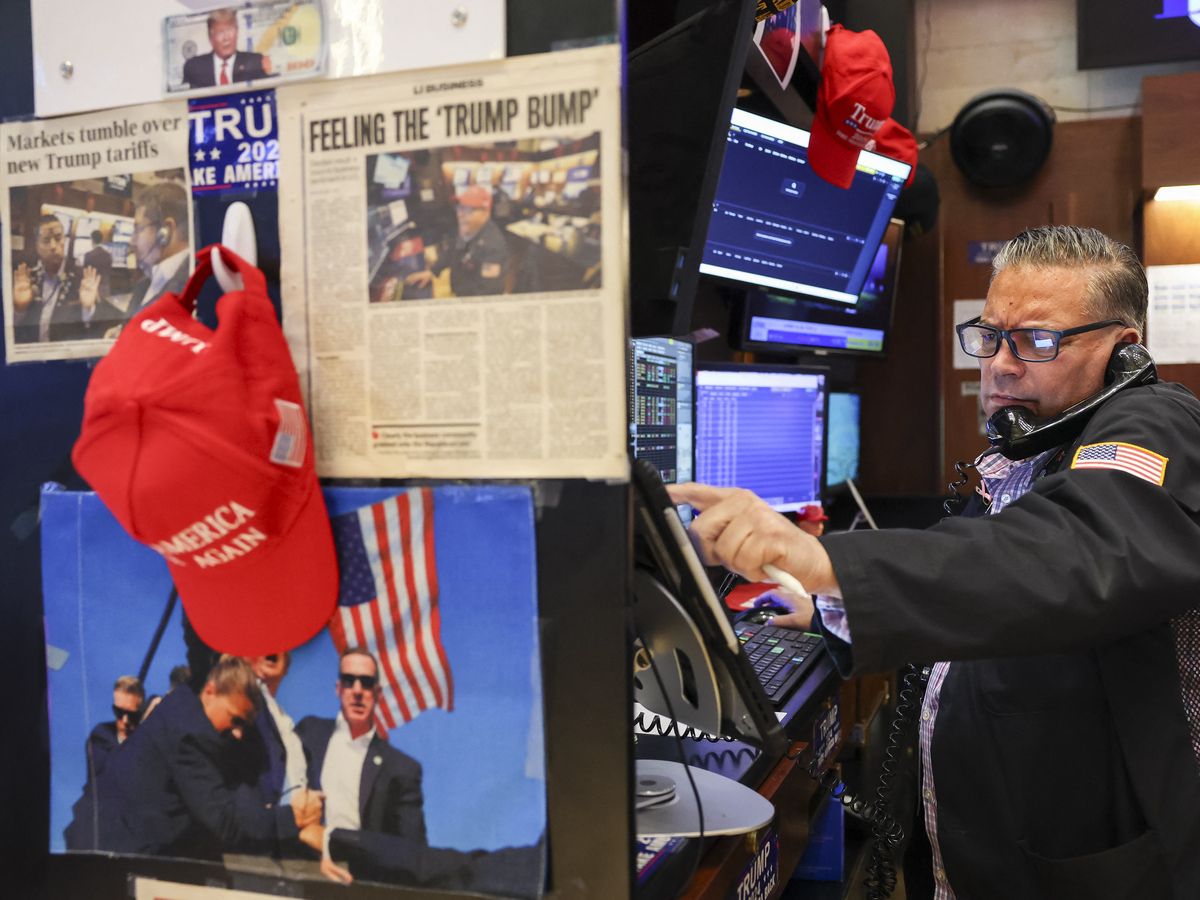
- A trader works on the floor of the New York Stock Exchange (NYSE) during the opening bell in New York, on May 11, 2026.
- Trump backlash adds new risks to the stocks the government owns
- Story continues belowThis advertisement has not loaded yet, but your article continues below.
Article content
As well, U.S. midterms are less than two months away and look particularly difficult to hedge. Stocks tend to be weaker in the run-up to elections, only to rally afterward. This time, the bigger challenge may emerge further down the road if the Trump administration finds it harder to push through policies.
Article content
The biggest challenge for markets would be a Democratic sweep. Bank of America Corp.’s Michael Hartnett expects a big flight from risk in such a scenario, including a slump of more than 10 per cent in stocks, a weaker U.S. dollar and stronger bonds. The best hedge against such an outcome is to short financials and the greenback.
Article content
By contrast, a surprise Republican sweep would likely trigger big risk-on moves, including a “green light for an AI bubble” and a stronger dollar. A scenario of “GOP Senate, DEM House” would see a modest risk-on response, where “gridlock equals Goldilocks,” Hartnett said.