
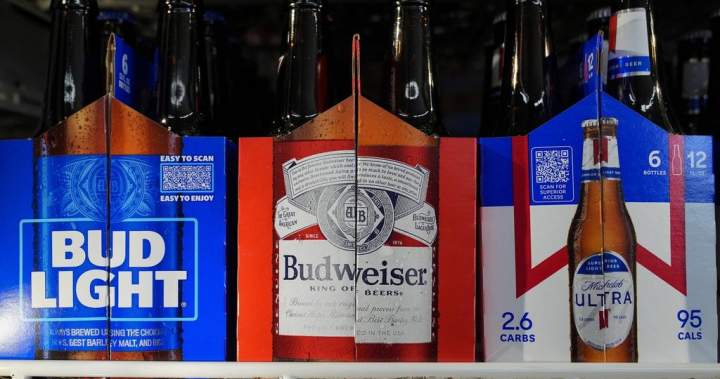
Saskatchewan’s government is set to slap its retaliatory tax on American booze today amid the ongoing Canada-U.S. trade war.
Saskatchewan Premier Scott Moe announced last month his province would implement the 50 per cent fee on American alcohol on the same day Canada’s reciprocal tariffs take effect.
The move came after trade talks broke down between Canada and the United States.
U.S. President Donald Trump implemented a 50 per cent tariff on Canadian liquor and a range of other goods.
Get breaking National news
Get breaking Canada news delivered to your inbox as it happens so you won’t miss a trending story.
By providing your email address, you have read and agree to Global News’ Terms and Conditions and Privacy Policy.
In return, Prime Minister Mark Carney promised to hit back with dollar-for-dollar retaliatory tariffs.
Any U.S.-produced alcohol purchased through the Saskatchewan Liquor and Gaming Authority’s online ordering system, used by retailers across the province, is being hit by the levy.
Unlike other Canadian provinces, Saskatchewan and Alberta do not have a ban on American alcohol products.
Story continues below advertisement
Alberta Premier Danielle Smith hasn’t followed Saskatchewan’s lead by implementing a reciprocal tax. Following Moe’s announcement, she said her cabinet would consider it.
Moe has said U.S. liquor would remain on store shelves, because the province doesn’t want to limit the public’s ability to choose.
- Back-to-school looks different for university students campaigning in Quebec election
- Inside the Ford government’s pause on all freedom of information requests
- Alberta separatist leader Rath faces $109M debt claim from US investors
- Frechette holds mid-campaign cabinet meeting ahead of counter-tariffs
-
Ottawa’s counter-tariffs kick in Tuesday: Economist breaks down what Canadians can expect
-
The impact of Canada’s counter-tariffs at home
-
Labour Day thoughts on the U.S-Canada trade war
-
Hope for workers after province announces talks with Howe Sound mill operators
“That is a very important core value for this government,” he said in late August.
He added that residents have been showing support for Canadian products with their wallets, as American booze sales in Saskatchewan are down by about 40 per cent.
“I think that actually sends a much stronger message than any government-ordered ban,” Moe said. “The sale of Saskatchewan-made products has increased at the very same time.”
Opposition NDP Leader Carla Beck called the Saskatchewan Party government’s move a “weak and gutless response” to Trump’s attack on Canada’s sovereignty and economy.