
Advertisement
September 8, 2026 — 6:00pm
You have reached your maximum number of saved items.
Remove items from your saved list to add more.
Spare a thought for Australia’s 15-year-olds. Life can be hard enough without representing the nation in international maths, science and reading tests, and then falling short of the 15-year-olds who attended school at the turn of the millennium by two and a half years.
In the latest OPEC Programme for International Assessment, the current cohort of high school students recorded their worst results in reading and mathematics. Science results across the country have flatlined.
Australia now ranks 11th in the world for reading and science and 17th for mathematics. The country was outperformed by Singapore, Poland and the United Kingdom in mathematics, and New Zealand, Ireland and Estonia in reading.
Advertisement
The decline in NSW’s results was not as severe as that in other states and territories.
The world’s largest international assessment of student learning, PISA, measures how well 15-year-old students who are nearing the end of their formal education can apply their knowledge and skills in reading, mathematics and science. This year, more than 760,000 students from 91 countries and economies, including 15,000 Australians, took part.
PISA’s testing has always been controversial. Many argue, fairly, that a country’s education systems shouldn’t be judged on the results produced by a sample of 15-year-olds (an age group notoriously unenthusiastic about exams, especially when they don’t see their results) and that international rankings are inherently flawed.
Nevertheless, the Australian 15-year-olds chosen from all school systems to sit the first PISA tests in 2000 did exceptionally well. Results have been declining or treading water since, as other countries in the OECD improved.
Advertisement
For Australia, the most telling comparison is between its own 15-year-olds. The fact that the latest cohort was two and a half years behind the cohort of 2000, and a year and a half behind the cohort of 2018, should give us pause.
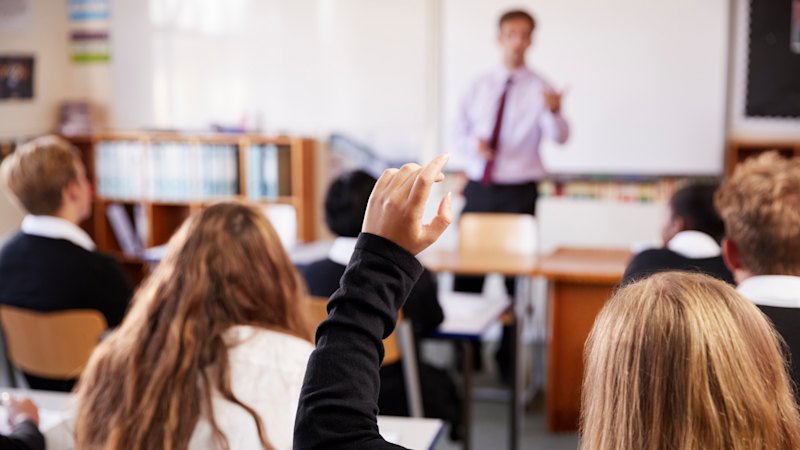
Since the turn of the century, the diminution has ridden side by side with radical changes in the school experience. Schools have had to navigate the arrival of mobile phones, laptops in class and artificial intelligence, coupled with what many consider to be higher rates of classroom inattention and noise, creating a tsunami of distractions.
Little wonder, then, that the impact continues to wreak damage. Australian students recorded more disruptive classrooms than 68 countries.
The PISA results are a reason to remain concerned about whether Australian education can turn around the persistent decline, particularly as the latest results in NAPLAN – a more valid measurement than PISA – show a third of NSW’s year 3 students were failing to meet expected numeracy benchmarks.
Similar countries have managed to turn their results around. The standout success story in this year’s results was the United Kingdom, which leaped three places in reading, four places in mathematics and seven places in science.
Advertisement
A safe and relatively wealthy country, Australia owes its children a high-quality education that equips them for an uncertain future. Improving results is a slow process, but the United Kingdom has shown it can be done.
Start the day with a summary of the day’s most important and interesting stories, analysis and insights. Sign up for our Morning Edition newsletter.
You have reached your maximum number of saved items.
Remove items from your saved list to add more.
More:
The Herald’s View – Since the Herald was first published in 1831, the editorial team has believed it important to express a considered view on the issues of the day for readers, always putting the public interest first.AdvertisementAdvertisement