
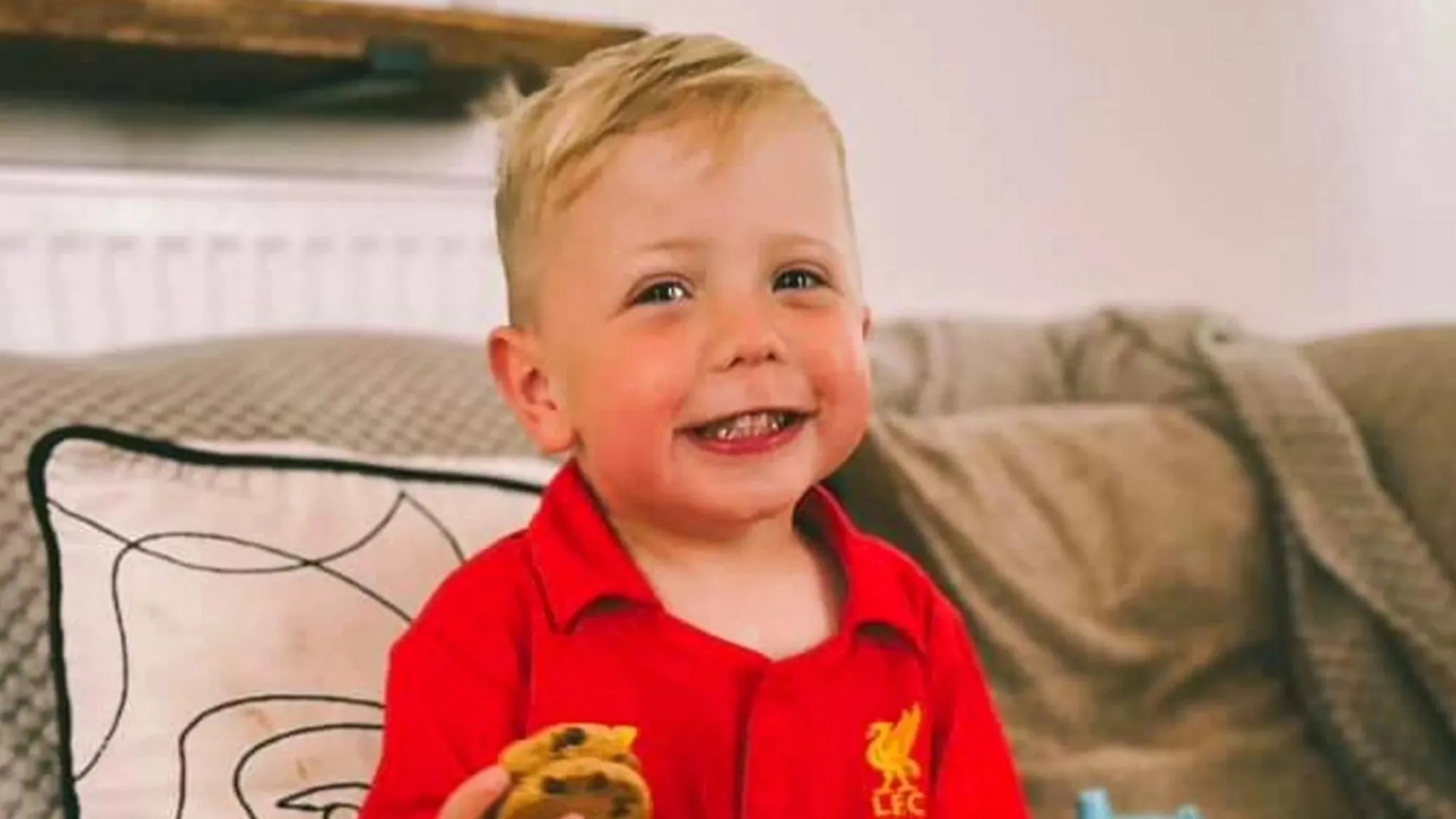
THE heartbroken family of a two-year-old boy who died from sepsis after doctors “misdiagnosed him with constipation” have won a payout from the NHS.
Hudson Cole Perrins was taken to Wolverhampton’s New Cross Hospital by his worried dad after he suddenly started complaining of stomach pains in June 2024.
6
6
The tot was assessed by doctors who said he had constipation before sending him home after giving him two suppositories, laxatives, and an enema.
An enema involves inserting liquid directly into the rectum to help patients clear stools.
But, just four days later the “boisterous and cheeky” toddler passed away at Birmingham Children’s Hospital from multiple organ failure and sepsis caused by a urinary tract infection.
Heartbroken mum Kayleigh Taundry has spent over two years fighting for answers and has now won an undisclosed settlement after Royal Wolverhampton NHS Trust admitted failures in its care.
READ MORE ON SEPSIS
‘AWFUL’
Man, 36, diagnosed with sepsis died after A&E discharged him due to overcrowding
SUBTLE SIGNS
Student who thought she had a hangover was hours from death after tonsillitis
Kayleigh had worked as a nurse for the same trust for 18 years but said she left her job in April as she felt she could no longer dedicate her time, skills and profession to a trust which “failed her son”.
She added: “It’s devastating to think that on top of everything else, Hudson was left in pain in his last few days when it didn’t need to happen.
“Nothing will ever bring Hudson back, but it means a great deal to finally have it accepted that he should have been given pain relief and that his catheter should have been checked properly.
“I hope this settlement, and the failures it has brought to light, mean lessons are genuinely learned so another family doesn’t have to go through what we have.”
Most read in Health
SUPPLY SLOWS
Millions on top NHS drug forced to RATION meds for months amid shortage crisis
EYE SPY
Tiny mark under your eye ‘indicates your risk of stroke in the next 10 years’
TAKE NOTE
The 5 little-known signs of blood cancer as BBC star reveals incurable diagnosis
BRAIN DRAIN
Dementia could be ‘REVERSED’ as surgery ‘flushes out toxic proteins’ from brain
Hudson was first taken to the hospital in the early hours of June 23, 2024 by his dad where doctors felt hardness in his tummy and concluded it was constipation.
Kayleigh and her partner, Shannon Waightman, took Hudson back to New Cross Hospital the following day when he began having seizures and was still in pain.
He was later transferred to the Paediatric Intensive Care Unit at Birmingham Children’s Hospital, where he died on June 27 after his parents took the heartbreaking decision to turn off his life support.
His cause of death was given as a brain injury caused by a urinary tract infection that affected his kidneys and caused sepsis.
Kayleigh stressed that she in no way blames Hudson’s dad for what happened when he first took Hudson to hospital, but believes staff should have made more efforts to contact her as Hudson’s next of kin.
Kayleigh, from Willenhall in the West Midlands, said Hudson had a complex medical history which included bladder and kidney issues as well as a heart problem.
6
6
She believed that hospital staff took the “obvious” route of diagnosing and treating constipation instead of investigating other options, even when there was little evidence of constipation.
She claims Hudson’s death could have been prevented if staff at New Cross Hospital had given him pain relief and checked him properly before he was left in pain in his last few days.
At an inquest in December 2024 Black Country Coroner Kelly Dixon heard that the trust had not followed its own guidelines when Hudson was first assessed in A&E.
Kayleigh said previously: “He was one month from turning three.
“He was very cheeky and boisterous, but really loving as well. He really loved a cuddle and was really affectionate.
“He was our baby. Hudson was born with a heart defect and had to undergo heart surgery at seven months old.
“We thought that would be the worst hurdle he would have to overcome.
“He was finally turning a corner. He was finally catching up, he was finally starting to develop alongside his peers, he was finally starting to talk and we just didn’t expect this at all.
6
6
“We are all still in denial. I can’t put it into words – he was a beautiful boy.”
In a statement, The Royal Wolverhampton NHS Trust denied that its diagnosis, and its decision not to investigate further, amounted to a breach of duty.
However, it did admit Hudson should have been given pain relief earlier, and staff should have checked how much fluid was draining into his catheter bag but has not accepted that either failure caused his death.
RECOMMENDED STORIES
Michael Portman-Hann, from law firm FBC Manby Bowdler, which represented the family, said: “While the trust maintains that these failures didn’t affect the eventual outcome for Hudson, his family will always be left wondering whether he suffered more than he should have in his final days, and that is something no parent should have to carry.”
A spokesman for the Royal Wolverhampton NHS Trust said: “As this claim is an ongoing matter it would not be appropriate for the trust to comment at this time.”
Sepsis – the worrying statistics
- There are at least 245,000 sepsis cases in the UK annually, with around 48,000 deaths (that’s five every hour)
- There are almost 50million cases of sepsis globally every year, resulting in 11million deaths
- As many as 40 per cent of cases are in children under the age of five
- One in five deaths globally is associated with sepsis
- Sepsis is the number one cause of death in hospitals
- It is also the most common reason for hospital admission
- Around 40 per cent of survivors have one or more cognitive, psychological or physical after effect
- Sepsis kills more people than breast (11,400), bowel (16,300) and prostate cancer (11,700) combined (39,400) in the UK