
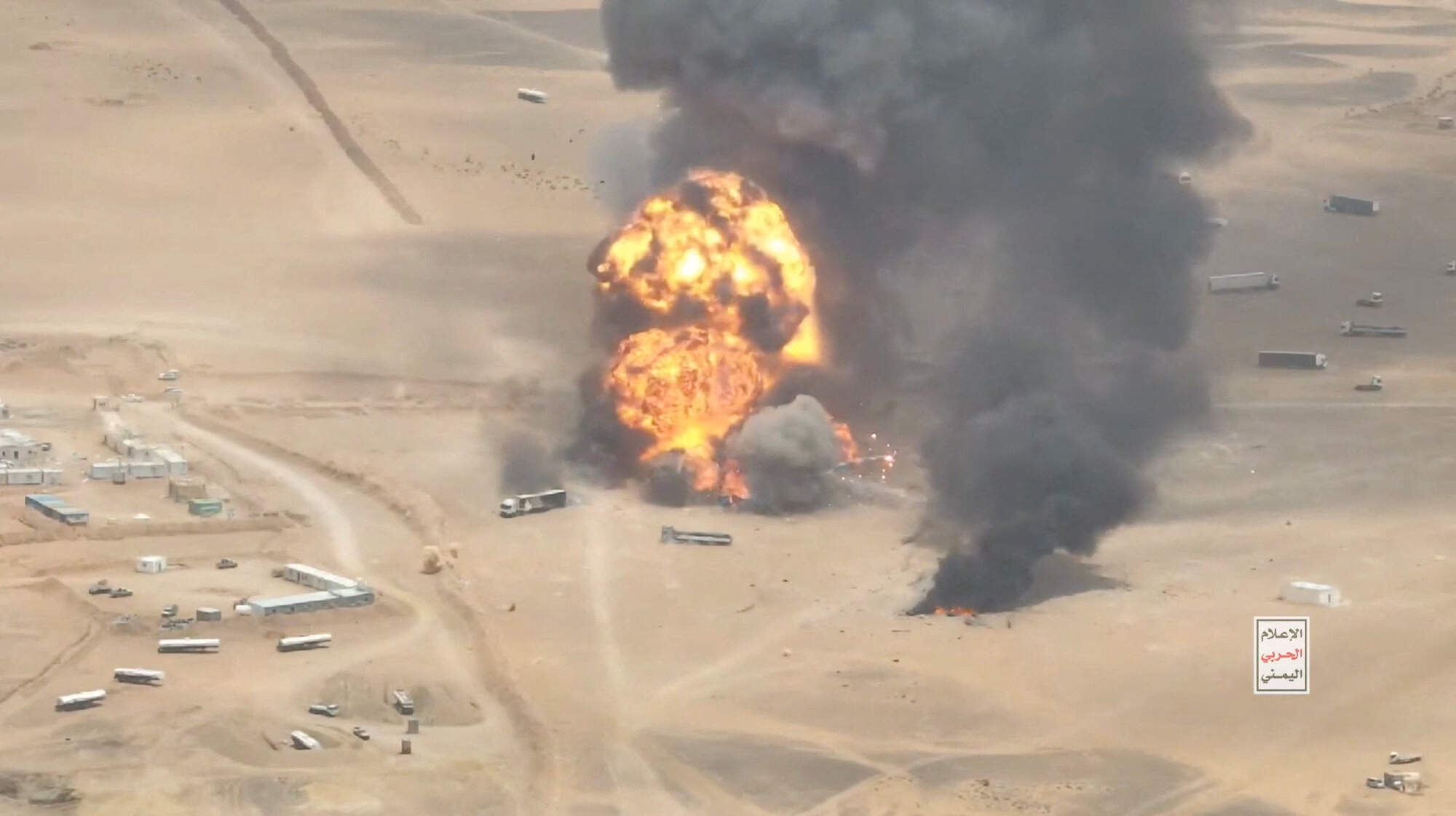
Yemen‘s Tehran-backed Houthis have attacked energy facilities and cities in US ally Saudi Arabia, wounding more than 70 people and underscoring the risk of the Iran conflict escalating into a wider regional war.
The six-month-old conflict in Iran has been marked by a cycle of pauses followed by periodic flare-ups since the U.S. and Israel launched attacks on February 28 that were aimed at ending Tehran’s nuclear programme, halting its ability to attack its neighbours and curtailing its support for regional proxies.
The Houthi attacks came after Iran warned that energy infrastructure across the Gulf, including US oil and gas interests, was vulnerable in the wake of a tit-for-tat exchange of attacks on ships in and around the Gulf last weekend. The attacks sent oil prices climbing to more than six-week highs.
Fires erupted at some energy facilities and several people were injured as firefighting and other emergency teams rushed to the scenes to contain the blazes, the Saudi energy ministry said.
At least 73 people were wounded in attacks on four cities in the south of Saudi Arabia, a spokesperson for the Saudi-led coalition in Yemen said.
“The coalition will take all necessary operational measures to deter this terrorist militia and resolutely confronts its hostile approach,” Colonel Turki al-Malki said in a statement on X.
The Houthis, who control the most populous parts of Yemen and much of the north, have been launching attacks towards Saudi Arabia since they declared a naval blockade against Riyadh in July, with strikes targeting its vessels in the Red Sea.
Disruptions to shipping through the Red Sea have added to worries about global oil and gas supplies with Iran continuing to limit shipping through the critical Strait of Hormuz, with commodity vessel traffic slowing again this week.