
Advertisement
September 8, 2026 — 11:59am
You have reached your maximum number of saved items.
Remove items from your saved list to add more.
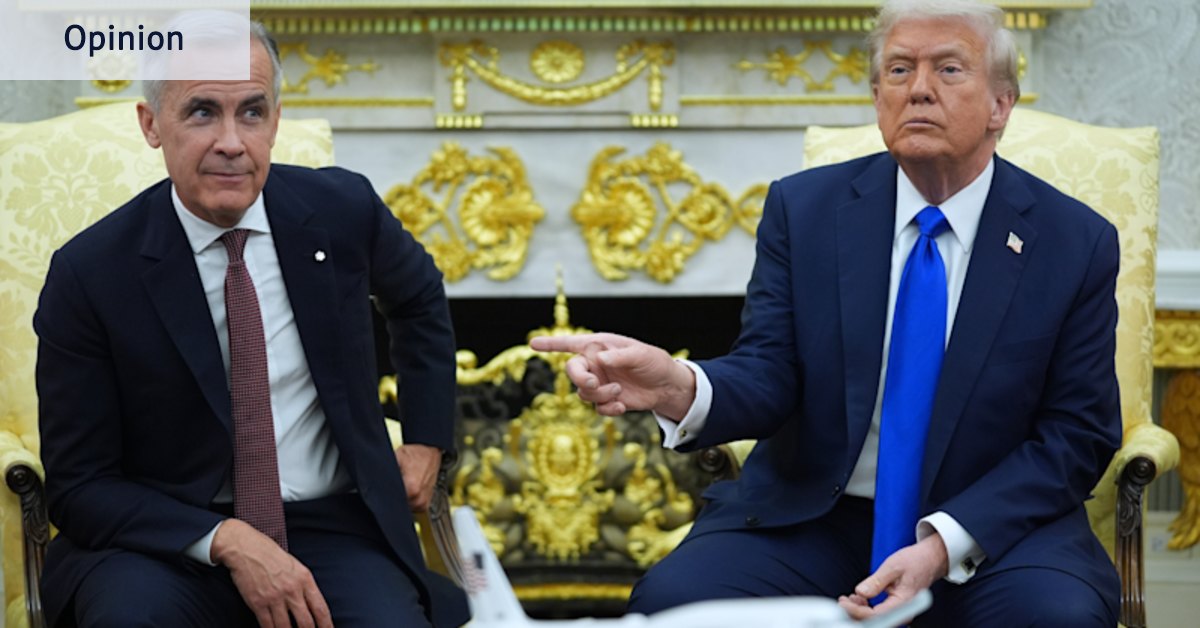
Canada’s Mark Carney has risked an escalation in trade hostilities with the US by following through with his foreshadowed retaliatory tariffs on US imports.
Just after midnight on Monday, Canada’s retaliatory tariffs on about $US20 billion ($28 billion) of US exports went live, making Canada, with China, the only significant economies willing to stand up to Donald Trump’s trade bullying.
The tariffs are a response to a similar dollar amount of new tariffs on Canada’s exports to the US that the Trump administration imposed last month after talks between the countries – held against the backdrop of Trump’s threat of those tariffs unless Canada made a range of trade concessions – broke down.
While willing to accept some duties and to tighten rules of origin that might have shifted more of the North American auto industry supply chain across the border into the US, last-minute demands from the US negotiators – abolishing Canadian French language local content rules and quotas, exclusive access to Canada’s minerals and restrictions on its ability to sign trade deals with other countries – caused Carney to end the negotiations.
Advertisement
The US proceeded with its new tariffs on Canadian autos, dairy, alcohol, metals and consumer goods and now Canada has matched them on a dollar-for-dollar basis, targeting US apparel, timber, steel and aluminium, agricultural equipment, appliances, pulp and paper, plastics and electronics.
Both countries had pre-existing tariffs, dating back to Trump’s initial declaration of a trade war on the rest of the world last year, his singling out (absurdly) Canada for its alleged role in fentanyl exports to the US and, more recently, a 10 per cent rate (along with much of the rest of the world) for its claimed failure to do enough to halt imports of goods made with forced labour.
Canada had responded to the earliest of those tariffs with duties of its own, but the effective rate on US imports was only just above one per cent. With this week’s counter tariffs, it is now closer to 4 per cent. The effective rate of the tariffs on Canadian imports to the US was around 3 per cent before the recent changes. It’s now closer to 6 per cent.
Carney’s willingness to stand up to the US is brave, bordering on foolhardy, given that nearly 70 per cent of Canada’s exports go to the US and that he doesn’t have the rare earths monopoly that China used to force Trump to back away from his direst trade threats to its economy.
Advertisement
There is some shelter from the United States-Mexico-Canada free trade agreement (USMCA), although that hasn’t stopped Trump from targeting Canada (or Mexico) with tariffs so far.
Trump has been trying to use the threat of walking away from the USMCA (which he negotiated in his first term) as leverage to force more trade concessions from Canada and Mexico (although America’s withdrawal from the USMCA would take a decade), with Mexico more willing than Canada to do a new deal.
While Canada’s retaliation might provoke even stronger action from the US – Trump has threatened more tariffs and even (along with some other major US trading partners) the end of all trade – the three economies within the USMCA are highly integrated.
Canada might be harmed more, but the US would also suffer self-harm if it responds to Canada’s new tariffs by raising its own.
Advertisement
By far the largest of Canada’s exports to the US are oil and refined products. It accounts for about 60 per cent of America’s oil imports. Because the oil is extracted from oil sands and is heavy, viscous and contains sulfur and metals, it requires specialised refining. Refineries in Texas and Louisiana process the imported oil.
Trump hasn’t included Canadian oil, yet, in his list of sanctioned products. That would be self-destructive.
Canada is, however, trying to diversify the customer base for its oil (and protect itself from the threat that America might displace its exports with similarly heavy Venezuelan crude) by planning to build a pipeline from its oil fields to the Pacific coast that would give it access to the Asian market.
The Canadian and US auto and auto parts industries are closely entwined – auto parts can cross the border several times (and be charged duties each time) before vehicles are fully built – so tariff disruption will hurt both economies and their US company-dominated auto industries.
Advertisement
Last year Canada exported $US9.9 billion of aluminium and aluminium products to the US, for use in the auto industry, in cans, construction and a raft of other purposes. The US gets about 70 per cent of its imported primary aluminium from Canada and nearly 60 per cent of all its aluminium and aluminium products imports.
The US aluminium industry has shrunk over decades, with some of the major US producers, like Alcoa, shifting their operations to Canada, with his vast hydroelectric power resources that provide cheap electricity to an exceptionally energy-intensive sector.
Canada might be harmed more, but the US would also suffer self-harm if it responds to Canada’s new tariffs by raising its own.
Trump might want to use tariffs to force companies to reshore activities to the US, but the US grid doesn’t produce electricity cheaply or reliably enough (and Trump is trying to stifle renewable sources) to compete with Canada.
If Trump does escalate, Canada does have options that would hurt the US, create supply shortages and raise costs for US businesses and prices for US consumers.
Advertisement
While Canada and Canadians would also suffer – unlike Trump, some in his administration and many of his MAGA supporters, they understand how tariffs work and who pays the duties – they appear prepared to accept that as the price of sovereignty.
Trump’s continued rumblings about the “51st state” have drawn Canadians together in their support for Carney and his response.
Carney has also been busy since winning his office in March last year, negotiating a raft of trade agreements with other countries to try to diversify his economy away from its over-reliance on the US. That, no doubt, is why Trump’s negotiators tried to restrict its ability to do trade deals with third parties.
Loading
Thus, in the longer term, Trump’s ill-conceived trade assault on America’s closest ally and trading partner is likely – as is the case with other allies of long-standing – to lead to a fundamental change and distancing in the economic and political relationships between the countries.
Advertisement
Trump isn’t helping to lower the temperature with his continuing threats and juvenile social media posts, including one very recently which depicts Trump skating on ice, dressed in full ice hockey gear, savagely beating Carney with a hockey stick.
Trump, of course, has never been seen on skates of any kind, while Carney was a very active and competitive ice hockey player in his youth, including a stint as the reserve goalkeeper for Harvard’s team. Trump’s post is rightly being criticised, and ridiculed.
Renaming Lake Ontario as Lake America, continuing to post maps of the United States that include Canada as a state and referring to Carney as “governor,” aren’t going to shift the increasingly anti-American sentiment in Canada.
Nor will they endear Trump to the rest of the nations that have been hit by Trump’s tariffs and will watch how Canada’s stand against Trump’s tariffs and intimidation plays out. If others showed similar resolve, Trump’s leverage – the threat of more tariffs – would be undermined.
The Business Briefing newsletter delivers major stories, exclusive coverage and expert opinion. Sign up to get it every weekday morning.
You have reached your maximum number of saved items.
Remove items from your saved list to add more.
More:
Stephen Bartholomeusz is one of Australia’s most respected business journalists.Connect via email.AdvertisementAdvertisement