
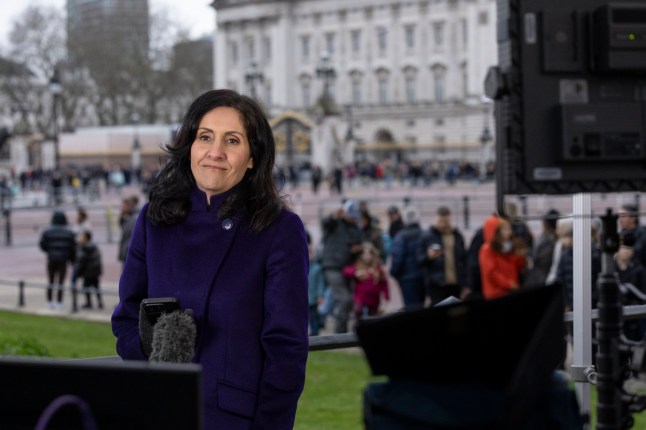
BBC News presenter Maryam Moshiri revealed she has been diagnosed with a rare blood cancer.
The presenter of The World Today with Maryam Moshiri shared she received the diagnosis of polycythaemia vera (PV) in November 24.
The 49-year-old has been undergoing treatment for the rare type of cancer, but the disease will be in her body ‘until the day I die,’ Moshiri told The Times.
The mum-of-three said: ‘It is going to be there until the day I die.
PV affects the bone marrow, causing it to continuously produce red blood cells, thereby thickening the blood.
‘A big part of this disease is having to get on with life.’
Moshiri underwent a procedure called venesection, or phlebotomy, around twice a month.
It involves removing almost a pint of blood through a vein to reduce the number of red blood cells.
She said the first round of immunotherapy treatment called interferon left her feeling like she was itching ‘from inside’ of her, along with insomnia and fatigue, while it reduced the number of venesections she needed.
Moshiri told The Times: ‘I was itching until I was bleeding through to my clothes, I have scars all over my stomach from the itching.’
Eventually, she was able to switch to a different drug with less severe side effects.
Throughout the cancer journey, she continued to work for the broadcaster, including long days leading the coverage of Pope Francis’ death.
She said: ‘I was working 14-hour days, constantly on air, constantly having to think on my feet, and holding it together, despite the fact that I had this chronic tiredness and fatigue.
‘When you’re doing live news, you have this rush of adrenaline, and you just have to get on with it.’
While adjusting to a ‘different life’ has been challenging, the future ‘punctuated by hospital appointments and loads of medication’ is better than dying ‘of a horrible cancer,’ Moshiri said.
‘But it’s something that you have to get your head around,’ she added.
The veteran news presenter shared on an Instagram post that she is supporting Blood Cancer UK and its Here for This campaign to shed light on the ‘moments people with blood cancer can miss because of gruelling treatments, side effects or time spent in hospital, while also celebrating the milestones and moments that research and better treatments make possible.’
What is polycythaemia vera (PV) blood cancer?
The rare form of blood cancer known as polycythaemia vera (PV) is a slow-growing cancer prompting the body to make too many red blood cells within the bone marrow.
It thickens the blood more than usual, increasing the risk of blood clots (thrombosis) as it is harder for it to flow through the veins.
Those with PV can also have a higher risk of sudden bleeding.
While PV cannot be cured completely, treatment can help to control it, including lowering the risk of clots.
Comment now
Comments
Add Metro as a Preferred Source on Google
Add as preferred source