
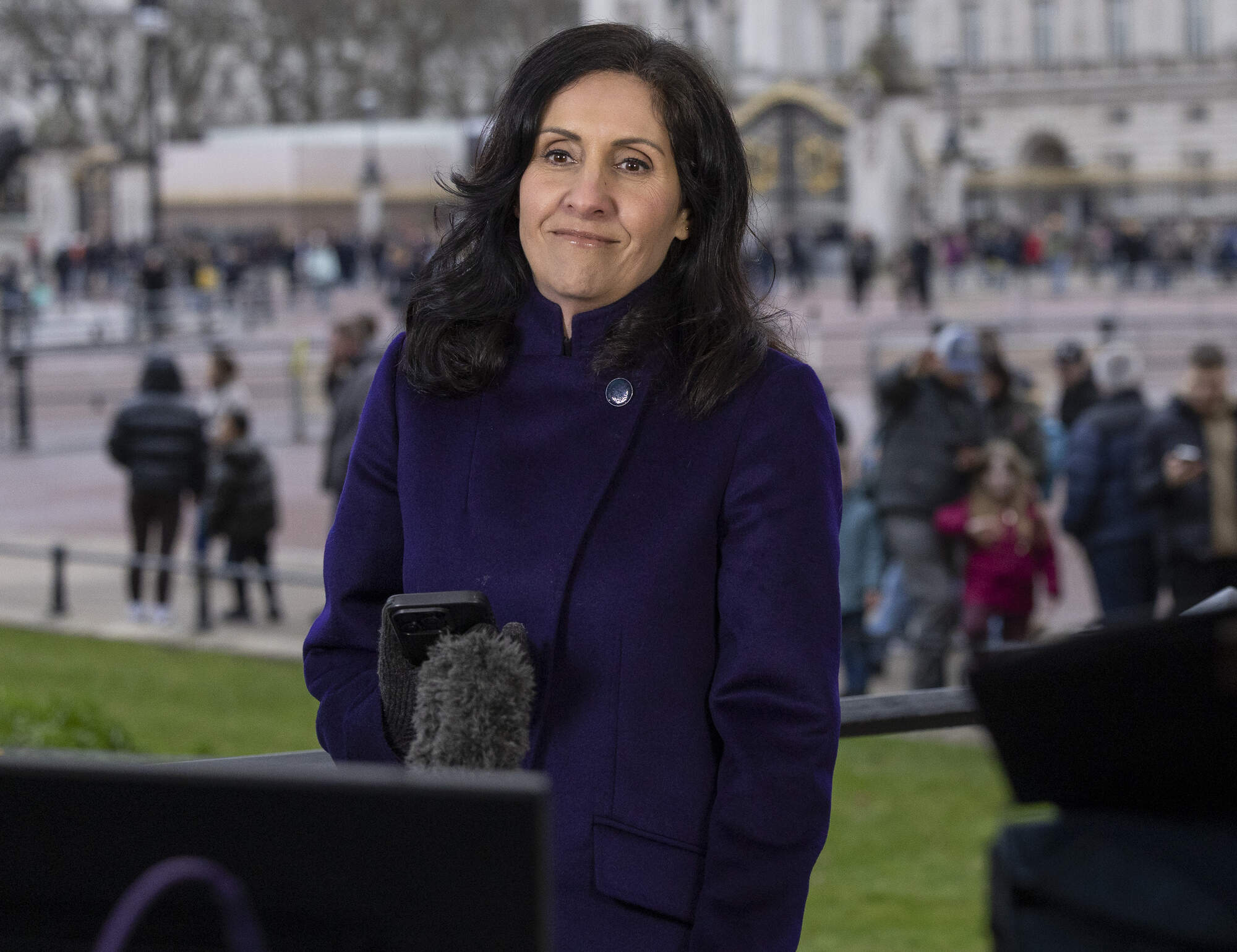
The 49-year-old is sharing her diagnosis to raise awareness of a cancer charity
BBC News presenter Maryam Moshiri has revealed she is living with blood cancer.
The 49-year-old was diagnosed in November 2024 with polycythaemia vera (PV), which cannot be cured but is treatable.
She said: “When I was first told to have blood tests, I wasn’t worried because I didn’t really have any symptoms. I thought: It can’t happen to me.
“Even after I was told I had PV, I didn’t really understand what it meant.
“It was a cruel blow to realise that while I could have treatment, this was a cancer that was incurable.”
PV is rare, affecting about 8,000 people in the UK, and usually develops slowly.
With this type of cancer, the body makes too many red blood cells, which makes the blood thicker than normal.
This leads to a higher risk of developing blood clots, which can cause a stroke, heart attack or deep vein thrombosis (DVT).
Symptoms include headaches, blurred vision, fatigue, night sweats and burning pain in the hands and feet.
Moshiri, who has three children, began taking daily aspirin and underwent regular venesections to reduce her red blood cell count.
They involve a needle being put into a vein in the arm to slowly draw blood out, which can help reduce blood thickness.
She said: “The treatments were working but they left me feeling really weak with horrendous fatigue, like someone had taken your batteries out.”
She continued with her job despite suffering symptoms, adding: “When you do live news you get a rush of adrenaline, but I was doing long days under pressure while dealing with chronic tiredness.
“Back home I would zonk out on the sofa for hours to recover.
“It really made me reflect on the fact that there are so many misconceptions about blood cancer and the fact it’s a ‘silent or hidden’ cancer.
“People think you have chemotherapy and then you are cancer-free but for many people like me it is a chronic condition.
“You have to live with it, the treatments and the side-effects around your everyday life, and that’s hard.”
As her symptoms worsened, the presenter researched her condition and discovered she was eligible for Interferon, a treatment that boosts the immune system.
But she suffered debilitating side-effects from the treatment.
She said: “I had constant headaches, insomnia and horrendous itching that felt like it came from inside my body.
“I was itching until I was bleeding through my clothes. I have scars all over my stomach.”
By Summer 2025, Moshiri had hit a low point. Her cancer was badly affecting her life with husband Jonathan and children Iris, 13, Vivienne, 11, and Caspian, nine.
“My iron levels were low and the treatment was making me feel so unwell,” she said.
“I remember going to my GP and crying. I was trying to work, look after three children, and support my elderly parents, including my dad who had dementia.”
In November last year, Moshiri switched to Pegasys, a weekly injection.
While it still caused fatigue, it has proved effective.
She said: “I didn’t tell the kids about my diagnosis for a long time, but eventually I had to explain why I couldn’t play football with them or was spending so long on the sofa.
“When I told my daughters I had chronic cancer, they asked: ‘Are you going to die, mummy?’ It was awful.”
She also kept her diagnosis from her mother for a year due to her father’s illness.
“In the end I was exhausted and not the same person,” she said. “I needed to explain why I wasn’t going to family events or out as much.”
Moshiri is now sharing her diagnosis to raise awareness of the charity Blood Cancer UK.
The charity is running the Here for This campaign, which highlights the things people with blood cancer miss because they are unwell, in hospital or coping with treatment side-effects.
“During the worst times I wasn’t there for my kids and I couldn’t exercise,” Moshiri said.
“Because there are fewer side-effects with this new treatment, I was able to kick a ball about on our recent holiday and do yoga – ordinary but important moments.
“I don’t want people to suffer in silence so I am sharing my story so people feel less alone and get help from charities like Blood Cancer UK.
“I want people to know there is hope, with new treatments and progress being made all the time.”
Helen Rowntree, chief executive of Blood Cancer UK, said: “We’re so grateful to Maryam for bravely sharing her story.
“When public figures speak openly about their diagnosis, it cuts through the silence that so often surrounds blood cancer – the UK’s fifth most common cancer and third biggest cancer killer.
“Blood cancer is still widely misunderstood and can often feel like a ‘silent cancer’.
“Many people don’t realise that leukaemia, lymphoma and myeloma can present with vague, hard-to-spot symptoms, or that for many people blood cancer is an incurable, life-long condition.
“There can be an assumption that once cancer treatment ends, people are able to simply move on with their lives.
“But for many people with blood cancer, the reality is very different.”