
Outback Way negotiations near completion for $1.2b ‘shortcut’ through central AustraliaBy Jarrod Lucas, Nicholas R Ward and Ivo da Silva
Posted Sun 6 Sep 2026 at 10:31amSun 6 Sep 2026 at 10:31amSun 6 Sep 2026 at 10:31am
In short:
The Outback Way stretches 2,719km, linking Western Australia and Queensland via the Northern Territory.
Since 1997, more than $1.2 billion in state and federal funding has been committed to sealing the remote route through central Australia.
What’s next?
The WA government is negotiating Indigenous land access agreements to resume work on the highway on its side of the border after four years of delays.
Years of complex negotiations with multiple traditional owner groups appear to be nearing an end, paving the way for the long-awaited sealing of the outback highway dubbed “Australia’s biggest shortcut”.
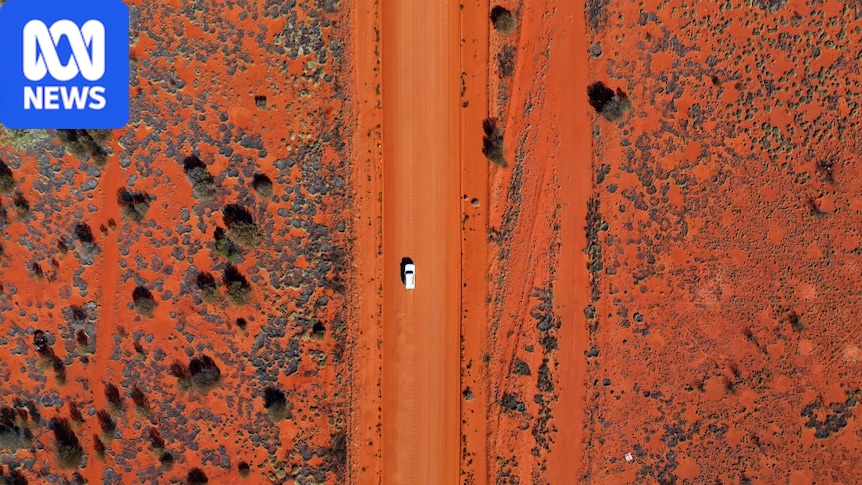
The Outback Way stretches 2,719 kilometres through central Australia — from Laverton in Western Australia’s northern Goldfields to Winton in Queensland.
With more than $1.2 billion committed to sealing the remote route by 2032, one of the project’s biggest hurdles has been securing Indigenous Land Use Agreements (ILUAs) in parts of Australia where a permit system is used for visitors.
The ongoing negotiations mean roadworks were put on hold four years ago on WA’s side of the border, which stretches 736km from Laverton to the Northern Territory.
Road progress at ‘glacial pace’
The delays prompted WA Liberal MP Rick Wilson to criticise the WA government in federal parliament in June for moving at a “glacial pace”.
“There are stretches of this road that do not fall within any native title claims, and still no progress has been made. It’s bureaucracy,” he said.
A spokesperson for WA Transport Minister Rita Saffioti defended the approach.
“Ensuring all approvals and registered ILUAs are in place will ensure the long-term success of the project, which has a key focus on delivering training, employment and economic opportunities for local and Aboriginal people and businesses,” the statement said.
Remote communities support road
In this remote part of WA, known as the Ngaanyatjarra Lands, three main groups represent the people of the Yilka, Nangaanya-ku and Yarnangu.
This week, Main Roads did not say how advanced its discussions were with traditional land owner groups, only that they were continuing.
Ngaanyatjarra Council major projects advisor Ralph Addis described the Outback Way as “nationally significant” with “complex opportunities and challenges”.
“We’re hearing early next year [for construction] … we think the earliest works can start, the better for all concerned,” he said.
Outback Highway Development Council chairman Pat Hill, who is also Shire of Laverton president, echoed those sentiments.
“The communities out there have all had input, negotiating with Main Roads and the state government,” he said.
“From what I’ve heard it will be starting just after Christmas … the sooner the better, obviously.”
Studies reveal next phase
New documents show Main Roads has completed a clearing assessment and biological survey to seal a 171km section of the road.
Under the plan, 660 hectares of native vegetation would be cleared.
The assessments did not identify any significant impacts to threatened flora or fauna.
The reports now form part of a formal planning and approvals process Main Roads has begun alongside the Department of Water and Environmental Regulation.
A social impact assessment by the Goldfields-Esperance Development Commission has also been completed, which questions if infrastructure along the route can support an influx of travellers.
It also raises the question of how to preserve culturally significant sites, with the loss of the current permitting system once it becomes a public road.
Other concerns include an increased risk of communicable disease, access to non-Opal fuel undermining petrol sniffing prevention and increased police enforcement.
Protecting places of significance
The Great Central Road currently averages 30-60 vehicles a day, but traffic volumes are estimated to increase 300 per cent over a decade once it is sealed, including a significant rise in heavy vehicle movements.
Mr Addis said the biggest concern for traditional land owners along the route remained the protection of culturally significant sites.
There are concerns about visitor behaviour involving photography and social media, including the photography of people, places or culturally sensitive features without consent.
“People are concerned about making sure the extra volume of people coming through the lands is both supported and properly managed so people can enjoy the experience but not damage the local environment and cultural places,” Mr Addis said.
Yilka Talintji Aboriginal Corporation chairman Harvey Murray was contacted for comment.