
Advertisement
You have reached your maximum number of saved items.
Remove items from your saved list to add more.
Melbourne’s biggest universities will launch dozens of start-ups each year in a bid to lift innovation and increase opportunities to blend students into the workforce as part of their degrees.
Higher education leaders want to flip the traditional model on its head – of teaching students on campus and sending them away to work. Instead, they are bringing industries and opportunities to their doorstep.
The plans come as universities face headwinds from artificial intelligence changing the delivery of tertiary qualifications and the careers they lead to, declining international student numbers, and increasing government pressure to commercialise research and engage with industry.
“It is one of the turning points in history for higher education,” said Andrew Norton, one of Australia’s leading experts on higher education policy. “The AI problem is top of the list.”
The University of Melbourne has an average of two to three start-ups a year come from its intellectual property. Deputy vice chancellor of research Mark Cassidy said there were plans to increase this to between 30 and 40 a year by 2035.
The university raised the number to 13 last year by offering funding to help researchers prove their concept and through a university venture capital fund. About 1300 students will attend an inaugural entrepreneurial boot camp later this year.
Advertisement
“We expect that we’ll see many companies coming out of the university,” Cassidy said. “There’s such an energy we’re finding in our students, and we can see this going into the future and becoming even more so.”
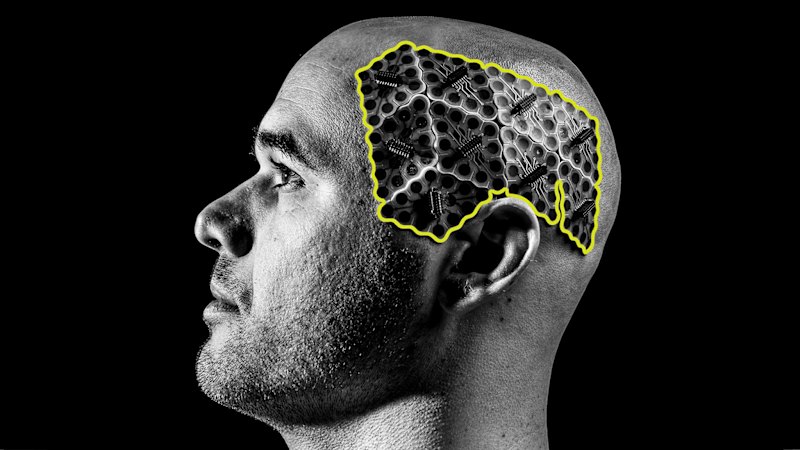
One example is former student Tim Mahoney’s PhD research into low-risk ways to record brain activity with electrodes implanted below the scalp of animals.
He now co-owns a company, Fluent, which employs four people and is working on converting the brain activity of people with speech impairments into communication. It is testing on humans above the scalp, and hopes to study below the scalp later this year.
“These are things like stroke, Parkinson’s and motor neuron disease, and so for those people, it’s really important,” Mahoney said. “But where we see it going in the future is actually a device that any of us could use to be able to upload tasks to AI with thought, or communicate with each other telepathically.”
Students in both undergraduate and postgraduate courses transition through several of the start-ups to receive credit towards their degrees. Many of the businesses are located around the university.
Education and innovation is a key topic of The Age and the University of Melbourne’s forum Melbourne Assembly, a three-day event in October bringing together some of the world’s brightest minds in city planning, innovation, education, arts and sport to discuss ideas for the city’s future.
Advertisement
This week, we will continue our series with a look at jobs and industries of the future.
Industry on campus
Monash University is taking a different approach – transforming its Clayton campus to welcome dozens of new businesses onto the grounds along with its own start-ups. The university has 31 businesses on campus and plans to increase this to 100 by 2030.
Deputy vice chancellor of research and enterprise Robyn Ward says the change will lead to a campus that is “alive 365 days of the year” with a business community co-mingling with students day to day.
“It’s busy during term time and quiet when it’s not term time,” Ward said. “It will be like a little living city, with people going about their business.”
Adrian Neild, the academic director behind Monash’s innovation precincts, cited universities such as Cambridge in Britain and RWTH Aachen University in Germany as building start-up cultures in the business districts that surrounded them. But he was not aware of any that were “trying to have this much intermingled company activity” on campus.
Advertisement
He said the new businesses would pay rent to be on Monash’s grounds and be drawn to the campus to access research facilities and students as part of paid internships and short-term engagements built into their degrees.
“This is really about creating a modern university,” he said. “We’re not an ivory tower; we have a porous boundary, and this is one of the ways that we’re bringing the outside in and then generating growth.”
RMIT, where the campus is already spread throughout 6 per cent of Melbourne’s CBD, prides itself on not having a “high wall” around it, says vice chancellor Alec Cameron. Six industry partners are located on campus, and the university collaborates with many others offsite.
In a precinct to the north of the CBD, between Queensberry and Victoria streets, Cameron said the university had plans to integrate its areas of study, such as social work, into community services.
“There’s an opportunity for us to provide those services into the community, and in doing so, give our social work students the opportunity for real hands-on engagement,” he said.
Swinburne University is also exploring ways to make its campus more like a workplace for students, said pro vice chancellor of educational innovation Llew Mann.
Advertisement
“Generally, when we think about connecting with industry through education, it’s placements, internships where students go out into those places,” he said. “What would it look like to flip that model? That’s what we’re really starting to explore.”
Embracing technology
Mann said a lot of the university’s physical space was locked up with traditional ways of delivering tertiary education, such as lecture theatres and academic offices. University leaders are thinking about how they could include more commercial and community spaces.
“And the secret sauce that we have as a university, and all universities have, is … thousands and thousands of passionate students who are desperate to make a mark and do real thinking and real work now,” Mann said.
They are also looking at positive ways to embrace AI, creating opportunities to further personalise student learning.
“What we’re imagining is that you will have your own learning agent that will know who you are, that will know where you’ve come from, what you studied in high school,” Mann said.
Advertisement
“It will interact with our university systems. Students will say, ‘Where’s my next class? Can you help me enrol in this?’
“On the learning side, as you then start to learn the material and engage in classes, it would start to learn what you’re good at, what you’re not so good at, and start to deliver the next learning experience tailored to this picture it’s building of you as a learner.”
The biggest hurdle, Mann said, was imagining a future beyond past or present experiences of university education. But he said university leaders would have no choice.
“The technology has really disrupted the core purpose of what we do and how we work.” he said. “You either ask yourself these existential questions or you’re confined to the past.”
Melbourne Assembly will be held from October 19 to October 21. More information is available on the Melbourne Assembly website, including special offers for Age subscribers.