
Article content
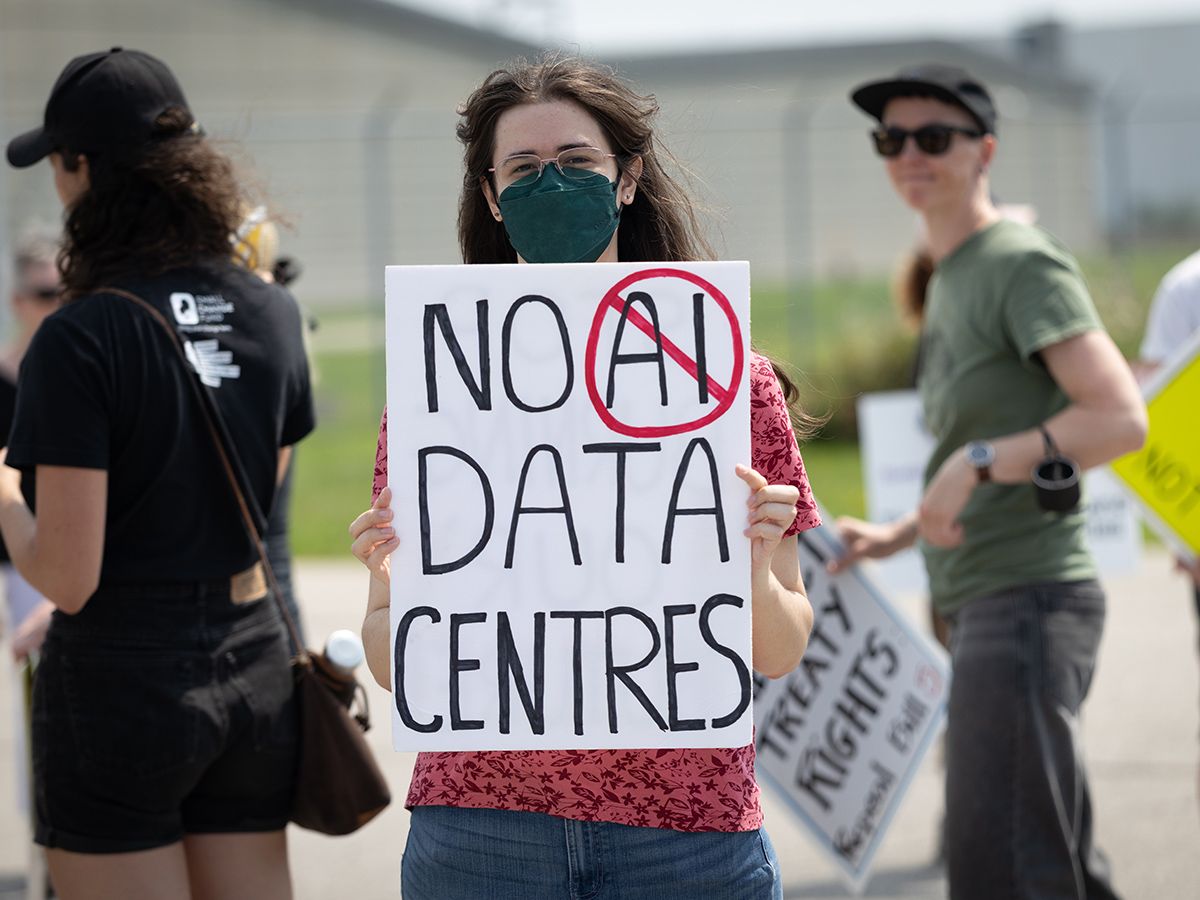
The data centre backlash that has gripped U.S. politics is spreading north, complicating Prime Minister Mark Carney’s efforts to attract investment in the rapidly expanding artificial intelligence infrastructure.
Sign In or Create an Account
or View more offersArticle content
In many respects, Canada is an alluring alternative for Silicon Valley firms: it has a cooler climate, abundant energy resources and plenty of open land. But a growing number of Canadian communities are looking to slam the brakes on server farm projects.
Article contentArticle content
Story continues below
This advertisement has not loaded yet, but your article continues below.
Article content
Two municipalities — Oakville, Ontario and Rocky View County, Alberta — have implemented one-year moratoriums on data centre developments. In the sparsely-populated province of Manitoba, Premier Wab Kinew vetoed a project that would have been built outside of Winnipeg, saying the drawbacks outweighed the benefits.
Article contentArticle content
A huge 7.5 gigawatt proposal by Canadian entrepreneur and Shark Tank personality Kevin O’Leary has also sparked pushback, while protestors have marched against data centres proposed in Vancouver which have been championed by all levels of government.
Article content
The Canadian hesitancy mirrors the skepticism toward data centres that has led to hundreds of local bans in the U.S., as well as a statewide moratorium in New York. Supersized data centres are loud and energy-hungry, and many people are still not convinced about the benefits of AI the facilities are meant to support.
Article content
Carney and other government officials have also presented data centres as an opportunity to bolster the country’s digital sovereignty. But tech policy critics warn that efforts to store Canadians’ data domestically aren’t always a protection against U.S. influence, while the economic benefits of these projects may be more modest than some claim.
Article content
Story continues below
This advertisement has not loaded yet, but your article continues below.
Article content
Although the number of local bans in Canada is limited for now, public polling suggests the hesitancy is more widespread. An Angus Reid Institute poll found 68% of respondents would oppose a large AI data centre near their home, while a survey by Leger found four in five respondents said they’re concerned about potential increases to electricity bills and environmental impacts.
Article contentRead More
- Carney is getting into AI data centres just as more people want out of them
- As Carney releases his AI strategy, opposition warns it misses the mark for nervous Canadians
- Story continues belowThis advertisement has not loaded yet, but your article continues below.
Article content
Two of the three petitions with the most signatures gathered to submit to Canada’s House of Commons are calling for a stop to data centres. The left-wing New Democratic Party is calling for a nationwide pause.
Article content
“I don’t think their concerns are groundless, but I don’t think we can put the brakes on progress,” said Jim Balsillie, the former head of BlackBerry Ltd., who has become an outspoken advocate for Canadian technological sovereignty.
Article content
Canadian Advantage
Article content
Canada’s AI data centre expansion is still in its early stages, but it’s poised to ramp up fast. Recent research from Toronto’s York University shows there are only five operational hyperscale data centres, defined as 50 megawatts or above, but 159 more are announced or under construction. That push is also showing up in trade data: Canadian imports of U.S. goods hit a record high in June driven by a surge in the computer parts used for data centres.