
Advertisement
September 4, 2026 — 11:30am
You have reached your maximum number of saved items.
Remove items from your saved list to add more.
I suspect I won’t be allowed in the United States again after this but being able to respectfully talk truth to power is a fundamental right of a Western democracy, so I take my chances.
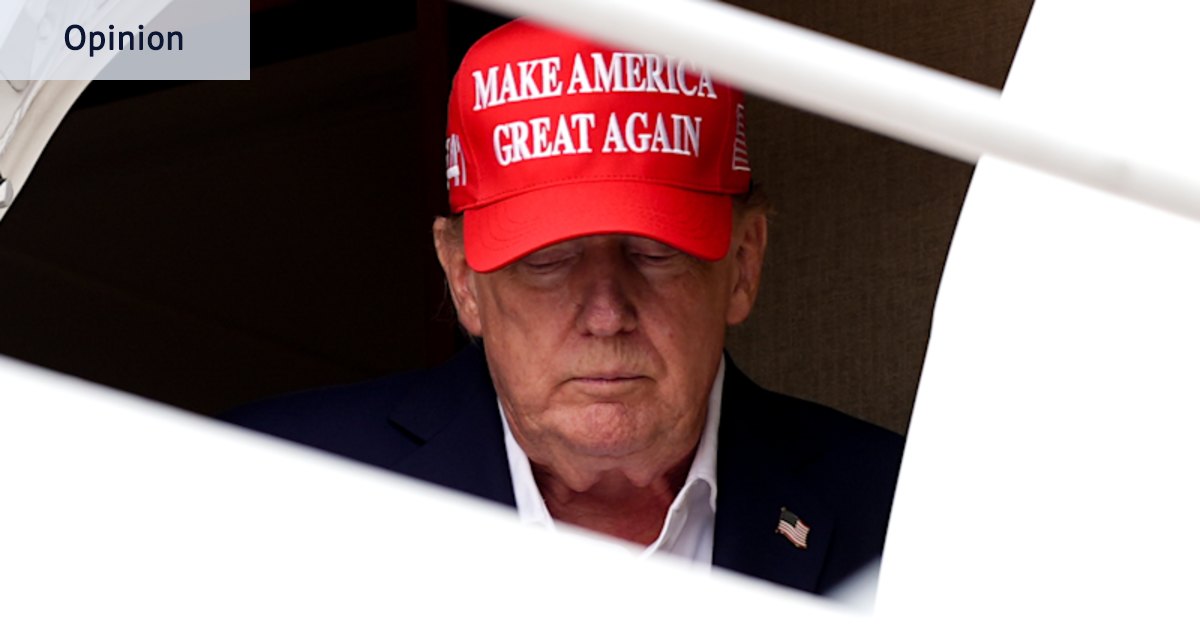
Last month, as reported by The Washington Post and CBS News, the president of the US boarded the presidential aircraft Air Force One in front of the cameras at Ankara airport, and then he quietly left it. Facing a credible Iranian missile threat, he was reportedly moved by catering truck to a smaller military aircraft and flown out under a different call sign.
The journalists and staff who boarded the original plane were told to keep their window shades down and they weren’t told why, and they also weren’t told the president was gone. Then, as scheduled, they flew home, unknowingly aboard an aircraft a hostile state had decided was a legitimate target.
Set aside the politics. I want to look at this through an entirely different lens: leadership.
Advertisement
I have spent three decades now in the Australian army, much of it in Special Forces, and my consultancy teaches leadership to executives. The definition of leadership I use is a demanding one: leadership is compelling other people to do what you want them to do because they want to do it. It’s important to understand that it’s not because they’re ordered to, and not because they’re deceived into it. It’s actually your credibility, your example and your care for them that make following you the thing they choose to do.
By that definition, what happened at Ankara wasn’t leadership.
There’s a simple framework we use to explain how leadership is projected: what leaders say, what they do, what they prioritise and what they recognise. Words are obviously the cheapest of the four, and actions take a bit more energy to demonstrate. But it’s the last two, a leader’s priorities and what they recognise, that are impossible to fake.
Let’s run the Ankara decision through that framework. What was said: that the flight was dangerous because of the adversaries “we have to deal with”. What was done: the principal was extracted from the danger while his own press corps and staff were left sitting inside it, shades drawn. What was prioritised: the safety of one man, and the secrecy of the manoeuvre, above the informed consent of his staff and those who convey his messages. And what was recognised? When later asked about the shades, the reported response to the journalists was, in effect, that if he went down, they’d go down, too; followed by the suggestion that perhaps they should change professions. That is recognition of a kind. It recognises that the staff are what made the decoy compelling.
Advertisement
Now, the counter-argument deserves a fair hearing, of course. A head of state is not an ordinary passenger; protective agencies exist precisely to move the principal out of harm’s way, and continuity of government is a legitimate priority. I don’t dispute any of that. The security professionals who designed the switch did their jobs and they did it well. My argument is not with the extraction. It is with what happened to everyone else. The Committee to Protect Journalists put it plainly: people covering the president should be informed of credible threats so they can make their own informed decisions about their own safety. Deciding to accept risk is a personal right. Having risk assigned to you unknowingly, as a decoy for someone else, I would contest that won’t be forgotten, and that’s where he has lost their trust.
Moreover, trust is built from three things: credibility (do you know what you’re doing?), reliability (do you do what you say?) and intimacy (can I be safe and honest with you?). And it is divided – divided, not merely reduced – by one thing: self-interest. You can be supremely credible and impressively reliable and have intimate working relationships, but the moment the people behind you conclude that, when it matters most, you will throw them under the bus (a narcissist manoeuvre), nothing else matters. Trust doesn’t just erode in that moment, it actually collapses and it can never be won back.
I know this equation from the other side of it. In Afghanistan, commanding soldiers in combat, the one thing I found hardest to do was delegate risk. I did do it – I often delegated risk to a lead vehicle and one driver, and I still haven’t forgiven myself for it – but the driver knew and accepted the risk. Unlike Trump’s staff, my staffer was given the option. Whatever we drove into, we drove into together. Soldiers will forgive a leader almost anything except the discovery that their exposure and the leader’s are valued differently.
I’ve just written a book, 100 Ways I Almost Died, and if there’s a thread running through all those moments, it’s this: I was never exposed to risk alone. My men were beside me and they knew everything I knew. The knowledge that the risk is shared is the intimacy in the equation. It’s why they followed me in training and combat. It’s why, years later, I think they still would.
Leaders at every level, in every organisation, face a quieter version of the Ankara choice most business days: who absorbs the risk, who gets told the truth and who is left with the shades down. When the pressure comes, your people will not remember your speeches. They will remember which plane you put them on.
Advertisement
Bram Connolly, DSM, is a former Special Forces officer, founder of Hindsight Leadership and Resilience, and the author of 100 Ways I Almost Died (published by Allen & Unwin).
Get a weekly wrap of views that will challenge, champion and inform your own. Sign up for our Opinion newsletter.
You have reached your maximum number of saved items.
Remove items from your saved list to add more.
More:
- Donald Trump
- Opinion
- For subscribers
- USA
- Trump diplomacy
- Trump’s White House
- Trump’s America
- Leadership lessons
Bram Connolly is a former Special Forces leaderAdvertisementAdvertisement