
Advertisement
Off Campus is the hottest TV show among Millennials, though Millennials don’t say TV any more. But it is TV, I argued with my daughter because we watch this ice-hockey love-triangle on a TV screen, even if the series doesn’t appear in the TV guide.
“Do we though?” asked Tess. At 29, training to be a relationship counsellor, Tess has a gift for rhetoric. “I’m as likely to watch it on my laptop or my phone.” Still a screen, I countered, though my feet were sinking. I felt like Garrett, the hockey jock struggling with his philosophy major, needing a mentor like Hannah, the sophomore who has a secret crush on Justin, the bad boy.
OK, so the show’s very watchable, whichever your screen. Since my daughter is right, TV is a quaint word. Even traditional stuff like The Block or the news is viewable by alternative devices, at whichever hour, be that on computer or Android, where we enjoy TV on non-TVs. Episode, the word, remains seaworthy, despite such episodes avoiding the grammar of ads or timeslot durations.
Back in the day we sat on the couch to watch Hawaii Five-O at a set time with a set number of ads, the credits rolling at a set time before the next program started, the whole box and dice on the one box. Not now. Unless you’re my 94-year-old mum who keeps her Sunday date with Vera, your screen liaisons are probably promiscuous.
Advertisement
True, the couch is often recruited, its adjacent telly. Just as you may resort to Colin From Accounts at a customary hour. Though chances are you’ll freeze the comedy to refill your glass or replay a moment if you missed a gag owing to a ping on your smaller screen. Come the credits, which you skip via autoplay, you’ll probably binge the next episode, make that three. Somehow television, the word we once knew, is shrinking in the rearview.
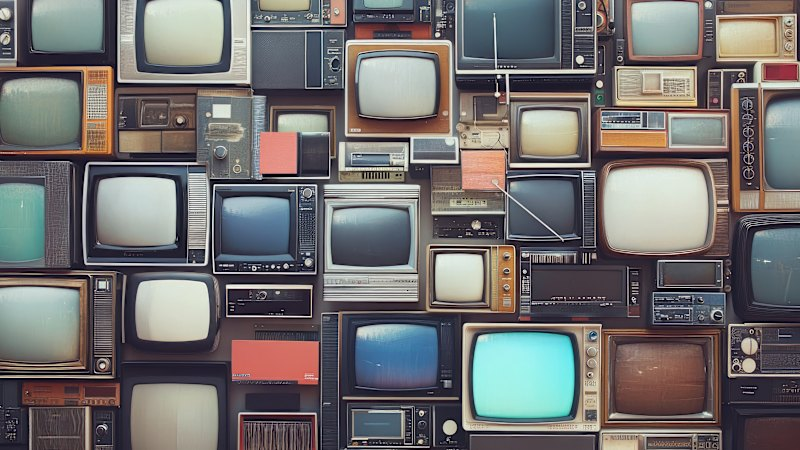
As a fossil word, TV has mixed heritage. A splice of Greek (where tele- means far), plus Latin’s videre, meaning to see, the noun goes to illustrates how hybridised screen culture has become. The far-vision we once received from the moon, back in 1969, seeing slow-motion miracles in black and white, has become the fore-vision of what the medium has become in colour. Or media plural.
Books have performed similar tricks. The German beech tree (or Buche) has faded from the 2026 picture, with modern books as likely made of sound or pixels or softwood pulp. Still, we cleave to the book-word, just as my habitual brain knows Utopia as a TV show. Both books and telly peddle narratives which yields the clue. As a word, story remains faithful despite all this shape-shifting, arriving via new portals. The deeper you scratch English, the more such fossils you unearth, like the intangible bitcoin, the non-papyrus truth of doomscrolling, the unscored musical track.
Maybe that’s the deeper story, how humans fall in love with a word, and then let time change its connotations as the world evolves. Just as Garrett pretends to love Hannah to make Justin envious, but then by episode 2 that performative love flips on its head, becoming something else altogether.
Advertisement
davidastle.com @dontattempt.bsky.social
Get tips, tricks and word games from our crosswords guru, plus links to our online puzzles and quizzes, delivered to your inbox every Saturday. Sign up for our Puzzled with David Astle newsletter.
Want more WordPlay?
- Fifty shades of … what? The absurd quest to name colours
- How a regional Instagram account is recording the latest entrants in the Aussie lexicon
- Out of the box: The grammatical nightmare keeping me awake
- Are you using the latest slang or are you just reheating nachos?
- The catchy nature of viral names
Find out the next TV, streaming series and movies to add to your must-sees. Get The Watchlist delivered every Thursday.
You have reached your maximum number of saved items.
Remove items from your saved list to add more.
More:
David Astle is the crossword compiler and Wordplay columnist for The Sydney Morning Herald and The Age. He is a broadcaster on ABC Radio Melbourne.AdvertisementAdvertisement