
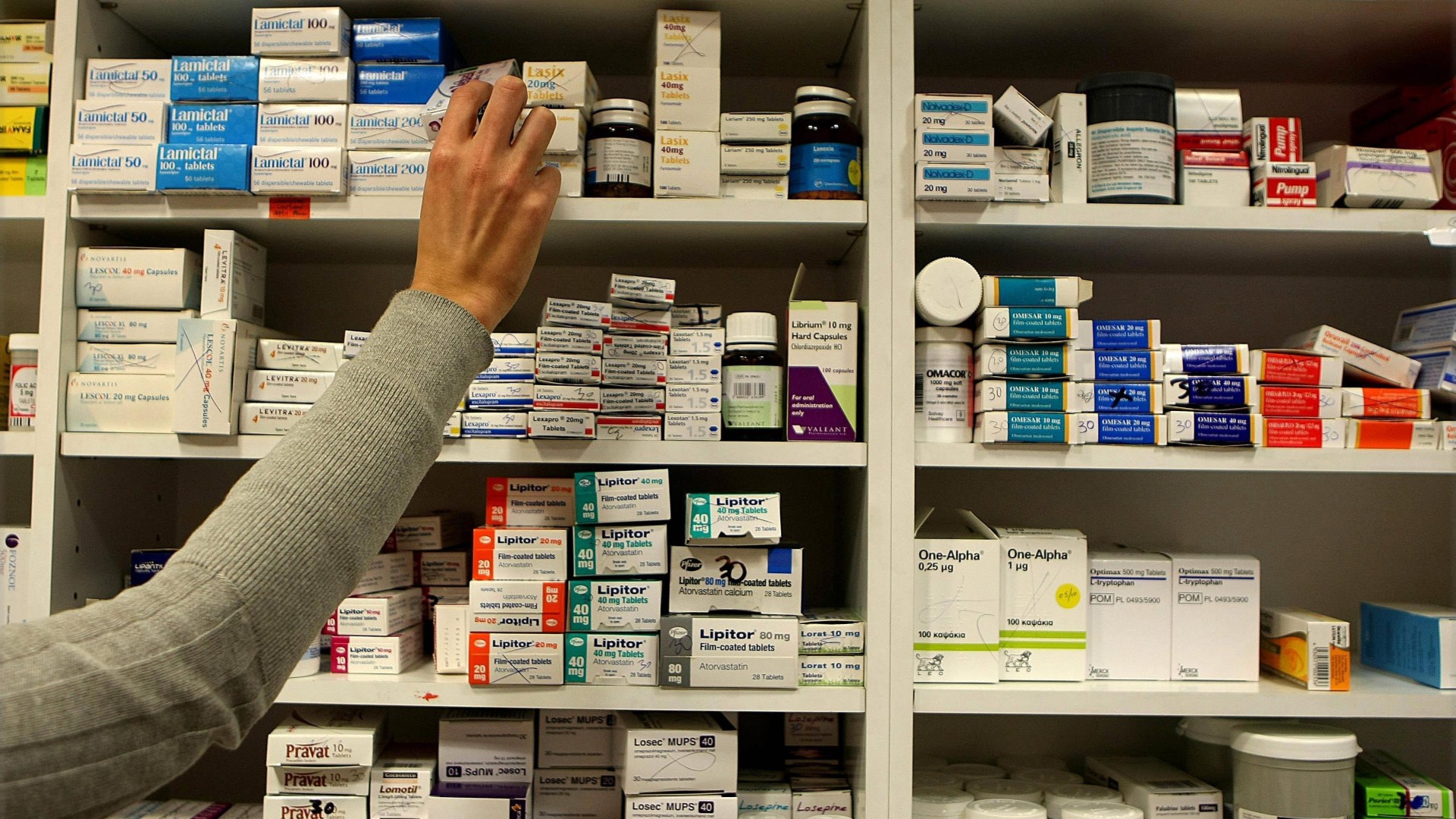
MORE than a dozen medications are facing shortages in the UK until at least early 2027, shock figures suggest.
Drug shortages reached a record high earlier this year with pharmacists warning the situation was “deeply alarming”.
3
3
Just this week, officials revealed that certain doses of two medications, one to prevent strokes and the other to treat allergies, would remain out of stock for weeks.
But, analysis of Community Pharmacy England (CPE) alerts, has found that six drugs including those to treat heart issues, epilepsy and glaucoma are expected to be in short supply until at least January.
Eight separate doses of pain relief and anti-psychotic medications, still have no confirmed resupply dates, despite some being in short supply for almost a year.
Other drugs, which have faced long-lasting supply issues of more than 18 months, are not expected to have sufficient stock until late 2026.
READ MORE ON MEDICINES
DRUG CRISIS
Common antidepressant ‘out of stock’ in UK with shortage to last until NOVEMBER
CRISIS DEEPENS
The 114 medicines in shortest supply in the UK – is YOURS on the list?
Community Pharmacy England, the official body representing pharmacy owners and contractors in England, tracks medicines supply notifications from the Department of Health and Social Care.
Health leaders have repeatedly warned that medicines shortages pose a “serious risk to patient safety”.
Earlier this summer, Graham Jones, owner of Shrivenham Pharmacy in Oxfordshire, also said that current medication shortages are the “worst [he’s] ever known”.
According to CPE alerts, heart drug Disopyramide (Rythmodan) 100mg capsules, are expected to face supply issues until at least April 2027.
Most read in Health
CRISIS DEEPENS
The 114 medicines in shortest supply in the UK – is YOURS on the list?
MY SHAME
Paedophilic thoughts made me want to die…then I found it’s a disorder affecting 1m
WATER BUG
Two children in hospital after swimming in ‘disgusting’ UK seawater pictured
SAVED MY BACON
Kidney disease patient survives 9mths with transplant PIG organ in world 1st
The medication is prescribed to treat and prevent abnormal, fast or irregular heartbeats.
The following medications are expected to remain in short supply until at least January 2027:
- Sodium valproate (Epilim Chronosphere) 250mg modified-release granules sachets sugar free
- Latanoprost 50micrograms/ml / Timolol [0.5%] 5mg/ml (Fixapost) preservative free eye drops
- Diclofenac (Voltarol® Ophtha) 0.1% eye drops 0.3ml unit dose preservative-free
- Moviprep® oral powder sachets
- Plenvu® oral powder sachets
The sodium valproate sachets are prescribed to certain epilepsy patients, while latanoprost treats high pressure inside the eye and helps treat glaucoma.
Diclofenac eye drops treat inflammation, pain, and other eye conditions related to surgery and laser procedures.
Moviprep and Plenvu sachets, meanwhile, are typically prescribed to patients to completely empty the bowels before medical procedures like a colonoscopy.
Two other medications, which are prescribed in eight different doses, also remain in short supply with no confirmed resupply date, according to CPE. These are:
- Quetiapine 50mg, 150mg, 200mg, 300mg and 400mg
- Diamorphine 5mg, 10mg and 100mg powder for solution for injection ampoules
Quetiapine is a prescription antipsychotic medication used to treat schizophrenia or treat or prevent symptoms of bipolar disorder.
It can also be used, alongside other medications, to treat severe depression.
Which medications are facing shortages until 2027?
According to Community Pharmacy England (CPE) alerts, six drugs are expected to be in short supply until at least January 2027.
These are:
- Disopyramide (Rythmodan) 100mg capsules
- Sodium valproate (Epilim Chronosphere) 250mg modified-release granules sachets sugar free
- Latanoprost 50micrograms/ml / Timolol [0.5%] 5mg/ml (Fixapost) preservative free eye drops
- Diclofenac (Voltarol® Ophtha) 0.1% eye drops 0.3ml unit dose preservative-free
- Moviprep® oral powder sachets
- Plenvu® oral powder sachets
Another two pain relief and anti-psychotic medications, still have no confirmed resupply dates, despite one being in short supply for almost a year.
Between them, there are eight separate doses that can be prescribed.
These are:
- Quetiapine 50mg, 150mg, 200mg, 300mg and 400mg
- Diamorphine 5mg, 10mg and 100mg powder for solution for injection ampoules
Source: Community Pharmacy England
3
Diamorphine powder for injection is a strong opioid painkiller used to treat severe pain and breathing difficulties.
Other medications with supply issues which are expected to be resolved in late 2026 include various doses of the HRT drug Estradot, pain relief Co-codamol, blood pressure medication Ramipril and Creon.
According to the National Pharmacy Association, pharmacists are spending hours sourcing scarce medication while GPs are having to alter prescriptions to fit in with supply issues, inconveniencing and often worrying patients.
A recent survey by the pharmacy body, which represents around 6,000 independent community pharmacies in the UK, found that 96 per cent felt the situation posed a serious risk to the safety of their patients.
Separately, the Govenrment’s price concessions list currently features a staggering 230 medications, as of the end of August 2026.
The price concessions list is an indicator that a drug may be nearing short supply.
Currently the NHS pays pharmacies a fixed price for each medicine they dispense and they then have to try and source the drug for that amount, or less.
But when the price goes above what the NHS pays, the medication is placed on the government’s price concessions list.
Some medications are becoming harder to obtain because of surging global prices and the fact that government funding has not kept up with rising costs.
RECOMMENDED STORIES
When market prices rise suddenly – often above the original tariff and even above the concession price offered – pharmacies end up dispensing medication at a loss, meaning they are not fully reimbursed by the NHS.
This then makes it harder for pharmacies to buy enough stock for their patients, increasing the likelihood that people will face delays or sudden shortages.