
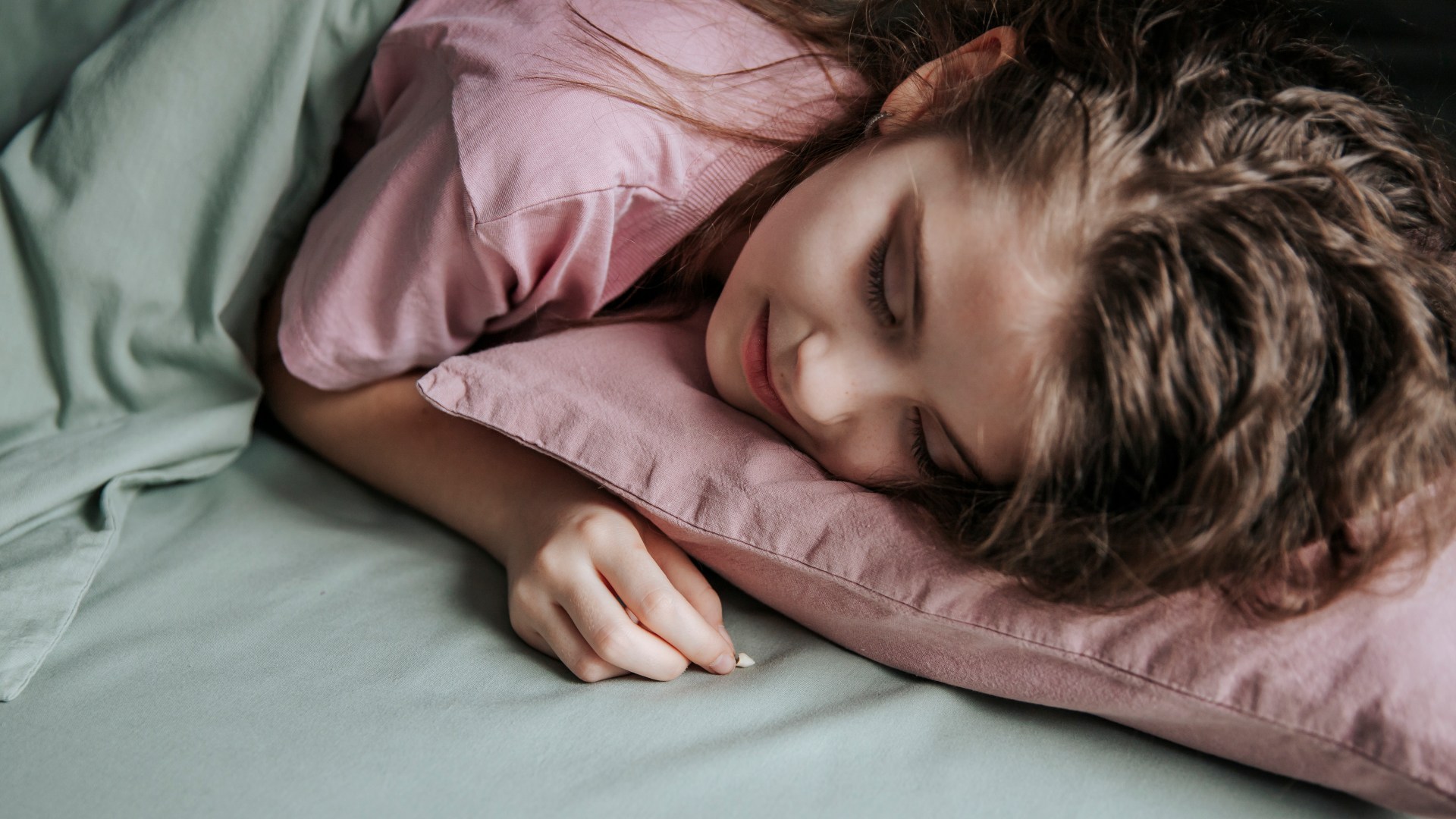
MANY people snore – even kids!
You might be amused at the sound of your little one grunting and snorting, but this seemingly harmless symptom could be a warning sign of a serious sleep disorder affecting thousands of children.
Sleep apnoea causes breathing to stop and start in your sleep.
The most common form of the condition, obstructive sleep apnoea (OSA), is often linked to obesity.
The disorder is more likely to crop up in adults, particularly those in middle age or older, but it can affect children, experts warn.
Having enlarged tonsils and adenoids could trigger the disorder in young kids.
Read more on sleep
‘VERY EXCITING’
New daily ‘Ozempic for the brain’ pill could tackle sleep disorders & ADHD
PRE-TERM PREP
The 3 main foods kids should eat NOW to fix sleep routines before school
The tonsils sit at the back of the throat and adenoids behind the nose.
Since children’s airways are narrow, enlarged tissue can leave too little room for air to pass comfortably.
It’s hard to pin down exactly how many kids have sleep apnoea, writes Dr Mirja Quante, an attending neonatologist and director of the Paediatric Sleep Program at the University of Tübingen in Germany.
A review of 30 studies, published in 2024, estimated that 12.8 to 20.4 per cent of nursery age children may have sleep apnoea.
Most read in Health
SHORT CHANGED
The 8 meds in shortage until 2027 or ‘indefinitely’ including heart drugs
MY SHAME
Paedophilic thoughts made me want to die…then I found it’s a disorder affecting 1m
CRISIS DEEPENS
The 114 medicines in shortest supply in the UK – is YOURS on the list?
WATER BUG
Two children in hospital after swimming in ‘disgusting’ UK seawater pictured
Dr Quante urges parents to look out for tell-tale signs of the condition.
“In children, habitual loud snoring is an important warning sign,” she says in The Conversation.
“Parents may also notice mouth breathing, restless sleep, pauses followed by gasps or snorts, or the chest and abdomen working hard to draw breath.”
If your kid displays any of these signs, they should be assessed by a GP.
But the condition can also produce “less obvious” daytime symptoms, warns Dr Quante.
She explains how the passage behind the nose and mouth repeatedly narrows or closes with sleep apnoea, meaning children have to work harder to breathe as they sleep.
While they may not wake fully when this happens, it can disturb their kip, meaning they don’t feel refreshed when they wake up.
“Rather than appearing sleepy, some children become irritable or unusually active, struggle to concentrate or develop behavioural and learning difficulties,” Dr Quante says.
“These problems can resemble or worsen symptoms of attention deficit hyperactivity disorder (ADHD).
“The conditions can also occur together, so this should not be treated as a simple either-or diagnosis.
10 tips to get your child to sleep on time
1. Get started ASAP
“Nine days is the average time it takes for a post school holiday bedtime routine to stick,” says Silentnight’s sleep expert Hannah Shore.
“But starting the routine a few days before school will still help.
“By introducing the routine early, your child’s body will start producing the necessary chemicals and sleep-promoting hormones at the right time, making it easier for them to fall asleep and wake up for school.”
2. Know how much sleep kids actually need
“People often forget that children need a lot more sleep than adults,” says Hannah.
“While we only need seven hours, primary school children need around 10 hours of sleep per night.
“There are two types of sleep: deeper NREM and lighter REM.
“The latter is great for learning and emotional processing, whereas the former is when growth hormones are released and the body recovers – both are needed for a child to get the best night’s sleep.”
3. Start with staggered bedtimes
“It’s a good idea to start moving your children’s bedtime and wake time – probably earlier than they have been going to bed and getting up in the holidays – towards their normal times in the days before school starts,” says Dr Lindsay Browning, psychologist, neuroscientist and sleep expert for And So To Bed.
“This avoids a shock to the system the day school starts when they will probably have to be up a lot earlier than they have been.”
She recommends moving bed and wake times by around 15 to 20 minutes per day until you get to the ideal bedtime for your child.
She adds: “Make sure you move both their bedtime and wake time by the same amount.”
4. Focus on ‘winding down’ time
“Everyone will have a completely different sleep routine, but the key is finding one that works best for you and your child and ensuring it includes winding down time,” says Hannah.
“Having a pre-bedtime routine ensures that children know bedtime is coming,” adds Lindsay.
“Doing the same things before bed in the same order can help prepare the brain and body for sleep.
“This routine may involve stopping screens an hour before bed; doing a peaceful activity such as reading or a jigsaw; taking a bath or shower and then getting into pyjamas and brushing teeth before bed.”
5. Manage tech use
“You may have allowed them more screen time over the summer holidays to keep them entertained,” says Lindsay.
“However, with school restarting, it might be a good ideal to reinstate screen time limits on the number of hours spent on devices, as well as stopping devices automatically in the evening.
“Ideally, stop any screen time at least an hour before their bedtime.
“If your child is still using a screen close to bedtime – parents can’t win all wars! – then ensure they have night mode activated, which will reduce brightness and blue light that may disrupt sleep.”
6. Bedroom set up is vital
Devise cues so your child’s brain knows it’s time to get ready for bed.
“Environment is really important for sleep and lights should be dim or ideally switched off in the bedroom to tell the body it’s time for bed,” says Hannah.
“The key is to make sure your child is comfortable in the setting they’re sleeping in – is the temperature ok (it should be around 18C)? Is it dark enough? Is the bedding comfortable?”
7. Be flexible
There’s no point strictly adhering to a sleep routine if it’s obviously not working for your child.
“The most important tip – not just with sleep routines – is to not overdo it,” says Hannah.
“Ease your child into their new routine, make small changes to see if they work and, if they don’t, try something different.
“The best sleep routines aren’t a chore – find something that works and fits into yours and your child’s lifestyle.”
8. Understand what your teen is dealing with
“Teens get a bad reputation when it comes to sleep, but they are tired and grumpy for a reason,” says Hannah.
“Our circadian rhythm controls our sleep/wake cycle and everyone’s slightly different.
“For teenagers, this means they’ll go to bed later and wake up later.
“The school day, however, doesn’t account for this and teens will have to get up much earlier than they’re ready to, impacting their overall physical, mental and emotional health.
“It’s important that we allow teenagers to make up for this lack of sleep on the weekend, to soften the impact.”
Lindsay adds that children aged 14 to 17 years need between eight and 10 hours of sleep.
9. Go outside
For teens especially, a shot of daylight can help get them in the swing of things.
“On a school day, a good tip to make sure a teen feels ready for the day is by incorporating morning daylight into their before-school routine,” says Hannah.
“Your body stops producing melatonin – the hormone that promotes sleep – in the morning light and it’ll help you feel more awake and ready for the day ahead.”
Just standing in the garden while eating some toast counts!
10. Keep the routine on track
Involving the kids and making them feel accountable and responsible will help.
“Spending some time as a family discussing bedtimes and wake times, as well as when screens will be stopped, is a great start,” says Lindsay
“If everyone is on the same page, it makes sticking to the rules much easier.”
“Repeatedly disrupted sleep is associated with poorer behaviour, learning and quality of life.
“Research also links childhood sleep apnoea with changes in blood-pressure control and metabolism, including how the body regulates blood sugar.”
In adults, sleep apnoea has been linked to a higher risk of stroke, heart disease and type 2 diabetes.
Aside from obesity and large tonsils, asthma inflammation in the nose from allergies could also increase the risk of the condition in kids, Dr Quante says.
Other possible causes include different jaw shapes, as well as genetic diseases such as Down syndrome.
Not sure if your tot’s snoring is worrying?
Take a short video of them as they sleep. This can help your GP diagnose sleep apnoea.
In terms of treatment, surgery can help address large tonsils and adenoids.
RECOMMENDED STORIES
But Dr Quante notes: “Up to 40 per cent of children may have persistent sleep apnoea after surgery, with higher rates among those with obesity, severe disease or other medical conditions.”
A doctor may also recommend special nasal sprays, facial muscles exercises or a continuous positive airway pressure (CPAP) machine to be worn as they sleep.