
Stealing tampons and using socks as sanitary items shows desperation of period poverty
Posted Thu 3 Sep 2026 at 10:42amThu 3 Sep 2026 at 10:42amThu 3 Sep 2026 at 10:42am, updated Thu 3 Sep 2026 at 10:49amThu 3 Sep 2026 at 10:49amThu 3 Sep 2026 at 10:49am
In short:
Teachers, social workers and wellbeing leaders are paying out of pocket for period products in South Australia.
More than 60 per cent of people who menstruate in South Australia struggled to afford sanitary items at some point in 2024.
What’s next?
Former MPs and not-for-profit charities say SA is behind the rest of the country in menstrual equity and legislative change is needed.
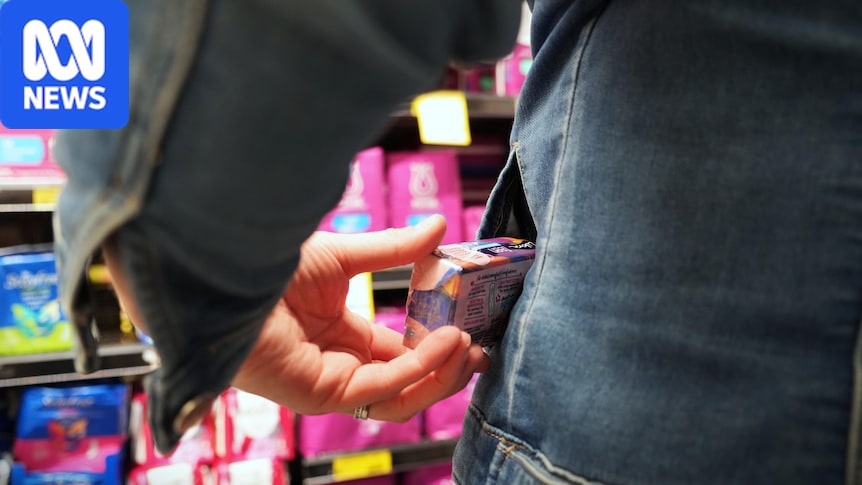
Using socks as sanitary pads, wearing tampons for more than two days and stealing products from supermarkets are just some of the lengths women and girls are going to in order to afford period products.
Cate Sherlock is an Adelaide-based social worker and says it is an invisible struggle plaguing communities across the state.
“Young women entering supermarkets and stealing products for the month is a recurring thing I hear,”
she said.
“They are wearing period products for a long period of time and then getting asked about their hygiene because they start to smell.
“There is stigma and shame about having poor self-care, when in reality they can’t afford multiple period products in a day.”
With 66 per cent of people who menstruate struggling to afford period products in SA at some point, many say the state needs to catch up and address its menstrual inequality issue.
Teachers paying out of pocket
The ABC heard from five government workers, including teachers, who were witnessing period poverty first-hand.
Three spoke under the condition of anonymity due to their roles in the public sector.
“I know the year 6 teachers buy products and leave them in the drawers in their classroom so girls can access them,”
one SA wellbeing teacher said.
“Many families are struggling to put food on the table.
“[They] are struggling to pay for such expensive products and it’s going to get worse with our current climate.”
A public high school teacher said social justice budgets were often utilised to purchase sanitary products.
“My site purchases supplies from our wellbeing budget so teachers don’t feel they have to, [just] to ensure students have access to a range of products if they need them,” the teacher said.
A public service social worker recounted how she has been having a conversation with someone about period poverty “close to once a fortnight”.
“A lot of homeless women tell me they use items such as socks rather than sanitary pads and tampons due to the cost,” she said.
“I recently had a [woman] fleeing domestic violence choose between putting petrol in their car over pads or tampons so they could flee in the middle of the night.“
SA, NT and Tasmania ‘failing’ people
Not-for-profit organisation Share the Dignity surveyed more than 150,000 Australians who menstruate in 2024.
Of those, 66 per cent of South Australians had struggled to afford period products at some point.
Chief executive Rochelle Courtenay said period poverty was a national issue that was growing, with the charity to date donating 6.2 million packets of period products since it began in 2015.
“When the data came out in 2024 we had 3.3 million Australians living below the poverty line,” she said.
“That number has now increased to 5.5 million Australians.”
Ms Courtenay said the only states and territories “failing” were Tasmania, the Northern Territory and South Australia.
“ACT is leading the way with a bill passed that makes it mandatory to provide period products in [places where] somebody is being educated, as well as hospitals, libraries and communal places,” she said.
“In Victoria, they have just rolled out 1,400 free period product vending machines, and they provide period products [in most public spaces].
“In Queensland, period products are in every primary and secondary school, as well as WA and New South Wales.”
Legislative change needed
Former South Australian Legislative Council MP Connie Bonaros put forward the Period Products and Facilities (Access) Bill in March 2025.
The proposed bill was modelled on the ACT’s which came into effect in 2023.
While the bill did not pass the Lower House and Ms Bonaros is no longer acting as a member of parliament, legislative change is still what she wants to see.
“We had the opportunity to lead the way when it comes to period poverty in South Australia, now we’re playing catch up,” she said.
The state government previously committed a total of $564,000 in 2023 over three years to fund free period products in some public schools.
It was an initiative Ms Bonaros said had likely only funded around 1,250 students with products.
“Victoria introduced its [period product] funding model and they threw $23 million towards a similar program rollout,” she said.
Ms Bonaros said not-for-profit charities like Kickstart for Kids, of which she is an ambassador, donates more than 2,000 products a month to 200 SA public schools.
“Sadly we’re a far cry from where we need to be,”
she said.
Minister for Education Lucy Hood declined an interview, and a department spokesperson did not confirm whether legislative reforms would be considered in the future.
In a statement the department said it currently provided period products to more than 500 public schools.
“This program will continue in our schools, supporting around 50,000 students each year,” the statement read.
“All South Australian public schools with year 5 and above enrolments receive funding to provide period products, with additional support directed to schools experiencing greater disadvantage.”
It is a reality Connie Bonaros said needed to change.
“If we’re going to get real about ensuring universal access in South Australia then we need to follow the lead of those other jurisdictions, and that involves enshrining this in our legislation.“