
Article content
A 618-page report from 1986 examining the postwar arrival in Canada of those alleged of Nazi war crimes still hasn’t been fully declassified, but certain segments must now be made public, according to a recent Federal Court ruling.
Sign In or Create an Account
or View more offersArticle content
In a 21-page ruling issued Tuesday, Justice Simon Fothergill said the public interest in preserving the historical record, the many decades that have passed and the weakness of the government’s reasons for continued secrecy all weighed in favour of increased disclosure of historian Alti Rodal’s report.
Article contentArticle content
Story continues below
This advertisement has not loaded yet, but your article continues below.
Article content
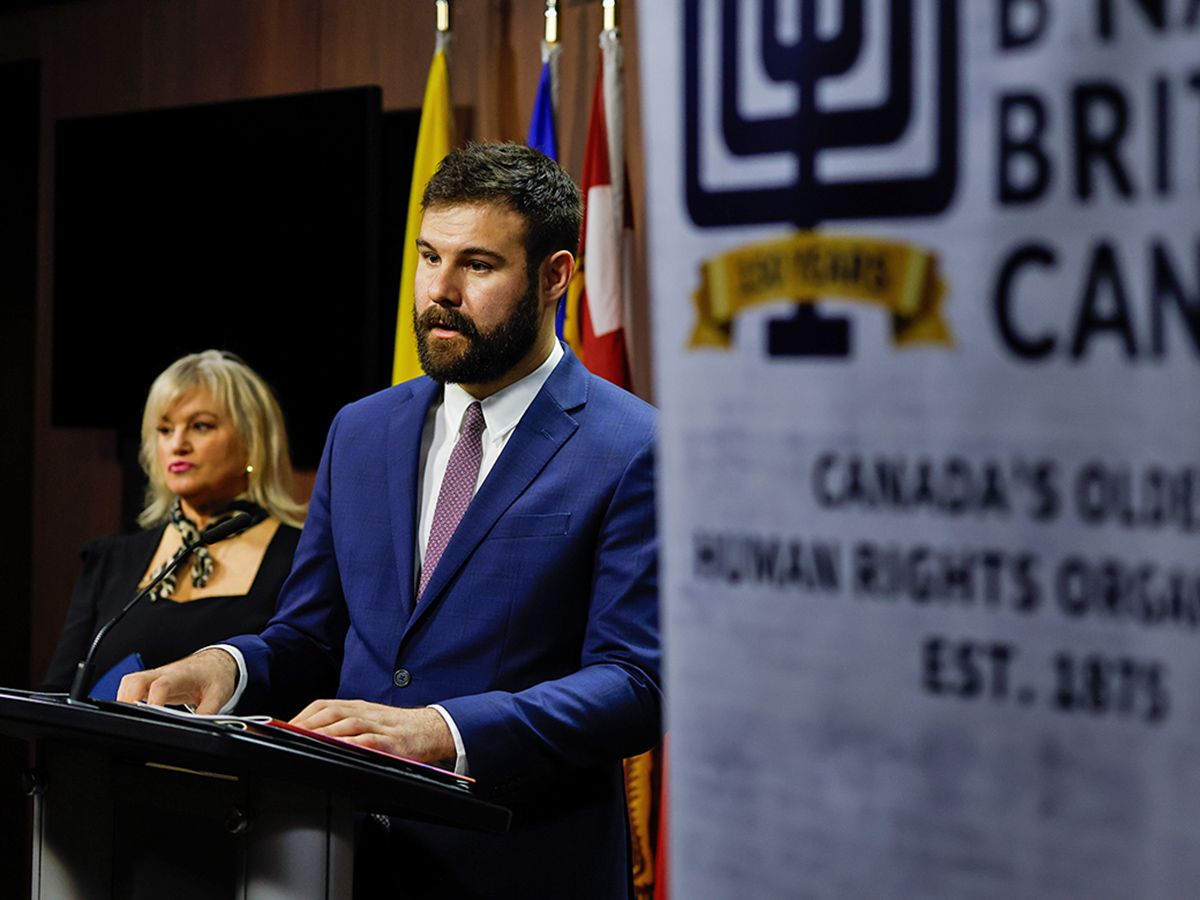
“We deserve the opportunity to learn from our past and to come to terms with the shortcomings of Canada,” Richard Robertson, B’nai Brith Canada’s Director of Research and Advocacy said.
Article contentArticle content
The decision follows years of attempts to obtain an uncensored version of the study, Nazi War Criminals in Canada: The Historical and Policy Setting from the 1940s to the Present, commonly called the Rodal Report.
Article content
Prepared for the Commission of Inquiry on War Criminals in Canada — the Deschênes Commission — the report examined the circumstances under which alleged Nazi war criminals and collaborators came to Canada after the Second World War. Although substantial parts of the previously unpublished study have become public, significant passages remained concealed.
Article content
Rodal concluded that weak screening procedures enabled some perpetrators of Nazi crimes to enter Canada.
Article content
Robertson told the National Post that it was his organization’s advocacy that pushed the case, as it was in February 2024, when Library and Archives Canada released new segments in response to an access-to-information request from B’nai Brith. The release revealed numerous passages that had previously been censored, but redactions remained on seven pages in one section and in RCMP file references contained in 14 endnotes.
Article content
Story continues below
This advertisement has not loaded yet, but your article continues below.
Article content
The contents of newly declassified materials are as yet unknown, he said.
Article contentRead More
- Why countless Nazis were welcomed to Canada after WW2
- Holocaust survivor ‘not surprised’ Canada won’t reveal names of 900 alleged Nazis who arrived after war
- Story continues belowThis advertisement has not loaded yet, but your article continues below.
Article content
The still-withheld section concerned Canadian officials’ 1954 discovery of a covert U.S. intelligence initiative that allegedly helped Nazis and Nazi collaborators settle in Canada while bypassing normal security procedures.
Article content
Library and Archives Canada argued that the withheld text was protected by section 15(1)(a) of the Access to Information Act, which permits the government to refuse disclosure where release could harm Canada’s international relations. It also relied on section 13 for one passage: a U.S. official’s assessment of American immigration law that Canada had allegedly received in confidence from the United States.
Article content
The agency also withheld RCMP file numbers under section 15(1)(d)(ii), which covers intelligence information whose release could undermine efforts to detect, prevent, or suppress subversive or hostile activity.
Article content
Justice Fothergill dismissed all but one of Library and Archives Canada’s exemption arguments. He found that the institution had not established that releasing information of clear historical importance would, today, damage Canada’s international relations or national security.