
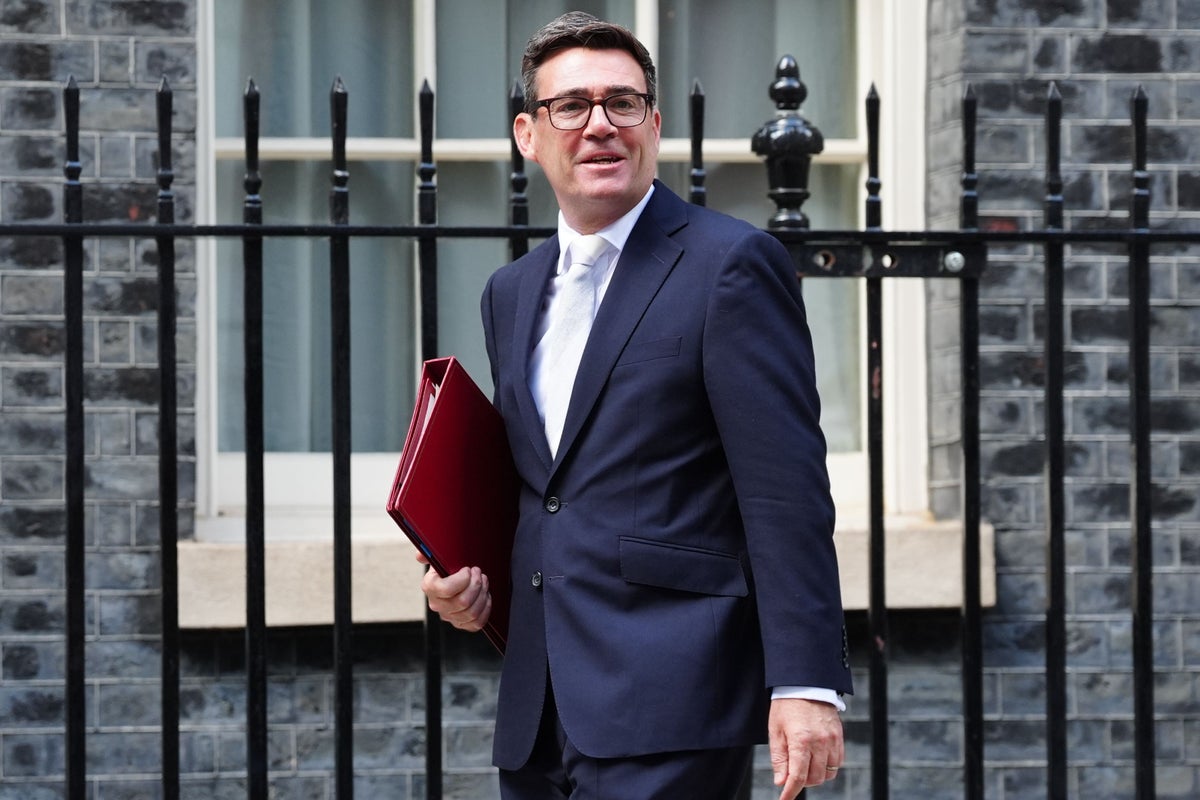
A think tank has warned Andy Burnham that he must be prepared to raise taxes for middle earners if he wishes to raise defence spending.
After quitting Sir Keir Starmer’s government in June over this issue, his chancellor John Healey has made clear he will wait until next year’s spending review to present a plan to meet Labour’s pledge of devoting 3.5 per cent of GDP by 2035 to defence.
The Resolution Foundation thinktank has warned that he will not be able to raise the necessary £28bn a year without asking average earners to pay more.
Meanwhile, Mr Burnham will be grilled by MPs in his first Prime Minister’s Questions since succeeding Sir Keir.
With parliament back from summer recess, the Makerfield MP on Tuesday addressed the House of Commons for the first time since becoming prime minister.
He said that Britain needs to be “blunt” about what has gone wrong in recent decades, and must spread power to people and places across the country to kickstart economic growth.
On Wednesday, he will face Kemi Badenoch at the despatch box and it is expected that the Conservative leader will quiz the former mayor of Greater Manchester on the possibility of tax rises and Britain’s defence spending.
‘Unrealistic’ to fund defence spending increases without hiking taxes of middle earners, think tank says
It is unrealistic for the UK to increase defence spending without higher taxes for middle earners, think tank the Resolution Foundation has said.
Chancellor John Healey resigned from Sir Keir Starmer’s government in June, arguing that the then-prime minister was failing to fund defence properly.
The think tank’s new report Thin end of the wedge looks at how workers’ ‘tax wedge’ – total taxes on earnings minus cash benefits – has changed as a result of decisions taken in 2024’s Autumn Budget.
Its analysis suggests that any politician promising a bigger state and lower taxes on middle earners is not being realistic.
It argues that there is a clear case for paying for increased defence spending through broad-based tax rises that include middle earners paying more.
James Smith, chief economist at the Resolution Foundation, said: “Despite recent increases, the UK still taxes average earners less than most of our international peers.
“No other OECD rich country has a bigger state and a lower burden on average workers, so any politician promising both is not being realistic.
“There is a strong case that any benefits of increased defence spending will be broadly shared, so the tax rises needed to find this should be too, including higher rates on middles earners.’’
Holly Evans2 September 2026 07:46
Join our commenting forum
Join thought-provoking conversations, follow other Independent readers and see their replies