
Advertisement
We usually eat fish 𝄒n𝄒 chips with the same amount of mindfulness as a morning commute. But, maybe we should approach it with more intent – savouring each chip and marvelling at the golden batter because, according to world-renowned Sydney chef, Josh Niland, it’s “without question one of the most challenging dishes to execute”.
Which is a big claim from the person who invented chips made from fish and calamari eyes, and spent 10 years perfecting the fish charcuterie dish he serves at his three-hatted Saint Peter.
Niland has just released his fourth cookbook, Saint Peter: Chapter & Verse, a grand 450-page book that includes the recipes, essays and philosophy that he and his team have fine-tuned over a decade of running his innovative seafood restaurant in Sydney’s Paddington.
It includes his recipe for fish 𝄒n𝄒 chips, which is served at the bar of The Grand National Hotel, home of the fine diner and hotel run by Julie and Josh Niland.
Advertisement
Niland’s fin-to-tail cooking technique has made him a global sensation and has changed the conversation around fish and seafood. “I wanted to do a fish restaurant that showed there was so much more to fish than the luxurious fillet, and that there were more than just a dozen species in the sea,” he writes, just two of the issues with chefs cooking fish at restaurants.
The best recipes from Australia’s leading chefs straight to your inbox.
He says seafood’s most popular dish is also not immune to issues. “For so long, fish 𝄒n𝄒 chips has been a vehicle to carry aesthetically and texturally compromised fish. The presence of odour and the absence of flavour in a bleached, skinless centre cut of unidentifiable fish are quickly resolved by a crispy golden exterior. If we continue to celebrate the mediocre, however, then the quality that the rare few continue to labour over will quickly become lost.”
Instead? “We believe in the potential that fish 𝄒n𝄒 chips has to create something special – the memory of a moment,” writes Niland.
For him, creating remarkable fried and battered fish involves vodka. As he told Good Food in 2019: “The more alcohol content means the liquid burns away faster, resulting in a crisp and, most importantly, delicious batter.”
– Sarah Norris
Advertisement
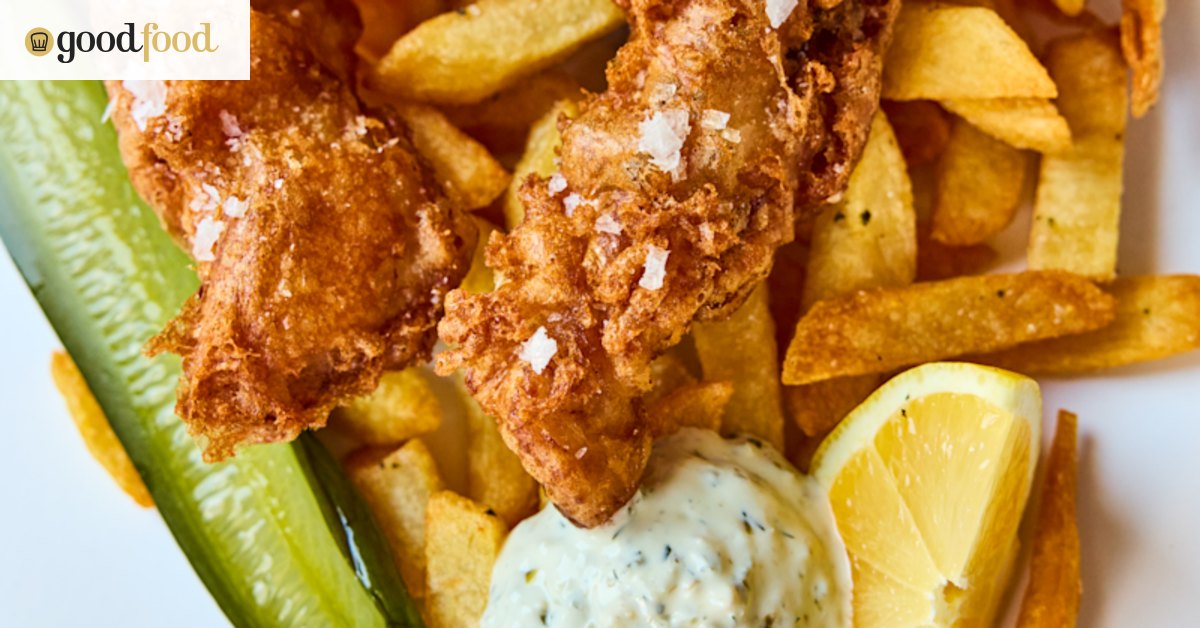
Fish 𝄒n𝄒 chips and condiments
INGREDIENTS
- 4 x 140g boneless rock flathead fillets
- 150g rice flour, for dusting
- Yoghurt tartare sauce (see below)
- 4 dill pickles
- 2 lemons, halved
Advertisement
Batter
- 215g self-raising flour
- 400g rice flour
- 10g baking powder
- 45g honey
- 345ml vodka (37 per cent alcohol)
- 550ml beer
Chips
- 3kg sebago potatoes
- 5 litres cottonseed oil
METHOD
Advertisement
- For the chips, scrub the potatoes thoroughly, leaving the skin on, and cut into index-finger-width and length batons. Soak in cold water overnight to remove some of the starches that can sometimes cause colour inconsistency when deep-frying.
- Decant the soaked chips from the liquid then transfer to a large heavy-based pot, cover with cold water and season the water with salt to taste (this will make your chips tastier in the end). Bring to the boil over a medium heat and cook for 10 minutes or until the chip is moments from collapsing but still holding its form. This stage is absolutely imperative to the condition of the final chip, as not enough cooking here will result in a dry, slightly chalky chip. Too much cooking, however, and the result will be chunks of potato rather than chips.
- Remove the chips carefully from the water to wire racks and place uncovered in the freezer. Allow to dry overnight.
- The next day, preheat the cottonseed oil in a deep fryer or large saucepan to 140C. When the oil is at temperature, place the frozen once-cooked potato chips into the basket of the deep fryer or on a slotted spoon for a saucepan and submerge in the oil, allowing them to cook for 5 minutes or until a blistered skin has fully formed. Being patient and waiting for the skin to blister is so important as this stage determines how crispy the chip can be.
- Remove from the oil and allow to cool, then return the chips to the freezer on a wire rack to dry overnight.
- The next day, increase the temperature of the oil to 180C and fry the par-cooked chips again until very crisp and golden, about 5-6 minutes. Drain well on paper towel and season with fine table salt.
- To make the batter, whisk the self-raising flour, rice flour and baking powder together in a large bowl. Combine the honey and the vodka in a jug and pour into the flour mixture, ensuring all of the honey is scraped out from the bottom, then add the beer and whisk well. Like any batter, it is in its optimum condition the moment it is made, but keep refrigerated if needed to be stored.
- For the fish, preheat the oil to 180C. Dip the fillets in the batter, then dust them lightly in rice flour then carefully lower into the oil and fry until very crisp, about 2 minutes. You may need to turn the fish over midway through the cooking for even colouring. Remove from the oil, season liberally with fine salt and rest for a minute before serving.
- To serve, tip the chips evenly across four serving plates then top with the fried rock flathead fillets. Place a generous spoonful of the yoghurt tartare sauce alongside a dill pickle and half a lemon. Finish the flathead fillets with a sprinkle of sea salt flakes.
Serves 4
Note:
If you want to cook the chips in this way, the recipe needs to be started 3 days ahead.
Yoghurt tartare sauce
Advertisement
INGREDIENTS
- 375g plain yoghurt
- 3 large French shallots, diced
- 1 tbsp small salted capers, rinsed, dried and finely chopped
- 60g coarsely chopped cornichons
- 2 tbsp finely sliced flat-leaf (Italian) parsley leaves
METHOD
- Stir all the ingredients together in a bowl.
Makes about 500g
Advertisement
This is an edited extract from Saint Peter: Chapter & Verse by Josh Niland, published by Hardie Grant Books. Photography by David Loftus.
You have reached your maximum number of saved items.
Remove items from your saved list to add more.
More:
AdvertisementAdvertisement