
Terrain Minerals’ metallurgical test work has confirmed high recoveries of up to 99 per cent total rare earth oxides (TREO) in samples from its Larin’s Lane prospect, part of the company’s 100 per cent owned Smokebush project in WA’s Mid West. The study also pointed to potential gallium and scandium credits.
The work, which used clay-hosted sample material from the prospect, achieved a TREO recovery of 83 per cent using a lower-impact acid leach process than that typically employed elsewhere. Terrain says that figure jumped to an impressive 99 per cent when the clay was thermally pre-treated, followed by leaching at 80°C.
That thermal pre-treatment, or calcination, involves subjecting the clay sample material to standard industrial high-temperature calcination – typically between 550°C and 700°C for clay/kaolinite activation – to collapse the crystal lattice and expose the rare earth elements.
Curtin University’s C3MET Research Group undertook the leaching tests as part of a Minerals Research Institute of Western Australia project. Intriguingly, the studies identified methane-sulphonic acid (MSA) as the standout leaching agent, outperforming other organic acids tested.
Terrain says the use of MSA is a key point of differentiation from other leaching reagents commonly used for rare earth extraction. It is described as a readily biodegradable, non-oxidising organic acid that offers a potentially lower-impact, lower-hazard processing route when compared to the hydrochloric acid often used in clay-hosted rare-earth recovery processes.
Published research has already pointed to MSA as a “green” leaching agent for rare earths recovery, which helps frame the company’s choice of reagent. Better yet, MSA is a commercially mature, off-the-shelf industrial reagent, meaning the company’s test work relies on a readily available product rather than the often more specialised or proprietary chemistry.
In addition to the positive rare earths leach results, the test work has also confirmed scandium as a consistently recoverable credit, with extraction rising to 68 per cent in an 80°C MSA leach and up to 79 per cent in an 80°C MSA leach following calcining pretreatment.
Gallium was also successfully recovered, with extraction improving from just 12-to-25 per cent under mild leach conditions to a remarkable 89 per cent after calcining prior to leaching with MSA at 80°C. While the company notes the head grades for gallium in the tested samples were modest at between 20 and 24 parts per million (ppm), the ability to recover it at high rates presents an intriguing opportunity.
The positive gallium results come at a time when Western nations are scrambling to secure supply chains for the critical mineral, following China’s move in 2023 to curb exports of gallium and germanium.
These results are an important technical milestone for Larin’s Lane. Working with Curtin University through the MRIWA M10528 program, we now have direct evidence that the rare earths in our clay-hosted material can be recovered at high efficiency, with scandium reporting as a valuable additional credit and gallium offering further upside as metallurgical studies advance.
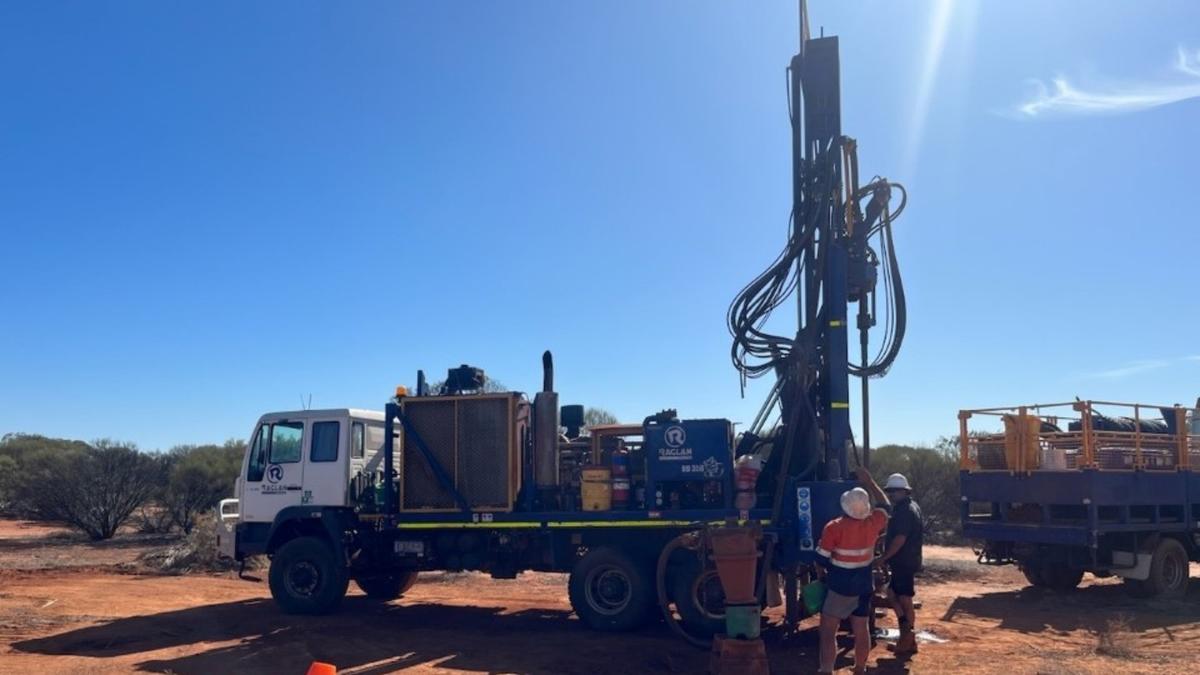
Maiden aircore drilling by Terrain late last year intersected broad zones of clay-hosted rare earths and gallium mineralisation over an interpreted nine kilometres strike and an estimated 3km width. The company says the mineralised area remains open in all directions.
That work led to a JORC-compliant exploration target defined in November over just 5 per cent of the prospect’s 27-square-kilometre footprint, outlining a conceptual target of 25 to 33 million tonnes grading between 880ppm and 980ppm TREO and between 19 and 21 grams per tonne gallium, based on 102 aircore drill holes.
The company says the latest metallurgical results provide a critical technical foundation from which to drive Larin’s Lane towards a mineral resource estimate and scoping-level studies, in addition to progressing discussions with potential partners.
With the metallurgy now showing a clear path to recovery for not one but three critical minerals using an off-the-shelf, lower-impact acid, Terrain has given itself a solid footing. As it now looks to expand the known mineralisation and progress potential partner talks, the company’s Larin’s Lane story could be just getting started.
Is your ASX-listed company doing something interesting? Contact: [email protected]
Get the latest news from thewest.com.au in your inbox.
Sign up for our emails