
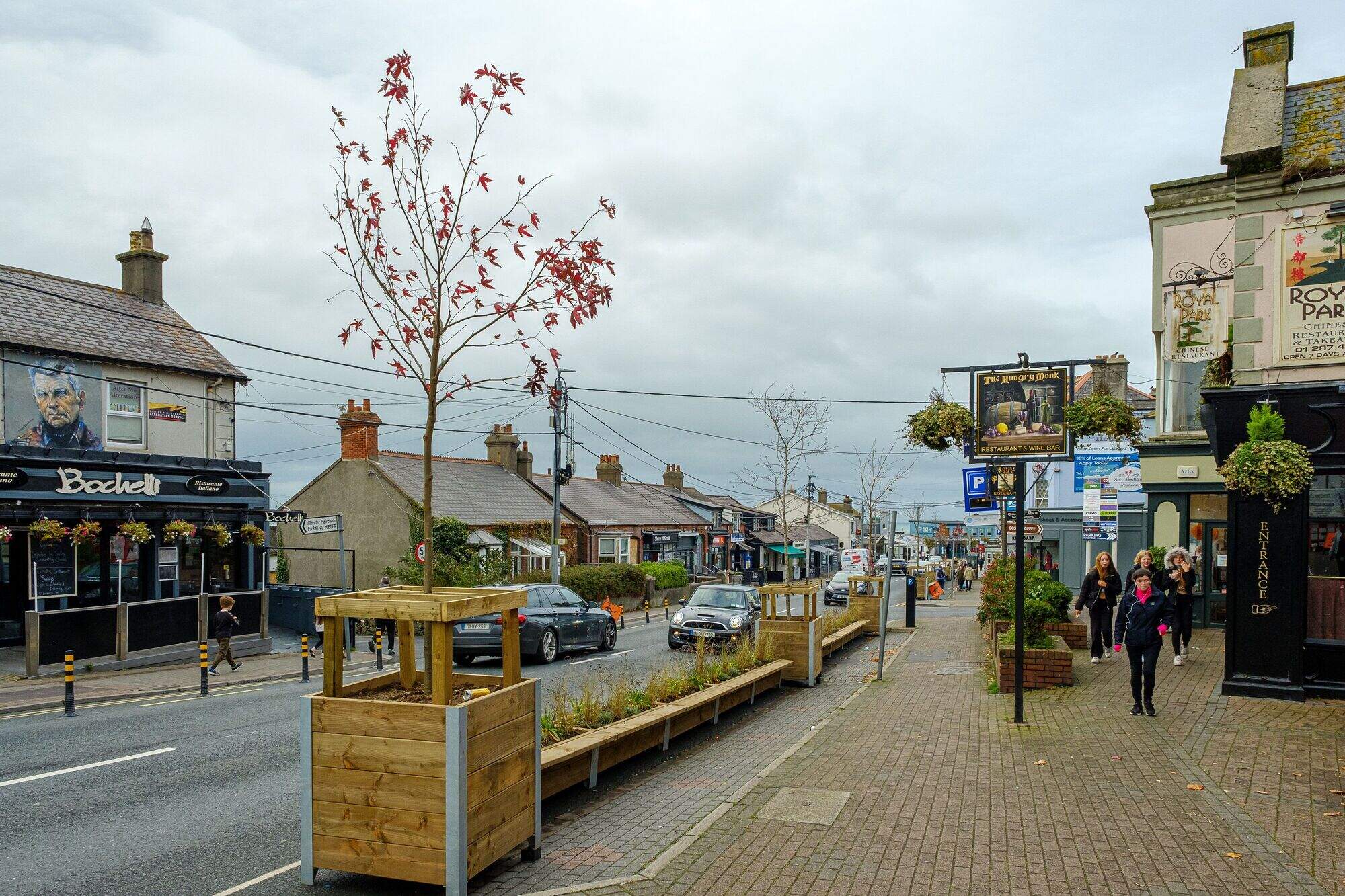
Public concern is mounting in Greystones as Wicklow County Council’s Pedestrian and Cycle Improvement Scheme enters the Part 8 process, with many residents saying they feel blindsided, unheard and increasingly frustrated by how the project has been communicated.
While the council describes the scheme as a major investment in safer walking and cycling routes, including upgraded footpaths, segregated cycle tracks, new crossings, junction redesigns, traffic calming measures and a new pedestrian and cycle bridge, the public reaction has been dominated by anxiety rather than enthusiasm. Much of that unease is now spilling into councillors’ inboxes.
In an email to district administrator Tawnia Kearns, Cllr Tom Fortune said he has been “receiving calls from a number of people” who say they simply do not know what is happening. Residents told him they contacted the Active Travel office in Arklow only to receive an envelope of drawings with no explanation. “
“As one person put it, they are not engineers,” he wrote. The absence of a staffed public display, similar to the Glenview Hotel event held for the N11 proposals, has become a central complaint. According to Cllr Fortune, people are asking why such an event “is not happening immediately”.
The concerns being raised are wide-ranging. Parking is the most persistent issue, particularly in the town centre where the scheme proposes narrowing the carriageway and removing bus bays.
Residents fear disabled parking will be reduced, senior citizens will struggle to access shops, and people with autism may find the redesigned spaces overwhelming or confusing. Several residents asked whether any consultation had taken place with advocacy groups representing people with additional needs.
Business owners are also uneasy. Some say trade has already been affected by reduced parking on Church Road, and they worry that further changes will make deliveries more difficult and discourage customers who rely on car access.
One resident told Cllr Fortune the plan “may look good on paper but is not practical”, while another said the project “is just being forced on them”.
Councillors have echoed parts of this sentiment. During their monthly district meeting in July, Cllr Stephen Stokes welcomed investment in the road network but strongly criticised the removal of parking on Church Road, saying businesses are already suffering.
He pointed to the recent closure of a dry cleaners as an example of how reduced parking can hurt local trade. Cllr Stokes also raised concerns about removing bus bays, arguing that Church Road is already congested and that buses stopping in line will worsen delays.
He said bus and train timetables do not connect and urged the National Transport Authority to review scheduling.
Other councillors have taken a more measured tone, but still highlighted gaps. Cllr Louise Fenelon Gaskin said the Bellevue Road junction needs closer scrutiny. Cllr Orla Finn said that while active travel is important, “the reality is people are still driving and they need to be considered.”
Even councillors broadly supportive of the scheme, such as Cllr Lourda Scott, acknowledged that funding and design details must be clearly explained to the public.
The council insists that environmental checks are underway and that features such as raingardens will be examined during detailed design, though cost will be a factor. Officials say the planters on Church Road were installed following consultation with businesses and that the goal is to make the main street safer and more accessible.
They argue that age friendly spaces could be better accommodated in nearby car parks and that buses should not be parking outside the Dart station for extended periods.
However, these explanations have not eased the sense of confusion. The Part 8 process requires submissions to be made to the department listed on the site notice, not the planning department, and several residents told councillors they were unsure where to send their views. Others said they were unaware the consultation had even begun.
The Appropriate Assessment Screening Determination, published earlier this month, concluded that the scheme will not have significant effects on the Murrough SPA or other European sites.
While this clears one statutory hurdle, it has done little to address the core issue that many people feel they have not been properly included in the conversation.
As the consultation continues until September 30, the council faces a growing challenge.
The scheme is ambitious, technically detailed and aligned with national transport policy. But in Greystones, the debate is no longer about design manuals or cycle track widths. It is about trust, communication and whether residents believe the project is being shaped with them, or simply delivered to them.
People have indicated that they want information and engagement, and they want to feel that their town is not being redesigned without their input.
Funded by the Local Democracy Reporting Scheme