
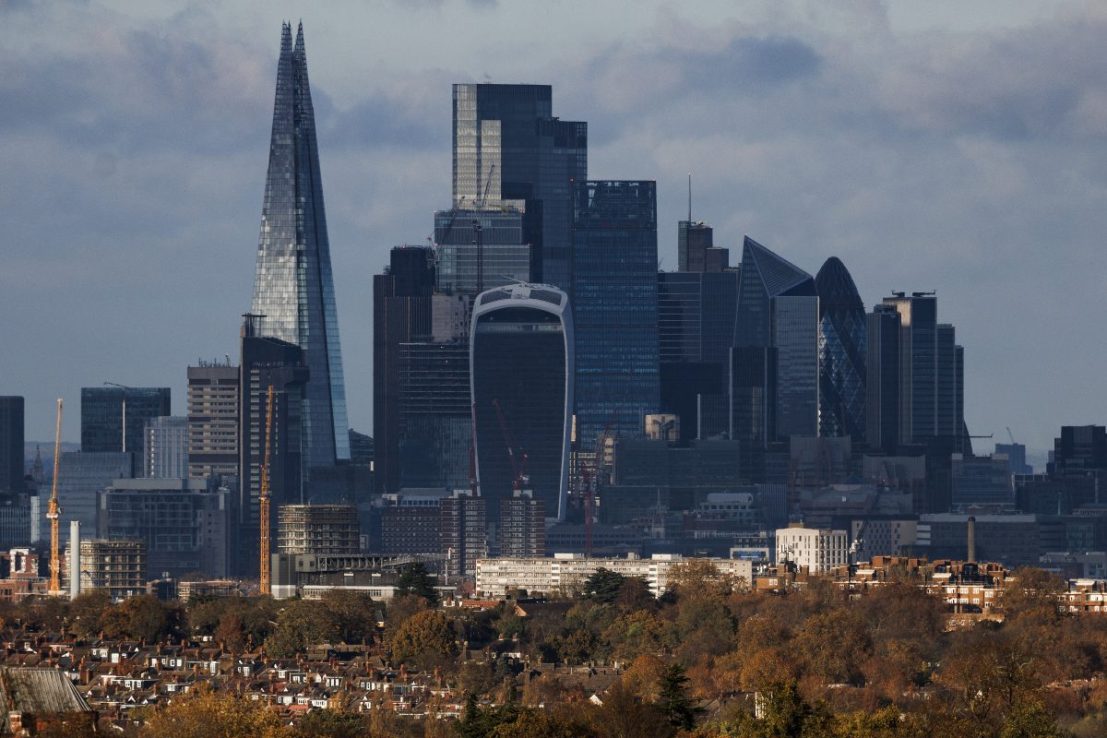
London’s rivals are the world’s capital cities. Whether you live in London or Leeds, Leicester or Liverpool, the success of our capital matters for jobs and funding for public services in every single part of the country, says Karim Fatehi
A truly competitive capital city which secures international investment, attracts the best talent and drives growth across the whole country does not happen by accident. The most attractive financial hubs are carefully curated by governments.
Thriving economies treat the success of their capital cities as national policy issues. Ireland, Denmark and the Netherlands have built a consensus around their capital succeeding, whether you live there or not.
If the Prime Minister is to meet his promise to deliver growth in every postcode, we must now do the same for London.
Autumn will bring the budget, the devolution white paper and the Prime Minister’s 10 Year Plan for Britain. Using these moments to move investment away from London and reduce the capital’s competitiveness would be a serious mistake. The investment London misses out on does not go to another UK town or city, it moves to Paris, Frankfurt, Dubai or Singapore.
Our rivals are not our fellow towns and cities. Our rivals are capital cities across the world. Whether you live in London or Leeds, Leicester or Liverpool, the success of our capital matters for jobs and funding for public services in every single part of the country. London and the South East pay 45 per cent of the UK’s income tax bill, and London businesses pay 30 per cent of England’s business rates.
With rival global cities in Europe, Asia and the Middle East becoming increasingly attractive investment prospects, we cannot afford to be complacent.
The solution is a mix of levers the Prime Minister and Chancellor can pull to reduce business costs and help SMEs, alongside support for infrastructure projects which are harder and require real political will, but deliver big economic rewards.
When London wins, Britain wins
Getting a pragmatic new deal with the EU over the line, restoring VAT-free shopping, reversing changes to the non-dom regime, designating King’s Cross as an AI Investment Zone and reversing the increase in employer National Insurance contributions are all decisions in the government’s gift.
Delivering airport expansion at Heathrow, Gatwick, and Luton would add billions of pounds to the UK economy and support tens of thousands of jobs across the country, powered by private investment.
Backing the Bakerloo line extension, supporting the DLR extension to Thamesmead, and restarting work on the next Elizabeth Line, Crossrail 2, would unlock thousands of homes, create skilled jobs and generate hundreds of millions of pounds in tax receipts. The success of the Elizabeth line, worth £42 billion to the economy, should leave no room for doubt on the value of infrastructure, both during construction and when complete.
We are realistic, however, that the public purse cannot support these transport projects in their entirety. Government, the Mayor and TfL must find innovative ways to deliver these projects, looking to the Elizabeth line, the Northern line extension and models used successfully by our rivals.
We know the UK’s rivals are not just competing for investment. They are also competing for people. London should be a hub for top talent globally, yet businesses cannot hire the skills they need. The social contract, meanwhile, has fractured because young people, no matter how hard they try or how skilled they are, cannot find a job.
If London cannot be a city where high-quality talent can build a career, afford to enjoy living in the best city in the world and eventually buy a home, we will see other cities and countries around the world benefit from growth instead. Lowering the cost of employment is the most useful thing we can do for the UK’s one million NEETs. Alongside making London housebuilding viable again, we can start to repair the social contract.
We can win the global investment and talent race if we choose to make our capital city as attractive as it can possibly be. At the London Chamber of Commerce and Industry, we want investors to choose London over other capital cities, and we want young people to choose London as the place to live, work and build their futures. This is a national mission, and so we must treat it as such.
When London succeeds, the whole country succeeds.
Karim Fatehi OBE is CEO of the London Chamber of Commerce and Industry. You can read more about the Choose LDN. campaign here.