
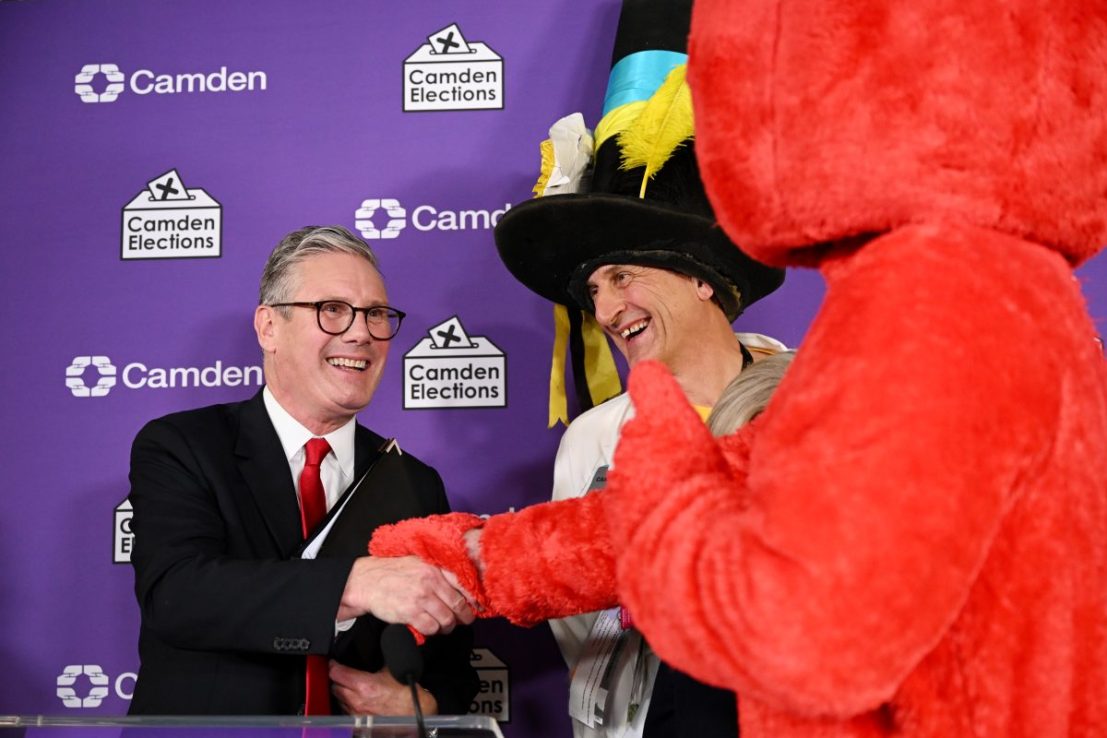
Holborn and St Pancras has been held by Labour for 43 years, but the rise of the Greens, and the cup-tie atmosphere of a by-election, could spell trouble as Keir Starmer steps down, writes Douglas Beattie
The best we can say about Keir Starmer’s decision to stand down as an MP is that it has provoked a somewhat mixed reaction across his party. Despite pledges he would remain until the next election he had rather telegraphed his likely intentions to go back in July.
During his last session of Prime Minister’s Questions he said he had reached the “end of my political journey”. For someone who came into the trade fairly late in his career his journey was remarkable.
Starmer’s life in politics
In 2014 rumours began to swirl in Camden Labour circles that a big hitter was being sought to replace the much-loved incumbent MP, Frank Dobson, who had indicated he would not be fighting the next general election.
It soon emerged that Starmer was that figure. Shortly after it was clear he was running and that he had that most precious political quality – momentum. Before Christmas a delighted Starmer was confirmed as the Labour candidate for Holborn and St Pancras during a selection meeting at a local church with hundreds in attendance.
It was the launchpad for all which would follow these past dozen years – for there was then very little prospect of anything other than a Labour hold in this seat which stretches from the wilds of Kentish Town, down to the Euston Road and beyond to the fringes of The City.
Duly elected in the spring of 2015, with Labour losing the general election under the leadership of Ed Miliband, there was talk even then amongst the Camden cognoscenti that Starmer should be leader of his party. All of which was far too soon, but Starmer was always bolstered by a loyal local following who actively wished to see their MP scale the political heights.
In the elections of 2017 and 2019 he again won, on both occasions with thumping majorities around the 30,000 mark. However, under slightly new boundaries in 2024 and with Starmer on the cusp of becoming Prime Minister, this was whittled down to just over 11,000.
While these figures may not make the seat terribly vulnerable at a general election, it does mean that in the cup-tie atmosphere of a one-off by-election danger lurks for Labour.
Who will challenge Labour in by-election?
Certainly, the party has not been slow in beginning the search for its candidate; the process started just hours after Starmer’s decision to go was made public, with the selection due to be tied as soon as next Wednesday. The breakneck speed of the timetable can only mean Labour effectively has its candidate, or at least a very tight shortlist of hopefuls deemed suitable.
Understandably there will be criticism that little time is being left for local members to properly have a say, and indeed to apply. Doubtless the converse argument will be that speed is of the essence to maximise chances of success.
Certainly, who Labour chooses will matter because they are likely to be thrown into a national media spotlight and find themselves taking on Zack Polanski, the leader of the Green Party. Frankly it would be astonishing were he not to have a tilt at the seat.
Internally Labour is already briefing members that “this by-election could become a straight contest between Labour and the Greens”. There is also the question of what Andrew Feinstein, the local independent left wing candidate who was Starmer’s main challenger in 2024, will do now.
Other parties too will feel they can increase their vote share, but the bottom line is Holborn and St Pancras remains prime Labour turf in the capital – a jewel Andy Burnham and his party will have no intention of letting slip from their grasp.
Douglas Beattie is the author of Victory at the Ballot Box: The History of How Labour Built Britain