
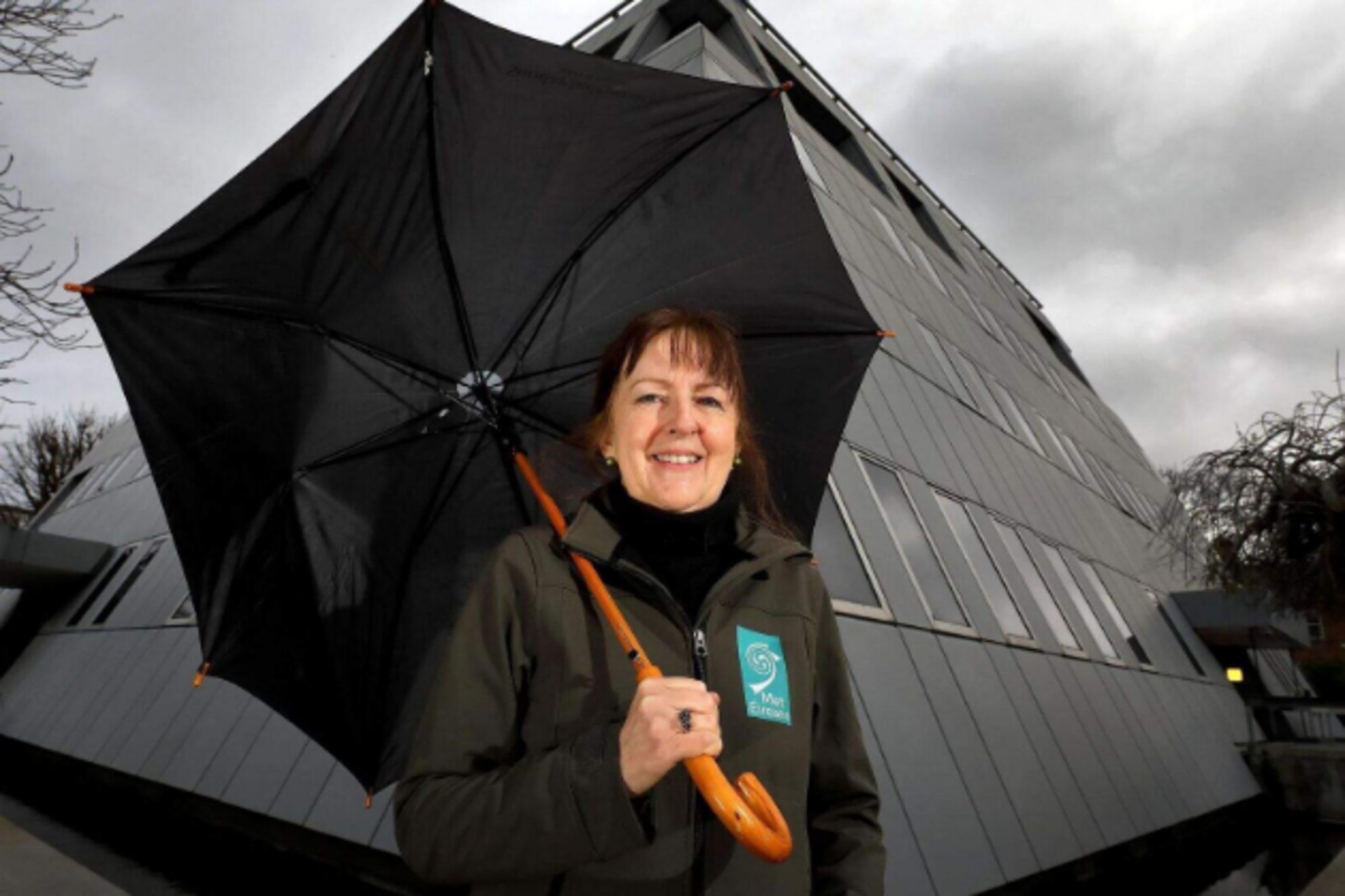
Ms Cusack describes the storm honour as a “mixed blessing”
Evelyn Cusack has said it is a “mixed blessing” to be honoured by Met Éireann as it marks its 90th anniversary by naming storms after pioneering figures in Irish meteorology.
One of this year’s storm names, Evelyn, pays tribute to Evelyn Murphy, the first woman to work as a meteorologist with Met Éireann and Evelyn Cusack, the forecaster’s first female head of forecasting and the face of RTÉ weather for four decades from 1983.
Ms Cusack appears fifth on this year’s 12‑month list of storm names and, joking, she said that with her name sitting at number five on the new list, she hopes it never comes to pass.
“Who wants to be associated with violent winds and destruction of property?” she told RTÉ’s News at One programme.
She described the recognition as a “mixed blessing” adding: “I’d be just as happy if we never got a Storm Evelyn.”
Met Éireann, working with the UK Met Office and Dutch service KNMI, released the annual storm‑naming list, which helps to sharpen public communication during severe weather.
The first storms this cycle are Austen, Boelo and Chloe, followed by Dano, Evelyn, Finn, Gwendolyn, Heather, Ivy, Jade, Kilian, Laoise, Miriam, Nicola, Olaf, Phelim, Ruban, Shaun, Theo, Vesna and Wende.
To mark its 90th anniversary, Met Éireann chose names that honour figures from its history.
Austen, is after Austen Nagle, the first director of the Irish Meteorological Service. KNMI, meanwhile, selected names from more than 3,000 public submissions, among them Boelo, a near‑extinct east Groningen name passed down through the nominator’s family for generations.
Heather, Laoise and Phelim derived from a longlist of nominations proposed through a public campaign run last year.
Miriam Lyons was also recognised. She was the first woman to hold an operational role as a meteorological officer.
Speaking to the Irish Independent, Ms Cusack said: “I really hope there will not be a Storm Evelyn (this year). It would be the fifth. Last year there was only four (storms), so I’m hoping it will be the same again.”
The retired meteorologist was directly involved in establishing Ireland’s storm‑naming system, a model that was later adopted across Europe by other national forecasters.
“Met Éireann pioneered this in 2015 and now all the national meteorological services in Europe name storms,” said Ms Cusack.
“It has proven very useful because it engages the media and social media and people get the safety messaging and are prepared.
“In the winter you could have a storm on Monday and then another one on the Thursday. And sometimes with social media there could be old warnings, it can be very confusing.”
Ms Cusack said that the celebration of women meteorologists in the forecaster’s history is significant.
“There were no women in the met service until Miriam joined, it’s important to honour her.
“The assistant director is now a woman. We haven’t had a female director yet, but that will come.”
Ms Cusack, who authored, They Say It Might Rain: The Highs and Lows of Ireland’s Weather and Climate, appeared on an early draft of names sent from the UK Met Office on August 16, after suggestions from all three offices.
This year there were more than 40,000 suggestions submitted by the public regarding storm names.
In the last year, four names were used from the list, reaching the letter D with Storm Dave in April 1, although the UK also saw impacts from a further three storms named by other European meteorological services – Storms Benjamin, Claudia and Goretti.