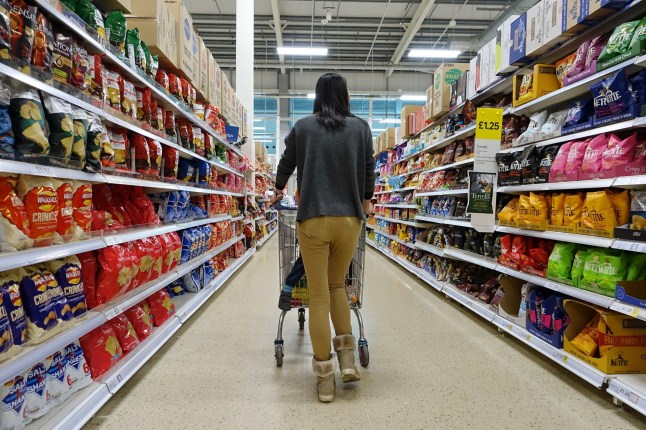
You might not have noticed it, but your favourite snacks have been quietly changing over the last few years.
Some of the UK’s most iconic products have had their recipes reformulated to avoid strict rules imposed on foods high in fat, sugar, and salt (HFSS).
Currently, HFSS products are not allowed to be advertised directly to children, can’t be placed in high-footfall areas in stores, such as aisle ends or at checkouts, and also cannot appear in any online paid-for advertising or in TV adverts before 9pm.
As such, Doritos, Walkers Crisps and Quaker Oats products have all undergone recipe alterations, so they contain less salt and fat, while 7UP and Pepsi have had sugar levels reduced.
Ritz Crackers are also thought to have had a recipe change, as have Digestive biscuits and BelVita bakes.
Years of work and lots of money have gone into these reformulations, as experts figured out how to retain the tastes and textures of products we know and love, while making them slightly ‘healthier’.
But further change could be coming to these items and many more as the government is currently reviewing the system used to classify food as HFSS – the nutrient profiling model (NPM).
What is the nutrient profiling model?
The NPM is the classification system used in England to rank food and drinks based on nutritional composition. It helps determine if they are ‘healthier’ or ‘less healthy’.
The ‘less healthy’ products are those high in fat, salt, or sugar (HFSS), and if the system changes, more products may require recipe reformulations.
Currently, the NPM 2004/05 is used, but there is an updated and modified version of the NPM that was created in 2018.
The 2018 version is said to reflect more up-to-date dietary guidance and features different thresholds for fibre and free sugars.
If the NPM 2018 is applied to the existing HFSS legislation, some of the products that have already been reformulated to meet current classifications would once again be at risk of being deemed ‘less healthy’ due to sugar content, and would need to be reformulated again.
The Food and Drink Federation estimates that 80 per cent of reformulated products could fail under the proposed new model.
The government has said it expects the benefits of applying the new NPMto include a reduction in people buying less healthy food, which will, over time, help lower obesity prevalence and obesity-related morbidity and mortality.
They estimate this could result in total health and economic benefits of around £36.93 billion over 25 years.
As such, health campaigners are all for the change. However, food manufacturers aren’t so keen – likely because there isn’t a simple or cheap solution for them. Brands can’t just remove some sugar from their products and call it a day, recipe development is much more complex.
Jacinta George, the managing director at Reading Scientific Services Ltd (RSSL), a lab where many British food recipes are reformulated, told The Guardian: ‘Sugar does more than sweeten – it provides texture, bulk and preservation.
‘Sweeteners provide sweetness but not these other qualities, meaning additional bulking agents or functional ingredients may be needed. This can increase processing and potentially conflict with consumer demand for simpler formulations.’
And historically, removing sugar from products hasn’t always worked out well for brands.
POLL
Poll
Do you think popular snacks need to be healthier?
-
YesCheck
-
NoCheck
-
UnsureCheck
In 2019, Cadbury launched Dairy Milk bars with 30 per cent less sugar in the UK and Ireland. At the time, the chocolate giant said the reformulation was ‘the most significant innovation in the brand’s history’ and its owner, Mondelēz International, had hoped it would go on to become the chocolate version of Diet Coke – a ‘lighter’ alternative to the classic Dairy Milk.
The bars didn’t prove popular with consumers, who preferred the taste of the classic, and ultimately, the less-sugar version was taken off supermarket shelves and discontinued in October 2023.
A Mondelez spokesperson said: ‘In 2019, we launched Cadbury Dairy Milk 30 per cent Less Sugar following significant investment over three years.
‘We not only invested heavily in developing a bar that consumers told us tasted great – but also in promoting it through a nationwide marketing campaign.
‘Despite these efforts, demand for this product has dropped, and we have sadly taken the decision to delist it.
‘We understand that some consumers will be disappointed by this news, but they can rest assured that we will continue to invest and innovate and bring more well-being choices to our consumers.’
So, what does this mean for the future of our favourite snacks?
Currently, there’s a lot of uncertainty, and we don’t know for certain yet if or when the NPM 2018 will be applied to the HFSS legislation and what the costs for businesses will be.
In March of this year, the government launched a public consultation on whether the NPM 2018 should be applied to the existing restrictions on the advertising and promoting of less healthy food and drink.
The consultation closed in June 2026, but no formal response has been shared as of yet.
Do you have a story you’d like to share? Get in touch by emailing [email protected]
Comment now
Comments
Add Metro as a Preferred Source on Google
Add as preferred source