Article content
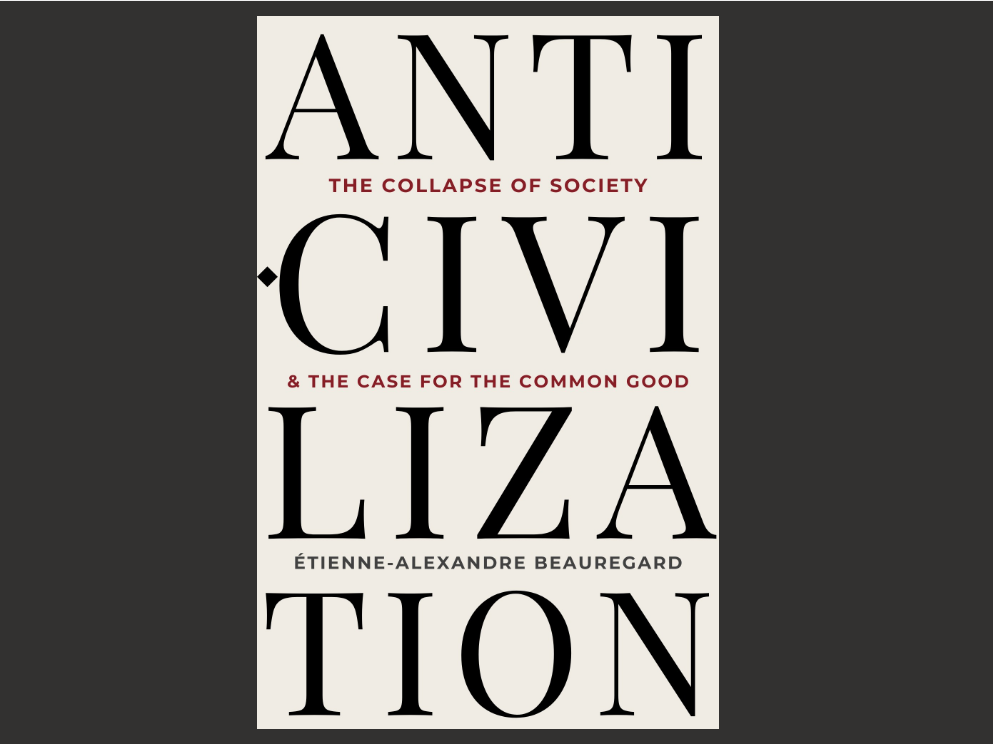
What happens when a society loses the traditions, institutions and shared obligations that once gave people a sense of belonging and purpose? In this adapted excerpt from Anti-Civilization: The Collapse of Society and the Case for the Common Good — now available from Sutherland House Publishing — Étienne-Alexandre Beauregard examines what this loss has meant for Generation Z, the first generation to come of age fully within this new landscape.
Sign In or Create an Account
or View more offersArticle content
Story continues below
This advertisement has not loaded yet, but your article continues below.
Article content
Generation Z — those born from 1997 to 2012 — are reaping the fruits sown by the baby boomers, the “sixties generation,” who, in their libertarian fervour, broke the chain of transmission without realizing that the cultural and moral heritage they had received was precisely the condition of their freedom.
Article contentWe apologize, but this video has failed to load.Try refreshing your browser, or
tap here to see other videos from our team.We apologize, but this video has failed to load.Try refreshing your browser, or
tap here to see other videos from our team.Article contentArticle content
As generations succeed one another, the traces of this precious heritage fade and young people are orphaned of the civilizational transmission they desperately need. The idea that culture, established customs and civilization are burdens for human beings ultimately proves to be the greatest of “luxury beliefs.” Because we took these treasures for granted and neglected to maintain them, we sorely miss them today.
Article content
The breakdown of value systems and social relationships has left behind a field of ruins. Several studies conducted among young Americans at the forefront of Western trends, point to a worrying impoverishment of social ties. They have fewer close friends and see them less often than before. Love is also in decline: young people have less sex than their elders did at the same age, and young people in relationships are sleeping together less often. It seems that “social distancing,” a term coined during the pandemic, has become an established reality. Unsurprisingly, a desocialized civilization is also one that has fewer children and where people become parents later, now after 30, in most of the Western world.
Article content
Story continues below
This advertisement has not loaded yet, but your article continues below.
Article content
Has this “open society” made them happier? On the contrary, Generation Z is swept away by a nihilistic temptation, more inclined to believe that life has no meaning, to doubt themselves and to have a pessimistic view of the future. It would seem that individualism has created a need for identity, belonging, and reference points that have not been fulfilled by the void that has been offered to their generation.
Article content
The impoverishment of general culture, which, at present, dismisses the great works of the Western canon, goes hand in hand with a closing of the mind and horizons, making us incapable of communing with what came before us. As French essayist and politician François-Xavier Bellamy writes,“Our ignorance renders statues mute, images indecipherable, texts incomprehensible; the signs we have inherited lose their meaning.”
Article content
This “precariousness of all spheres of existence” logically translates into a “demand for protection, measure and limits” to serve as a guide in an unknown and strange world to which they have been deliberately denied the keys. Left to fend for themselves in a labyrinth without a map to guide them, young people have every right to hold this new world accountable for abandoning them.