
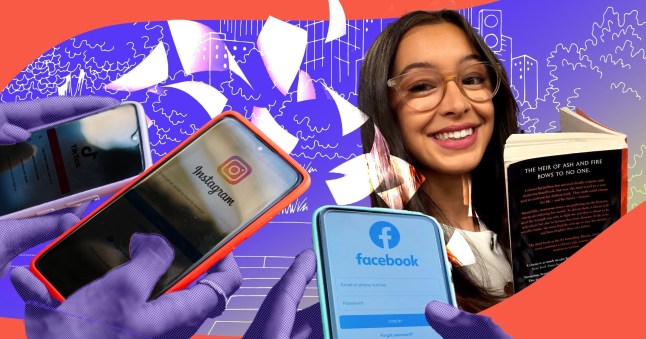
I’ve gone 22 years without becoming dependent on any of the substances that responsible adults warn you about.
On New Year’s Eve 2023, I quit vaping after puffing my way through my teens on a blueberry elf bar.
It wasn’t hard, so I figured I wasn’t addicted. When it comes to alcohol, I know that I could quit tomorrow, and illegal drugs don’t interest me.
However, there’s one thing you can be addicted to that doesn’t ring any physical health-related alarm bells. And that’s social media.
Now the negative mental impacts of the digital world are being talked about, even with the government introducing a ban for young teens.
However, I was part of an ‘invisible’ generation.
My parents put all the suitable guardrails in place, but aged 16 I downloaded TikTok in lockdown and started spending hours a day doomscrolling.
I deleted it, thankfully, sensing it was getting unhealthy.
Scrolling and addiction
In truth, the whole social media landscape had shifted in 2018. That year, what was once Musical.ly turned into TikTok.
The short-form scrolling model was so successful that it was poached by all mainstream social media platforms in the years to come – think YouTube shorts, Snapchat spotlight and Instagram reels.
Social media changed from a way to keep up with friends, to something vying for users’ attention through highly addictive algorithms.
I’m still at the mercy of so-called ‘gold mining’ – that feeling of ‘just one more video’ until you look at the clock and hours have passed.
Scientifically speaking, the brain is searching for a ‘gold nugget’ video, to provide you with the dopamine hit that makes the whole system so easy to get hooked on.
Across the UK, people are spending the equivalent of more than five full weeks a year on social media, in what experts are calling a growing ‘lost time trap’ – costing us 36 days a year.
A recent study from DataReportal found that the average adult now spends two hours and 21 minutes a day scrolling, messaging, posting and sharing content online.
After the harrowing realisation that my screen time had hit seven hours one day, I decided it was time to take a month off.
Week One
I decide to go cold turkey.
So Snapchat, Instagram and even YouTube are deleted from my phone.
Day one, I instantly feel lighter. I am pleased for finally making the move. I get lots done – and I don’t really miss the apps.
Day two, I find myself opening my phone and mindlessly clicking on a blank space on my screen — only to realise my muscle memory is trying to get onto Instagram without me even making a conscious decision to do so.
Maybe the depedency was worse than I thought.
In the place of screen time I spend much more time reading, and I start watching a new TV series, which I hadn’t done in years.
However, the initial boost is short-lived.
After a few days, I feel life is missing something important. I’m not keeping up with what’s happening in the lives of my friends – and I’m worried I am missing out.
Week two
The start of what turns out to be the hardest week. I meet up with friends and I notice they were able to ask each other about events I simply didn’t know had happened.
Quickly, I have to shift my mindset.
I become more active in checking in with them daily, and become accustomed to picking up the phone.
It’s a typical Gen Z trait to hate calling (almost definitely due to reliance on social media), but I realise that perhaps it’s a lost art.
In fact — experts say phone calls are crucial for maintaining close bonds.
I usually struggle going to sleep, often (I hate to admit it) scrolling reels until my eyes are closing, or drifting off to YouTube on a good day.
Newly invested in my book from all the reading I am now doing on my commute, I start getting a few chapters of romantasy in before nodding off.
This proves one of the biggest differences that I notice. Reading before bed – instead of scrolling –allows this noise to totally quieten. My dreams are less vivid, and I wake up more refreshed.
Week three
This is where I saw a big difference.
I notice my brain start to get quieter. Being less foggy in the mornings continues throughout the day. I find myself searching for missing words less, and noticing what is around me more.
I am present in a new way. I start journalling again to fill the time, creating a gratitude journal of three good things I have clocked each day — a cute dog on the train, a compliment from a colleague, a particularly pretty cloud.
Most of these things I wouldn’t have thought twice about if I was using all my spare seconds to scroll.
This said, a quieter brain does in turn mean more time to get bored. I confess – I use YouTube on my MacBook.
But watching a 30-minute film commentary on a laptop screen feels wildly different to scrolling five second clips at 2x speed for hours so, reader, you will have to forgive me.
Week four
I am converted. I watch films on TV, which, while it may sound ridiculous, I am pretty chuffed with myself for. Usually I’d have some of my attention on my phone, picking it up every now and then, missing a key piece of dialogue and rewinding.
Sure, I sometimes feel FOMO, but that voice is quieter now and I have fallen into a comfy routine of checking in with those who I love.
I find I have more time in the day, my perspective has broadened, my head is quieter, I sleep better. Overall, I actually feel undeniably happier.
All of this said, I confess I am excited to redownload Instagram at the end of this week, as I am taking a once-in-a-lifetime trip with my friend and want to properly document and share it.
However, I set myself a rule, which if I stick to will be the greatest form of relf-restraint: no reels. And I manage it.
For the first time in years, I felt I was in control of the app, not the reverse.
The aftermath
Getting back from my trip, I notice myself slipping back into old (bad) habits.
Waiting for Instagram to load on my commute, scrolling before bed, not being present. So, I delete it again – just Instagram this time as, for me, that’s the main place where it can get unhealthy.
All in all, I would encourage anyone to have a social media detox. It offers your brain a chance to breathe and reset.
Now, I can pick it up and put it down, and the transition between having social media and not is easy. It’s taken four weeks but I’ve officially snatched back control.
Comment now
Comments
Add Metro as a Preferred Source on Google
Add as preferred source