
MONEY. However much you earn, have or inherit, the role that it plays in all our lives shapes not just the trappings around us.
It dictates how we feel. Too often, those of us in financial journalism overlook that side of the coin.
We write column inch after column inch on how to make yourself richer by saving and investing. We dream up side hustles that can (but mostly don’t) earn you an extra hundred quid a month.
We tell you to save, to budget, to cut costs. Sometimes we tell the stories of those who’ve racked up tens of thousands of pounds of debt – and then we tell you how easy it was for them to pay it off and buy their dream home.
They are all good stories – but increasingly, they can feel irrelevant. And it’s time someone said why.
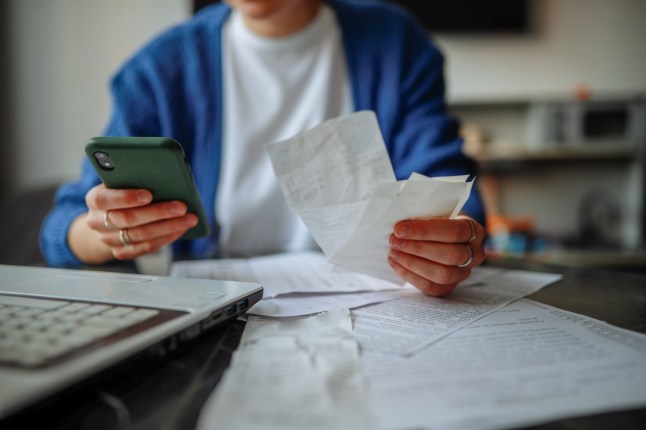
We feel poor. I feel poor. Honestly, I spend all – all – of my time with this slightly sick feeling in the pit of my stomach. It’s a low level, persistent, corrosive anxiety and it’s because of money.
{“@context”:”https://schema.org”,”@type”:”VideoObject”,”name”:”Water bills to rise 30%, warns author of landmark report on ‘broken’ water industry”,”contentUrl”:”https://videos.metro.co.uk/video/met/2025/07/21/2089856853535538945/480x270_MP4_2089856853535538945.mp4″,”description”:”Sir Jon Cunliffe warns water bills will go up 30% over the next five years.”,”duration”:”T1M25S”,”height”:270,”thumbnailUrl”:”https://i.dailymail.co.uk/1s/2025/07/21/09/100484621-0-image-a-7_1753088359435.jpg”,”uploadDate”:”2025-07-21T09:59:00+0100″,”width”:480}
Up Next
Previous Page
Next Page
window.addEventListener(‘metroVideo:relatedVideosCarouselLoaded’, function(data) {
if (typeof(data.detail) === ‘undefined’ || typeof(data.detail.carousel) === ‘undefined’ || typeof(data.detail.carousel.el_) === ‘undefined’) {
return;
}
var player = data.detail.carousel.el_;
var container = player.closest(‘.metro-video-player’);
var placeholder = container.querySelector(‘.metro-video-player__up-next-placeholder’);
if (placeholder) {
container.removeChild(placeholder);
container.classList.add(‘metro-video-player–related-videos-loaded’);
}
});
You will have had – unless you are very lucky – similar feelings at some period or another.
Now, let me caveat this with the acknowledgement that I am not poor. I earn what is, by anyone’s standards, a decent salary. I am fortunate. Well-educated. Able to work.
In short, I am extremely lucky and millions of people are not. People can’t afford to eat. Who’s going to feel sorry for me because I have had to ditch my normal supermarket for a low-cost one?
At the risk of being cancelled for being an entitled brat, I think that’s a mistake. Middle Britain is Britain. We are the vast, quiet majority. And we are suffering in our own way – it’s just relative.
Some numbers – forgive me, I am a finance journo after all…
Latest London news
- Met Police refuse to say if they are investigating London upskirting website
- Man, 32, dies after ‘violent attack’ at major London station
- Londoners can hail a limited Uber Wayve robotaxi after new trial starts
To get the latest news from the capital, visit Metro’s London news hub.
I got my first job out of university in 2006 as a temporary receptionist in a very fancy bank in London’s Mayfair. I was given a salary of £30,000. It was a fortune.
After tax and repaying my student loan, just over £1,800 landed in my bank account each month.
My rent was £400 a month. My mobile cost about £12 a month. I probably spent about £45 on energy.
I could eat a meal out at Pizza Express in Soho for around £18 – wine included. I shopped at Waitrose and spent around £50 a week.
After all my expenses, I had something in the region of £1,000 a month to save (I didn’t – I spent it, I was just out of uni). A grand – one thousand pounds. A month. In 2026 money, that’s £1,785.
Let’s compare that to today. My income has roughly doubled over the past 20 years.
Let’s go with a round number of £60,000, giving me approximately £3,780 a month in the bank. So far, so brilliant. But…
My rent is now more than £1,200. I pay £55 a month for my phone. My energy bills have just gone over £200 a month.
I went out for dinner with a friend at a local Italian in Gloucester (not Soho) recently and parted with £70. We shared a bottle of wine, had pasta and garlic bread. It wasn’t even that nice.
After all my committed expenses, I have around £500 a month to save or spend on nice-to-haves – books, clothes, coffees with friends.
In 2006, that was equivalent to £280. In real terms, I am a whopping 72 per cent poorer in disposable income terms. I haven’t been on holiday since 2018. I rarely buy booze. I no longer eat red meat.
I swapped my petrol Nissan for an electric car, which has upped my electricity bill but dramatically cut my travel and motoring costs.
And bye bye Asos. Now I sell old clothes on Vinted and buy everything I wear second-hand using the proceeds.
As well as wanting to cry every time I go to the supermarket, I now have regular bills from the garage because the sodding potholes everywhere are wrecking my suspension and tyres.
I can’t get a doctor’s appointment unless I pay to go private. The train, 85 minutes into London, costs £135 for a one-day return.
A day at the office is a luxury I can no longer afford.
I can’t contemplate buying a house – I don’t have the deposit (pah!) but more importantly, the thought of having to find the money to repair the boiler/roof/ leaky pipes/whatever fills me with insurmountable dread.
Don’t get me wrong, I have a nice life. I really like my life. I go for walks outside – it’s free.
But I’ve made more and more compromises over the years and I’m not actually sure how many more I’ve got room for before I have to give up my independence and move back into a shared house – in my 40s.
I know I’m not alone. This is the reality facing millions of middle income families in the UK.
No, we’re not poverty stricken – far from it. So yes, the pain is relative. But that doesn’t stop it hurting.
Do you have a story you’d like to share? Get in touch by emailing [email protected].
Share your views in the comments below.
Comment now
Comments
Add Metro as a Preferred Source on Google
Add as preferred source