
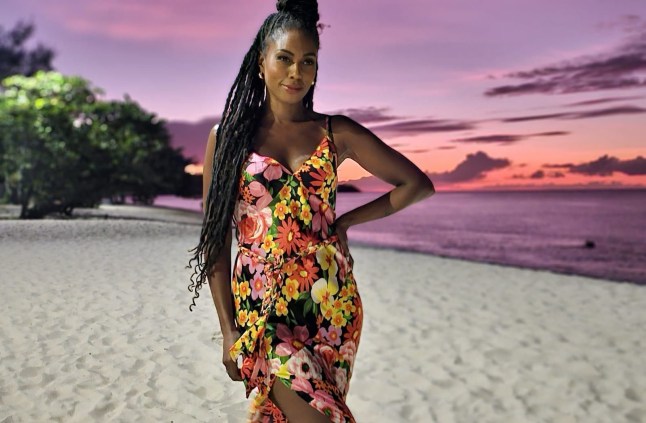
Teetering my finger above the phone screen, I pressed ‘post’ on Instagram – finally ridding myself of the ‘dirty secret’ I’d been concealing for seven years.
I had been diagnosed with bipolar in 2012 – but it took me until April 2019 to ‘come out’ about my condition to the world.
As I posted about my situation, I felt an overwhelming sense of relief.
For years, I had felt stamped with the stigma of bipolar. Now, at last, I was able to live freely as my true authentic self.
Bipolar essentially manifests as extreme changes in your mood – from ‘low moods’ in the form of depression, to ‘high moods’ in the form of mania or hypomania.
For me, it manifests as a whole range of symptoms: severe depression, mania, impulsivity, racing thoughts, hyperactivity, overspending, disrupted sleep and suicidal thoughts.
I can’t pinpoint the moment when bipolar started to rear its head for me, but my symptoms began in my teens. My depressive episodes were dismissed as teenage angst; I didn’t know what I was describing, and all I was asked by my GP was to rank my emotions on rigid mood questionnaires.
My concerns around my mood, my thoughts and the sharp shifts of both were brushed aside. It was clear then that my mental health wasn’t taken seriously – treatment or support were not on the table.
This pattern continued for the entirety of my 20s.
The first major depressive episode I remember was after my girl band, Kleshay, lost its record deal in 2000.
Later, after being made redundant when Disney Channel UK closed, I experienced another major period of depression. I became withdrawn, stopped seeing friends, rarely left the house, wasn’t eating properly and struggled to function.
I went to the GP roughly every month, explaining my low mood, but time and time again I’d be dismissed as having a ‘bad day’, or told that ‘people like me’ – a Black woman – are usually ‘strong’.
Not only was I fighting my mind, I was battling the medical misogynoir – the systemic intersection of anti-Black racism and misogyny within healthcare – blocking access to the help I so desperately needed.
It didn’t matter what GP I saw, the reaction was more or less the same; even when I repeatedly said that I was contemplating ending my life.
The sudden loss of energy, the constant tears, the growing dark thoughts – it was all consuming.
But, again, I was told to be ‘strong’ and that I was ‘too self-aware’ for anything to be seriously wrong.
Eventually, I was misdiagnosed with depression in 2010 and prescribed SSRIs, a type of antidepressant.
But, while neither I nor my GP realised at the time, this medication sent me into mania.
I was in a manic episode for a year. I didn’t feel the need to sleep or eat; I’d never felt so confident or spontaneous. Ideas constantly streaming. I felt untouchable. Invincible.
That was, until I wasn’t. The euphoric facade of mania eventually wore off and the harsh reality of this part of the illness hit.
I was unemployed for two years as a result of my manic episode, and in debt – but impulsive spending and excessive generosity are common symptoms of hypomania, and I couldn’t stop spending money I didn’t have.
I’d get delivery after delivery of parcels I didn’t remember ordering; I’d buy rounds of drinks for people I didn’t know, even though my bank balance was in six figures of debt.
At one point, I briefly became homeless and severed ties with friends and family due to my erratic behaviour.
Do you need support?
For emotional support, you can call the Samaritans 24-hour helpline on 116 123 for free, visit a Samaritans branch in person or go to the Samaritans website.
PAPYRUS offers specialised suicide prevention support for young people. Their HopeLine 24/7 is available every hour of every day. You can call 0300 102 2470, text HOPE to 88247 or email: [email protected].
During mania, I was highly impulsive. Although I often felt euphoric and invincible, suicidal thoughts could appear suddenly and intensely. It was frightening and deeply confusing.
During the height of mania, my friend Sheeba talked me down from doing something life-threatening. It was one of my darkest moments.
In 2012, I seriously thought about ending it all.
In a last ditch attempt to save myself, I wrote a suicide note and gave it to the GP receptionist. I hoped putting my feelings in writing would make them take action.
Sure enough, once the GP had read my note, an ambulance came. I thought this would be the end of my suffering – but upon arrival at the hospital, I was left alone in a meeting room for hours, scared and confused.
I was sent home without any diagnosis, treatment or support. Despite being severely suicidal, I was on a waiting list to see a psychiatrist for three long, painful months; and my symptoms worsened in this tortuous state of limbo.
Eventually, I was finally assessed and diagnosed with bipolar and generalised anxiety disorder.
Initially, after fighting an exhausting decade-long battle with both my mind and various GPs who hadn’t taken my concerns seriously, I just felt relieved. The fight certainly wasn’t over; but at least now, I could equip myself for it. My medication was altered and I was gradually weaned off my antidepressants.
However, that initial relief was abruptly replaced with the haunting title of this diagnosis, and the heavy shame it carries. Bipolar is readily stigmatised – it was impossible not to feel threatened by the very real possibility of prejudice – and I spent the next seven years concealing my diagnosis to the world and even some of my closest friends.
For years, I believed people would judge me before they got to know me. I worried I’d lose work, credibility and opportunities.
Eventually, though, I began to rebuild my life.
Medication helped stabilise me, but therapy was transformational. It helped me understand myself, process what had happened and move forward.
Gradually, as I became more stable, I grew tired of living in the shadows of the condition. I knew I had to look within and fully accept who I am.
In short, I took my power back.
I learned everything I could about bipolar. I prioritised stability, accepted support, built routines and eventually turned my experience into advocacy through my book and work.
At the point of pressing ‘post’ on Instagram, I wasn’t thinking about becoming a mental health ambassador – I simply wanted to stop living a double life and feeling like a fraud.
It’s now been 14 years since I got my diagnosis, and I’ve come a long way since then.
I worried that I would no longer have a career in TV if people knew about my bipolar, but I landed my presenting job on Channel 4’s A Place in the Sun in 2021 – which I still have today.
I’ve managed to rekindle my relationships with friends and family that are so integral to the support system that keeps me going.
Want to learn more?
Leah’s book, Thriving with bipolar: A Personal and Practical Guide to Living Well, is available on Amazon now.
In a full circle kind of way, I’m now an ambassador for Bipolar UK.
And, most importantly, I’m the most mentally well I’ve been in my life.
The stigma attached to mental health difficulties can be just as debilitating as the symptoms themselves. It’s what made me feel I had to keep a ‘dirty secret’ to begin with. But my initial step to being able to thrive with bipolar was – and is – acceptance. That shift of mindset allowed me to realise that bipolar shouldn’t be secret; nor is it ‘dirty’.
There’s more to me than my condition – one that I can now manage really well – and it took me a long time to realise that. Bipolar is something I live with; it isn’t who I am.
Yes, I have bipolar; but I am not Bipolar Disorder. I deliberately remove the capital ‘B’ to give the word ‘bipolar’ less power, as I am the one with the control.
And a disorder? I am certainly not that.
It’s possible to thrive with bipolar. I’m living – not merely existing – proof.
As told to Layla Nicholson
Do you have a story you’d like to share? Get in touch by emailing [email protected].
Share your views in the comments below.
Comment now
Comments
Add Metro as a Preferred Source on Google
Add as preferred source