
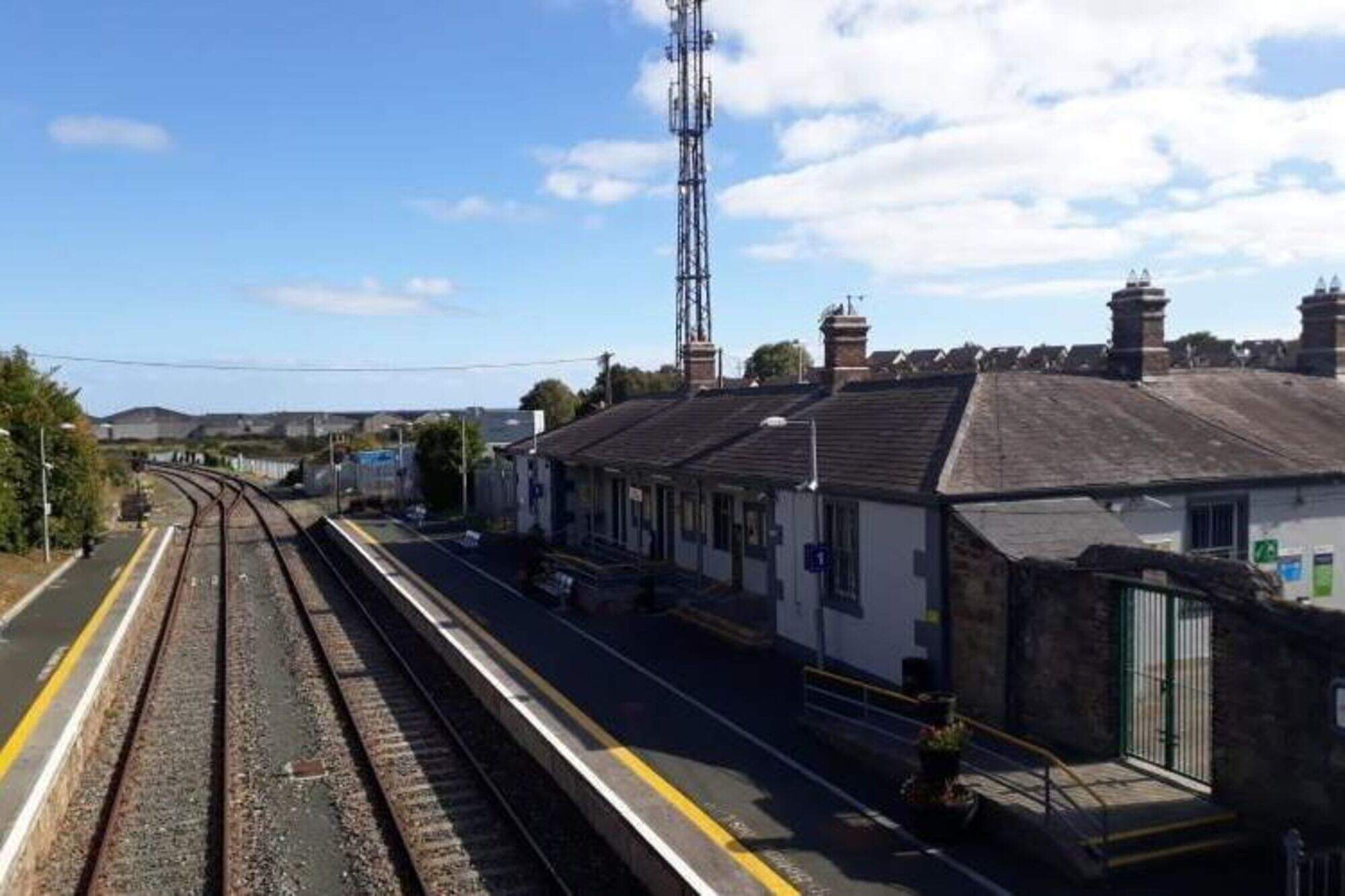
The government has reversed a recent shift in its timeline for delivering Dart services to Wicklow town, rowing back to the long-stated 2029 target just weeks after Transport Minister Darragh O’Brien appeared to soften the date to “around 2030”.
The change comes as Irish Rail advances the project with the publication of a design and build tender for new battery charging infrastructure at Wicklow station, the first construction focused procurement issued for the extension.
The tender, published on August 25, seeks a contractor to design and install a new substation, overhead charging equipment on both platforms, and associated engineering works.
These installations will allow the incoming battery electric Dart fleet to switch from overhead power at Greystones, operate southwards on battery mode, and recharge at Wicklow before returning north. Irish Rail says construction is expected to begin in 2027, subject to planning and funding, with hourly services commencing in 2029.
However, the milestone arrived at a moment when the project’s timeline was once again under scrutiny.
In late July and early August, Mr O’Brien responded to parliamentary questions from Wicklow TDs John Brady and Jennifer Whitmore by stating that the deployment of a second order of 90 battery electric Dart carriages would enable the Wicklow extension “around 2030”.
It was the first time the government had publicly shifted away from the firm 2029 commitment repeated for years by both the Department of Transport and the National Transport Authority.
The minister’s remarks were subtle and buried within written replies. They represented a significant departure from the established position. Until then, official documentation had consistently stated that the first tranche of the new fleet, part of the 285 carriage Dart+ order, would support Wicklow operations.
The €50 million write‑down linked to the failed system had raised questions about whether delays to key enabling technology could affect the rollout of the Wicklow extension.
In his July 28 reply, Mr O’Brien avoided giving detail on how the failure was being addressed, instead pointing to the existing multi-annual rail maintenance contract.
While neither Irish Rail nor the NTA has publicly linked the TMS failure to the Wicklow timeline, the minister’s reluctance to reaffirm the 2029 date at that moment prompted renewed concern among Wicklow representatives.
That concern has now eased somewhat. In more recent comments to Wicklow Wexford TD Malcolm Byrne, Mr O’Brien has returned to the original 2029 timeline, aligning himself once again with Irish Rail’s operational plan.
Deputy Byrne’s question went straight to a long-standing operational bottleneck. The southside corridor has no overtaking locations between Grand Canal Dock and Bray, meaning Intercity trains from Rosslare are forced to run behind Dart services at their speeds for much of the journey.
Deputy Byrne’s query sought clarity on whether any passing loops, dynamic overtaking sections or additional tracks were planned as part of Dart+ Coastal South, and whether the government had a strategy to separate fast and slow services on the corridor.
The minister’s reply avoided the operational issue entirely, offering no detail on whether overtaking infrastructure is planned, whether it has been costed, or whether it forms part of any future capacity strategy.
Funded by the Local Democracy Reporting Scheme