
International coverage has focused on ‘controversy’ generated by US president’s united Ireland comments
Ahead of US president Donald Trump’s visit to Ireland this weekend, the smart money was on expecting the unexpected.
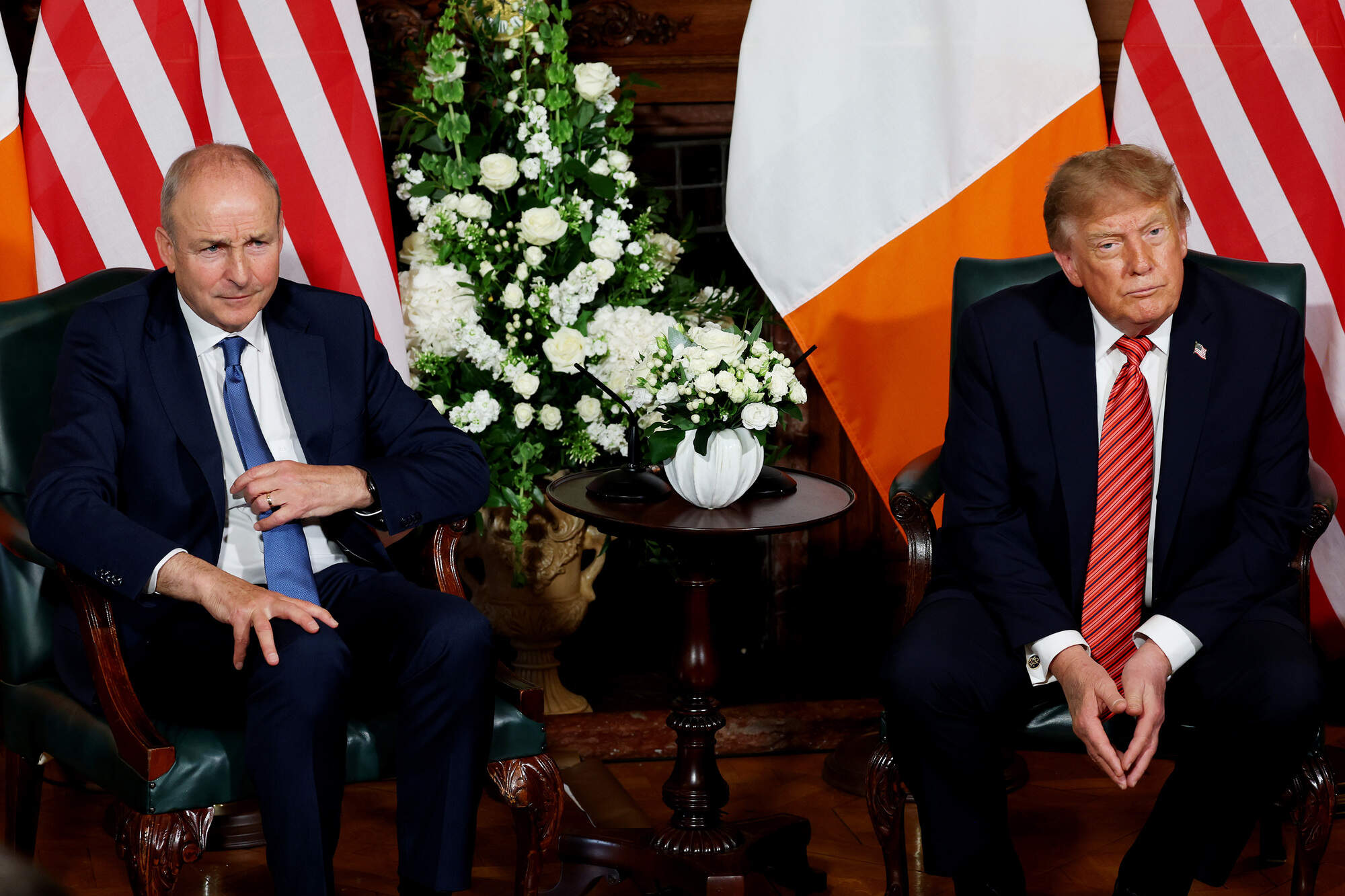
With Mr Trump set to meet President Catherine Connolly, and a briefing with Taoiseach Micheál Martin also taking place, there was ample opportunity for the Leader of the Free World to spark debate, and he has done so both at home and abroad by broaching the subject of reunification.
In the UK, US and further afield, the US president’s declaring he would “love to see” Ireland reunified took up most of the attention, while coverage also touched on his mixing of a golf trip with diplomacy, and the protests against his visit.
Headlines across UK, US and international media placed the focus firmly on Mr Trump’s comments about a united Ireland, noting that they marked a major departure from the US governments official position of neutrality on the constitutional question.
Television coverage of the visit was prominent in news broadcasts from the likes of Sky News, ABC News in the US, and 7 News in Australia.
ABC’s bulletin on Mr Trump’s media engagement alongside Taoiseach Micheál Martin led with his response to a question about the threat of attack by Houthi rebels on a Saudi Arabian oil pipeline, before turning to the headlines the US president generated with his United Ireland remarks.
“This meeting comes at a time when people here in Ireland, they are feeling the effects of the war in Iran, so this visit prompting large demonstrations with many people unhappy about the president visiting here and wanting their opinions to be heard,” ABC News foreign correspondent Marcus Moore said.
On German public servic broadcaster DW News, the response to Mr Trump’s weighing-in on reunification was labelled a “fervent reaction” among Irish and British politicians.
Most of the global coverage centred on Mr Trump’s unexpected reunification stance, but outlets including the BBC and The Guardian also published footage from Dublin city centre, where thousands took to the streets in protest against his visit.
Mr Trump’s take on reunification was described in US politics and pop culture outlet The Daily Beast as a casual push for a “major upheaval” in the UK.
The report said Mr Trump used his visit to “fan the flames” of conflict in the North, adding that the US president had endorsed what amounted to a “geopolitical bombshell”.
It outlined the swift reaction to his comments, a “flurry of pushback” from politicians in the UK, including Conservative leader Kemi Badenoch, Traditional Unionist Voice (TUV) leader Jim Allister, and Ulster Unionist Party leader (UUP) leader Jon Burrows.
The Washington Post reported Mr Trump’s statement marked a breakaway from Washington’s decades-long policy of neutrality on Irish reunification.
The US president has shown form for challenging sovereignty with talk of annexing Greenland or making Canada the 51st state. The Washington Post report said his call for reunification extended “that pattern into another political and historically fraught territorial dispute”.
Just hours after the US president and the Taoiseach spoke to the media on Saturday, British broadsheet The Telegraph published an editorial calling on UK prime minister Andy Burnham to take the opportunity “to come out strongly in favour of the territotial integrity of the United Kingdom”.
Mr Trump’s statement that reunification “would happen eventually” were brushed aside by The Telegraph as the stuff of “fantasy”, an opinion given “with no apparent awareness of the loyalist community for whom Britishness is not negotiable”.
Headlined ‘British sovereignty is non-negotiable’, the piece declared the US president “would do well” to learn the history of Ireland and the UK. It stated that Mr Trump’s view “may come as music to Sinn Féin’s ears”, but outlined in no uncertain terms that reunification would be settled under the terms of the Good Friday Agreement, not on the whims of a foreign leader.
International media reaction to the visit has also focused on the mix of business and pleasure encompassing Mr Trump’s time in Ireland, a blend of his diplomatic engagements in Dublin on Saturday and his attendance at the Irish Open at his Doonbeg golf course.
The Associated Press (AP), an American news agency, reported on the visit as one that “combines work and pleasure”, while a separate report from the outlet said he “touched a nerve” by saying reunification would be “fantastic”.
A report on the visit from US outlet CBS News also highlighted that Mr Trump’s visit was one “that mixes diplomacy and golf”.
“The president certainly knows how to mix business and pleasure,” 9 News Australia’s Europe correspondent Mimi Becker said in a bulletin describing his thoughts on reunification as “controversial”.
“President Trump’s visit here has given the locals a lot more to talk about than just the golf,” she added.