
An international study shows Irish 15-year-olds outperform their EU counterparts when it comes to reading, and perform strongly in science and maths.
The report from the 2025 study concludes that Irish students are first for reading, third for science, and fourth for mathematics out of 27 EU countries.
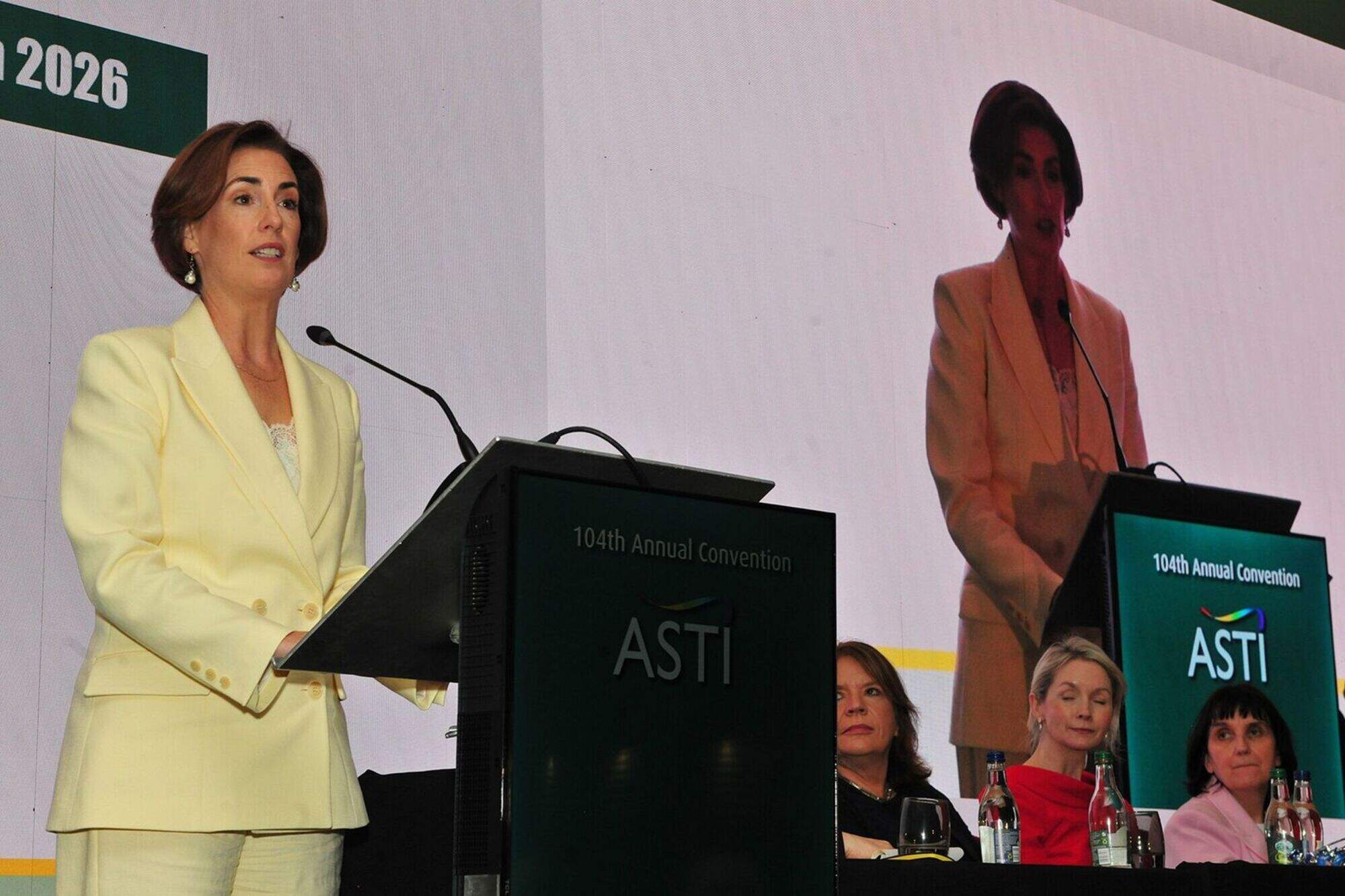
Minister for Education, Hildegarde Naughton welcomed the publication of PISA 2025 (Programme for International Student Assessment) which is an initiative of the Organisation for Economocs Cooperation and Development (OECD).
“The results published today show that Ireland continues to perform strongly on the international stage, with our students achieving above both OECD and EU averages in reading, science and mathematics,” Minister Naughton said.
“The stability of our science results is encouraging and reflects the positive impact of sustained investment in science, technology, engineering and mathematics education,” she added.
Ireland performed above both OECD and EU averages across all science competency areas, and while Ireland’s mathematics performance remains above OECD and EU averages, Minister Naughton said “the results also highlight a trend of decline that has been observed both here and internationally”.
Minister Naughton said: “PISA gives us a valuable insight into how our young people are applying the knowledge and skills they develop in school to real-world situations and challenges.
“The results published today show that Ireland continues to perform strongly on the international stage, with our students achieving above both OECD and EU averages in reading, science and mathematics.
These results come at a time where the Leaving Certificate Maths curriculum is coming under particular scrutiny in terms of its perceived inability to match global developments.
Dr Aoibhinn Ní Shúilleabháin has asked for a review of the decision-making process around what to include in Leaving Cert curriculums, as she believes it [curriculum] is “very slow to evolve in Ireland and very slow to incorporate new findings from research in terms of knowledge or skills that will benefit our young people. I think that’s an error of the system.”
Drr Ni Shuilleabhain, associate professor of mathematics education at DCU, said she resigned from the National Council for Curriculum and Assessment’s Mathematics Development Group last June as it was “no longer something I could be part of”.
Other key findings from the research conclude that students in Ireland are also above the EU and OECD averages in the innovative domain of computational problem solving, and in all three core domains (reading, maths and science), Ireland has a smaller proportion of lower-achieving students than both the OECD and EU averages.