
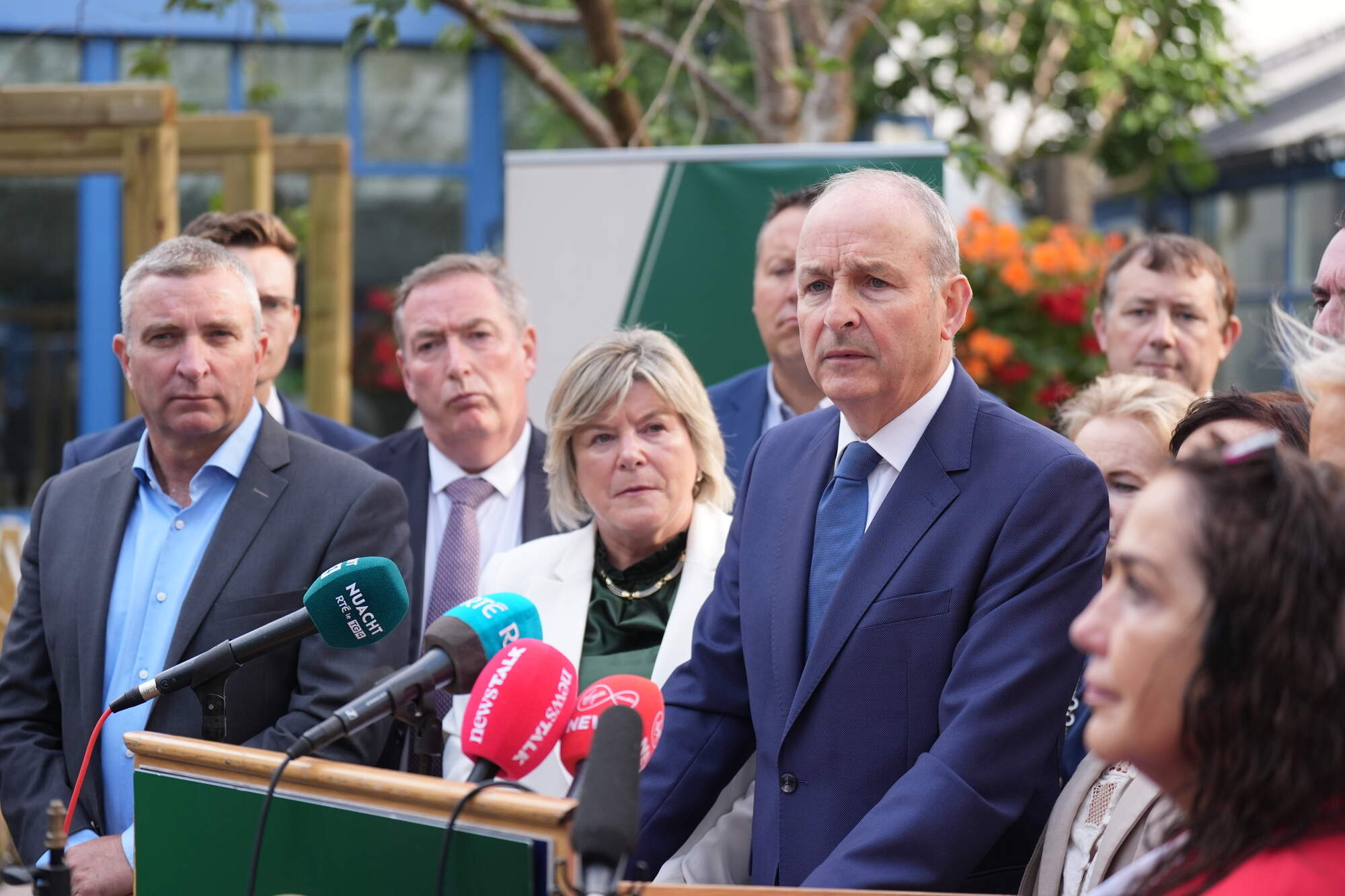
New language proficiency rules for people who want to become Irish citizens would ensure that applicants have “capacity to contribute to society”, the Taoiseach has said.
The length of time someone must have been resident in Ireland before they can apply to become a citizen will rise from five to eight years under new plans, while the applicant will also need to pass a proficiency test in either English or Irish.
Justice Minister Jim O’Callaghan has said people who have been in Ireland for five years and are almost eligible for citizenship under current rules will have to wait another three years under new proposals.
Speaking at the Fianna Fáil think-in on Monday, Mr Martin said the changes will bring Ireland into line with other European countries and the measures will ensure that “with citizenship comes the capacity to contribute to society to be honest, and that there is that the balance is right between independence, self-reliance, as opposed to total dependency”.
The proposed legislation further states that time spent living in Ireland as part of the Temporary Protection scheme will not count towards the residency requirements. Mr Martin said the scheme was “never meant to be a pathway to citizenship”.
Mr O’Callaghan defended the proposed change to the legislation, saying that eight years is a “reasonable period” of time before being eligible to apply for citizenship.
He also said that the legislation will “restrain” the growth in citizenship numbers.
The length of time someone must have lived in Ireland before they can apply to become a citizen will rise from five to eight years under the plans, while the applicant will also need to pass a proficiency test in either English or Irish.
Speaking to reporters in Tullamore, Mr O’Callaghan said the “truth of the matter” is that even those who have lived in Ireland for “4 years and 10 months by the time the law is changed and commenced” will be affected.
“The thing about citizenship is that it’s a privilege, it’s not a right. In terms of people who have given a commitment to Ireland, it should be reflected that they get citizenship, and that will certainly continue if there is new scheme approved by Cabinet,” he said.
Mr O’Callaghan told reporters in Tullamore that the new rules are an attempt to bring Ireland more in line with other EU countries and attempt to restrain the level of growth in the number of new citizens.
Eight years is a “reasonable period of time” that someone should spend in Ireland before being eligible for citizenship, he added.
“That is a fair amount of time to show that you have revealed your commitment to Ireland as your home,” he said.
Asked what happens to those who have already spent almost five years in Ireland and are therefore almost eligible to apply for citizenship under the current rules, Mr O’Callaghan said: “Well, obviously, legislation always discriminates against individuals, there are cut off points, but if you have been here for 4 years and 10 months by the time the law is changed and commenced, it will affect you. That’s the truth of the matter.
“Legislation will always affet and discriminate against people on the edges.”
The rule changes “have not come out of the blue” and will come before Cabinet in the coming weeks.
He also told the Fianna Fáil parliamentary party in Tullamore on Tuesday afternoon that the spend on temporary protection accommodation will be cut by nearly €900m this year.