
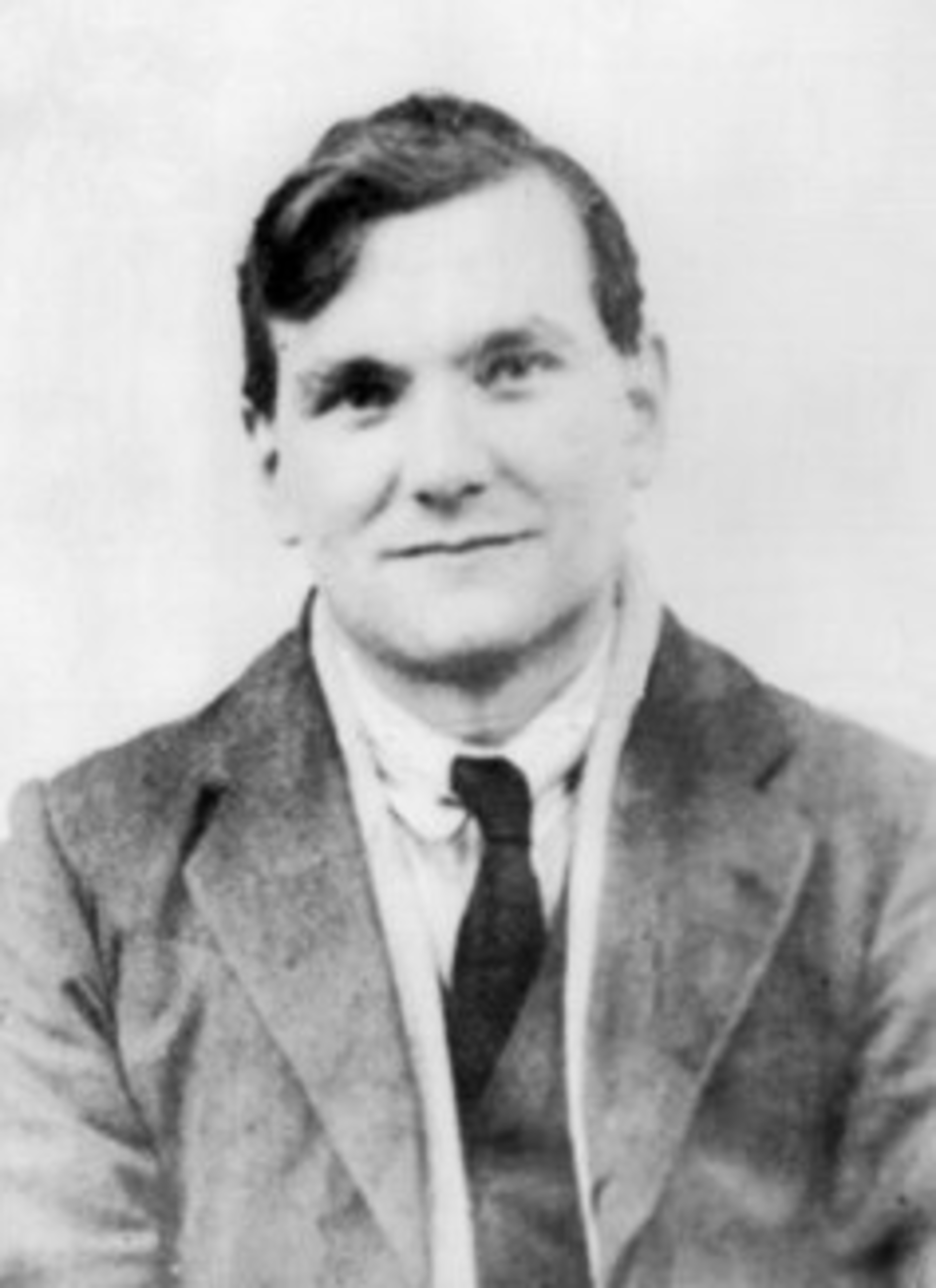
Maurice ‘Moss’ Twomey was admired by both Generals Michael Collins and Liam Lynch, but his role in Irish republican movement has been largely overlooked
A forgotten rebel has been honoured in his home village in north Co Cork.
Maurice ‘Moss’ Twomey was a key figure in the War of Independence and Civil War, as well as being the longest-serving chief of staff of the IRA.
He also became famous for two escapes during both wars.
Despite being admired by both General Michael Collins and General Liam Lynch, Mr Twomey has largely faded from the headlines and he is rarely mentioned in contemporary coverage of the events of 1916-23.
However, the community of Clondulane and Fermoy in north Cork, where Mr Twomey was from, was determined to honour his memory.
A local committee, assisted by former food minister and ex-TD for Cork East, Ned O’Keeffe, decided to honour the memory of the IRA volunteer with a special ceremony and a monument which was unveiled on Sunday.
Relatives of Mr Twomey attended the ceremony, which featured an oration by historian Dr Brian Hanley.
The 130th anniversary of Mr Twomey’s birth occurs next year.
Born in 1897, he was inspired to become involved in Irish republican activity by the execution of Thomas Kent in Cork Prison after a gun battle at a farmhouse outside Fermoy in 1916 – the only armed uprising outside Dublin that Easter.
When he was just 20 years old, he was adjutant of the Fermoy IRA battalion in 1918.
He participated in the Fermoy ambush of British troops in 1919 – the first attack on British military rather than RIC units in the War of Independence.
Mr Twomey rose to become part of the IRA intelligence apparatus.
While opposed to the Anglo-Irish Treaty, Mr Twomey did not support attacks on pro-Treaty forces.
Personable and conciliatory, Mr Twomey became known for his ability to amicably settle internal IRA disputes and was one of those who tried to avoid the Civil War.
However, in the wake of the Four Courts siege and assault, he became actively involved in the anti-Treaty forces during the Civil War.
Mr Twomey became adjutant general on the staff of Gen Lynch, commander of the anti-Treaty forces, shortly before the general was shot and fatally injured in the Knockmealdown mountains in April 1923.
The Cork man later spearheaded a total overhaul of the IRA from 1924 and was a supporter of republican ideals, becoming editor of An Phoblacht.
He later succeeded Frank Aiken as chief of staff of the IRA in 1926.
Mr Twomey opposed the IRA working with Germany during World War II, argued against an IRA military campaign in the UK in the late 1930s and saw the IRA shift politically to the left.
He was interned by former taoiseach Éamon de Valera’s government before World War II and, on his release, left the IRA.
Mr Twomey settled in Dublin and opened a newsagent’s on O’Connell Street.
It was frequented by republicans and his advice was regularly sought on settling internal disputes over future decades.
He also provided assistance to republicans fleeing crackdowns in the UK and others who had fallen on hard times.
Mr Twomey died in 1978 at the age of 81.