
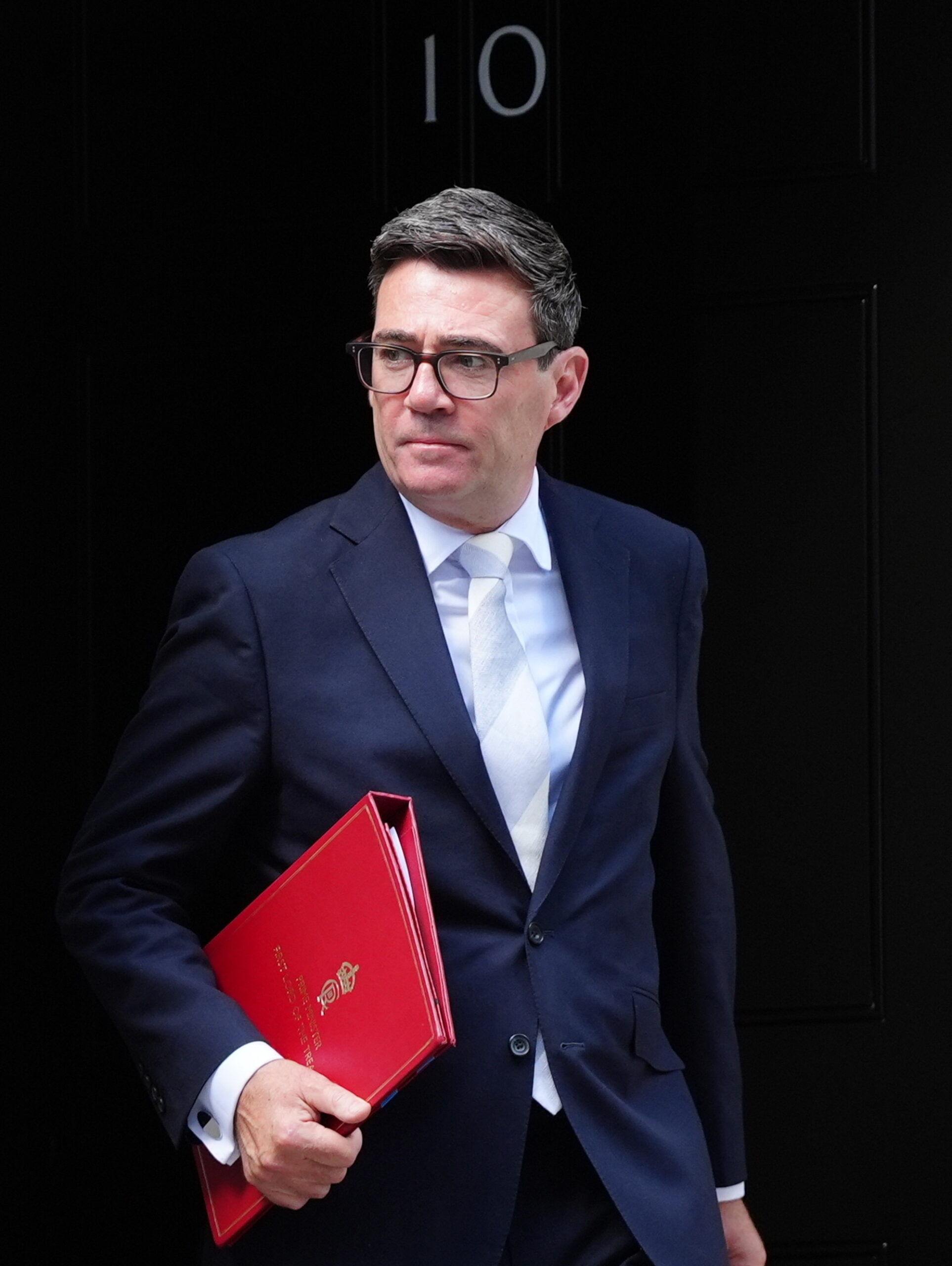
Andy Burnham has vowed to “stick to” the Good Friday Agreement, as he defended his previous comments on an Irish unification referendum.
SNP MP for Dundee Central Chris Law claimed Mr Burnham had “already attempted to unilaterally defy the legally binding Good Friday Agreement”, when the UK Prime Minister last month told reporters that a border poll was “off the table”.
Mr Law asked: “Does the prime minister recognise he has no mandate to defy the constitutional wishes of the people of Northern Ireland, the people of Scotland or the people of Wales, and that any written constitution or devolution agenda must include a pathway for each of those nations to choose their own future?”
Responding, Mr Burnham told the Commons: “I think (Mr Law) has misunderstood what I actually said.
“I answered a media question on a visit to Northern Ireland before meeting the various parties and the question was that a proposal was being put to the meeting about a border poll.
“And my answer was that the purpose of the visit was to get functional government in Stormont because, in my view, that would most serve the people of Northern Ireland right now – and I wasn’t there to distract onto other issues.
“I’m very aware of every word in the Good Friday Agreement. I will stick to it 100pc as Prime Minister.”
Mr Burnham was speaking as he addressed the House of Commons for the first time since becoming Prime Minister.
Taking back public control over services and utilities will be at the centre of the UK government’s efforts to create economic growth, he said.
He hit out at the “failed economic model” which had led to high streets across the UK being left desolate, and described Britain’s water industry as “a leaking monument to that approach, a country run in the private rather than public interest”.
Mr Burnham added: “The government I lead will be relentless, relentless in giving people and places what they were promised 10 years ago: ownership and control.
“And from that control over their destiny comes change and growth.”
A 10-year plan for Britain, laid out later this year, will make the case for “stronger public control over these essentials, making them work for people and places again”, Mr Burnham said.